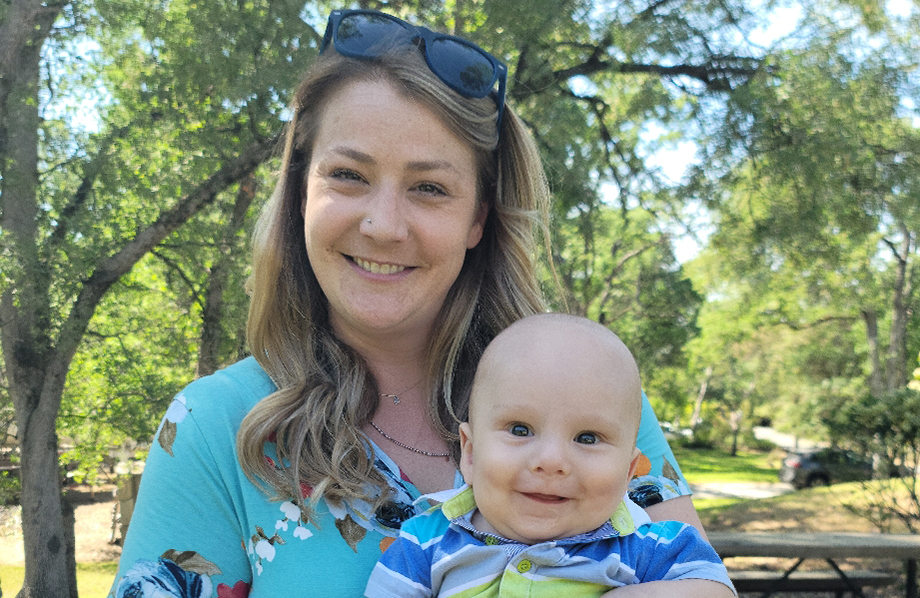
Elizabeth Randel relied on courage and trust to navigate her high-risk, uncertain pregnancy. But she never lost hope. Today, her son's happiness and strength are a testament to Elizabeth's perseverance, the support of her family and the expertise of the care team.
"Michael is a happy, happy boy for all that he has been through," Elizabeth said of her firstborn. "My son is a miracle. I'm really glad I decided to stick it out because I wouldn't have him. Thank you, UC Davis."
Diagnosed with a pregnancy complication called PPROM
It was June 2025 and her amniotic fluid was leaking, a condition called oligohydramnios. The diagnosis? Preterm premature rupture of membranes (PPROM). This is when the amniotic sac, or "water," breaks before active labor begins.

Elizabeth was referred by her local hospital to UC Davis Health, home to the highly specialized maternal-fetal medicine department. From prenatal care through labor, delivery and beyond, multidisciplinary experts support every step of the parenthood journey, including high-risk pregnancies, complex congenital abnormalities and unexpected complications.
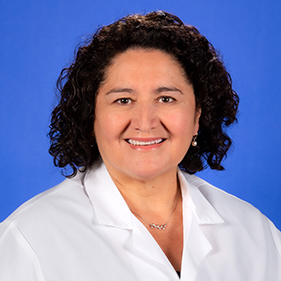
Elizabeth and her husband, Anthony, initially met with maternal-fetal medicine doctor, Carolyn Reyes. She detailed the difficulty that Elizabeth and her developing baby were facing: The depleted amniotic fluid surrounding Elizabeth's fetus meant her baby's organs could be underdeveloped or his tiny limbs could be deformed. There was also the risk of preterm birth or stillbirth, as well as sepsis for mom.
Aware of the daunting obstacles, the Randels decided to move forward with the pregnancy. Reyes and the UC Davis maternal fetal medicine team supported the couple yet expressed their concerns.
"I remember saying to Elizabeth, 'These pregnancies humble me since we cannot predict the outcome. Some have survived and thrived, most have not,'" Reyes said. "But we were there to help her no matter what."
Waiting for Michael
The Randels, including Elizabeth's mom "Granna" Shannon Mainwaring, packed a bag and headed down the hill from above Placerville to UC Davis Medical Center in Sacramento on June 23, 2025. Elizabeth was 22 1/2 weeks pregnant.
Elizabeth was closely monitored during her stay, which would last more than 80 days to reach 34 weeks of pregnancy. It was a strain on the family.
I remember saying to Elizabeth, 'These pregnancies humble me since we cannot predict the outcome. Some have survived and thrived, most have not.' But we were there to help her no matter what."-Carolyn Reyes, maternal-fetal medicine doctor
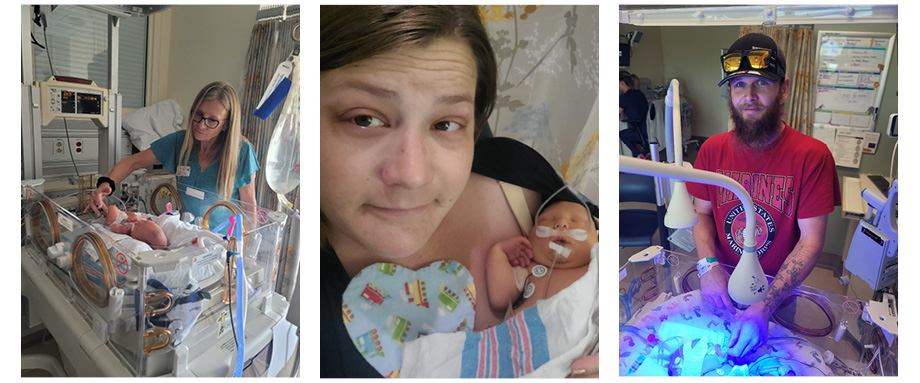
Anthony would work during the week, then drive to Sacramento for dinner with Elizabeth, then head home — every day, for three months. Granna Shannon also visited daily and delivered "Team Michael" shirts and hats she created.
But Elizabeth still felt alone, worried and scared. Fortunately, staff in the hospital took up the mantle to care for her mental health, as well as her physical needs.
Nurses like Ashnita Singh helped brighten Elizabeth's darkest days. "She was so kind, fixing me mommy mocktails and sharing photos of her life while she took care of me," Elizabeth recalled. "I really needed another connection to the outside world during that time, and I am so grateful to her for providing that."
Welcome to the world
Elizabeth's scheduled C-section was set for Sept. 9, 2025, but she ended up going into labor the night before. Michael Timothy Randel, whose middle name honored Elizabeth's late dad, was 5 pounds, 12 ounces and 16 inches long — coincidentally enough, the date of nurse Ashnita's birthday (5/12).

But as expected, Michael's entry into this world was complicated. He was moved to the UC Davis Neonatal Intensive Care Unit (NICU), a designated Level 4 nursery (the highest possible rating) for the Sacramento region. The NICU provides specialized intensive care for infants who are born prematurely, face critical health challenges or require surgery.
Michael required respiratory support for immature and underdeveloped lungs, said NICU nurse specialist, Christa Mu. "As anticipated from prenatal findings, he had contractures affecting all his extremities, but most notably his feet," Mu added.
Elizabeth and Anthony had prepared for those possibilities.
"He was breech and he wasn't breathing. Anthony told me the care team worked to resuscitate him for about 15 to 20 minutes before they were able to transport him to the NICU," Elizabeth said. "He had also been so squished in my belly and didn't have room to kick and grow and stretch so he had clubfoot and a bum wrist."
In addition, Michael's spinal cord required neurosurgical evaluation, and a small hole in his heart needed the care of pediatric cardiologists.
But then the care team discovered something no one could have anticipated.
A surprising diagnosis: Anorectal malformation
Doctors soon learned that Michael had no way to poop.
"Michael was born with an anorectal malformation. In his case, he did not have a visible anal opening," said UC Davis Children's Hospital pediatric general surgeon, Jamie Anderson. "This is something that is not seen on prenatal ultrasounds and always comes as a surprise and quite a shock to families."
Indeed, the family seemed stunned when Anderson explained the rare diagnosis and the need for immediate surgery. "It's a lot to take in," Anderson acknowledged.
This is something that is not seen on prenatal ultrasounds and always comes as a surprise and quite a shock to families."-Jamie Anderson, pediatric general surgeon

Granna Shannon remembers how the mood post-delivery quickly changed.
"We have a picture right before Elizabeth was going in for her C-section and she looked so happy. We were so excited that she made it to that 34-week mark," Shannon said. "And then, when the baby was born, the scenario was really, really scary. I saw the heartache and the fear in Elizabeth's eyes."
But the new mom held onto hope.
"My biggest fear was the unknown. The care team had proven they were both experienced and kind," Elizabeth said. "I just had to let go and trust more strangers with the life of my child."
The expertise Michael needed, close to home
Thankfully, UC Davis Children's Hospital has the region's only dedicated pediatric colorectal surgery center, part of a network of national pediatric colorectal and pelvic learning consortium providers. Michael underwent three operations for his anorectal malformation.
Anderson first performed a colostomy (or an ostomy) — a surgery that brings the colon up to the skin to allow stool to be evacuated when natural functions are impaired. Waste exits through the stoma into a wearable, disposable pouch. It is a life-saving procedure that can be temporary or permanent.
Poop preparedness: The bottom line
In Michael's case, the stoma would be in place for 6 months so the Randels had a lot to learn. But team Michael was all in.
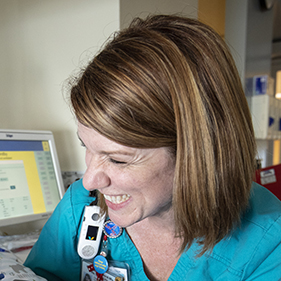
Mu, the NICU nurse, taught the family personalized and entertaining lessons on how to change, empty and clean the plastic pouch.
"It's ostomy care but I call it 'stool school;'", Mu said. "I try to make it fun but it can be really overwhelming."
Imagine having to spend extended time in the NICU with very little control over the environment or situation. It was overwhelming for first‑time parents who had done everything 'right.'"-Christa Mu, NICU nurse specialist
The Randels faced it head on.
"Imagine having to spend extended time in the NICU with very little control over the environment or situation. It was overwhelming for first‑time parents who had done everything 'right,'" Mu said. "But quickly, the Randels became ostomy pros and we laughed a lot during the process."
Michael was discharged after 24 days, the first of his many medical milestones.
Home is where the heart is … and the wipes are in reach
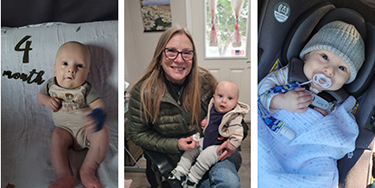
Home for 4 months old, Michael went back to the hospital so Anderson — along with Payam Saadai, co-chief of the pediatric colorectal center — could perform a posterior sagittal anorectoplasty, to create a new anal opening. Then, at 6 months, Anderson reversed the stoma so Michael could stool normally through his new anal opening.
"I don't know how Dr. Anderson did that. It looks normal and there were no issues. He pooped the very next day after the connection surgery," Elizabeth said. "Whatever she did, she did it with precision and gave my son the chance to have some normalcy in his life. Dr. Anderson is amazing!"
But that "normalcy" would take a little adjusting to.
"We were so used to his poop being contained," Elizabeth chuckled. "It threw me for a loop at first. The number of wipes I went through in the beginning … wow!"
Teamwork makes the bowels work … and more
Doctors said that Michael could experience constipation and/or incontinence as he gets older and may need medication for constipation, but they are confident he is on the right path toward a normal bowel function and a healthy, fulfilling life.
"Michael's case really highlights the team approach we have here at UC Davis," Anderson said. "The NICU took great care of him in his early days and weeks. And the surgeries wouldn't be successful without a huge team of inpatient and outpatient nurses, nurse practitioners and specialized staff who know all about caring for stomas and babies with anorectal malformations and other colorectal issues."
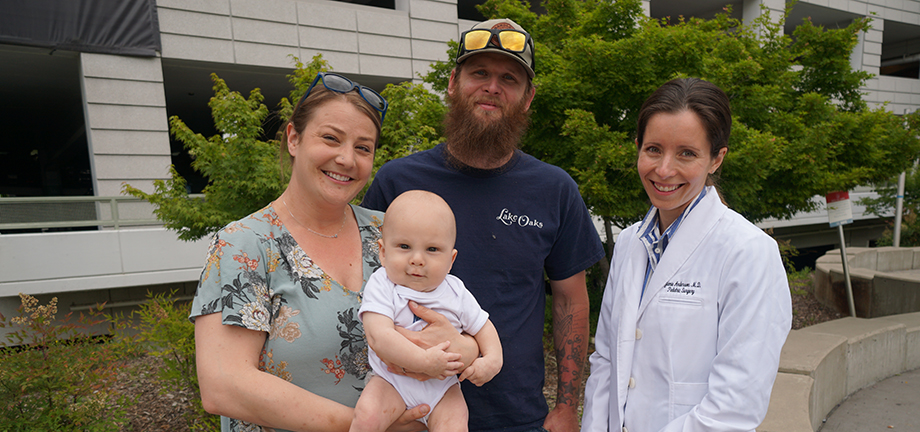
The Randels appreciate the continued follow-up care for Michael and stay connected to the care team.
"We keep in close contact with all of these kids as they grow up to help address any issues with stooling if they arise," Anderson said. "It's been an honor to help take care of Michael in his early months and I can't wait to see how he grows up!"
And Anderson is not the only one.
With the opening of the UC Davis Health Folsom Medical Care Clinic, Michael's new pediatrician, Peter O'Malley, will keep tabs on this "miracle" boy, too.
"Dr. O'Malley is wonderful! I can tell he really cares. Plus, we don't have to drive so far," Elizabeth said excitedly.
Miracle Michael
With his grumpy eyebrows and spirited personality — which Elizabeth's attributes to her own dad — Michael is all his parents could have hoped for. Despite the ongoing orthopaedic challenges, the Randel family feels blessed to have made this decision and would do it all again.
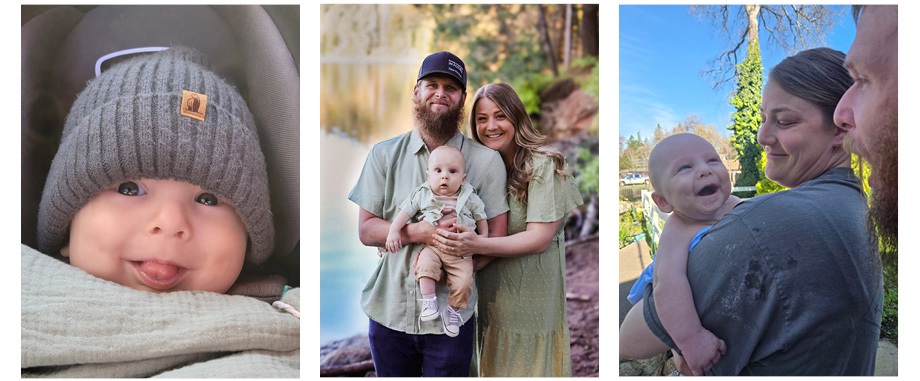
"He's freaking adorable and so happy," Elizabeth beamed. "Michael definitely has some hurdles, but he's handled so much already. He's a warrior and we love him dearly."