
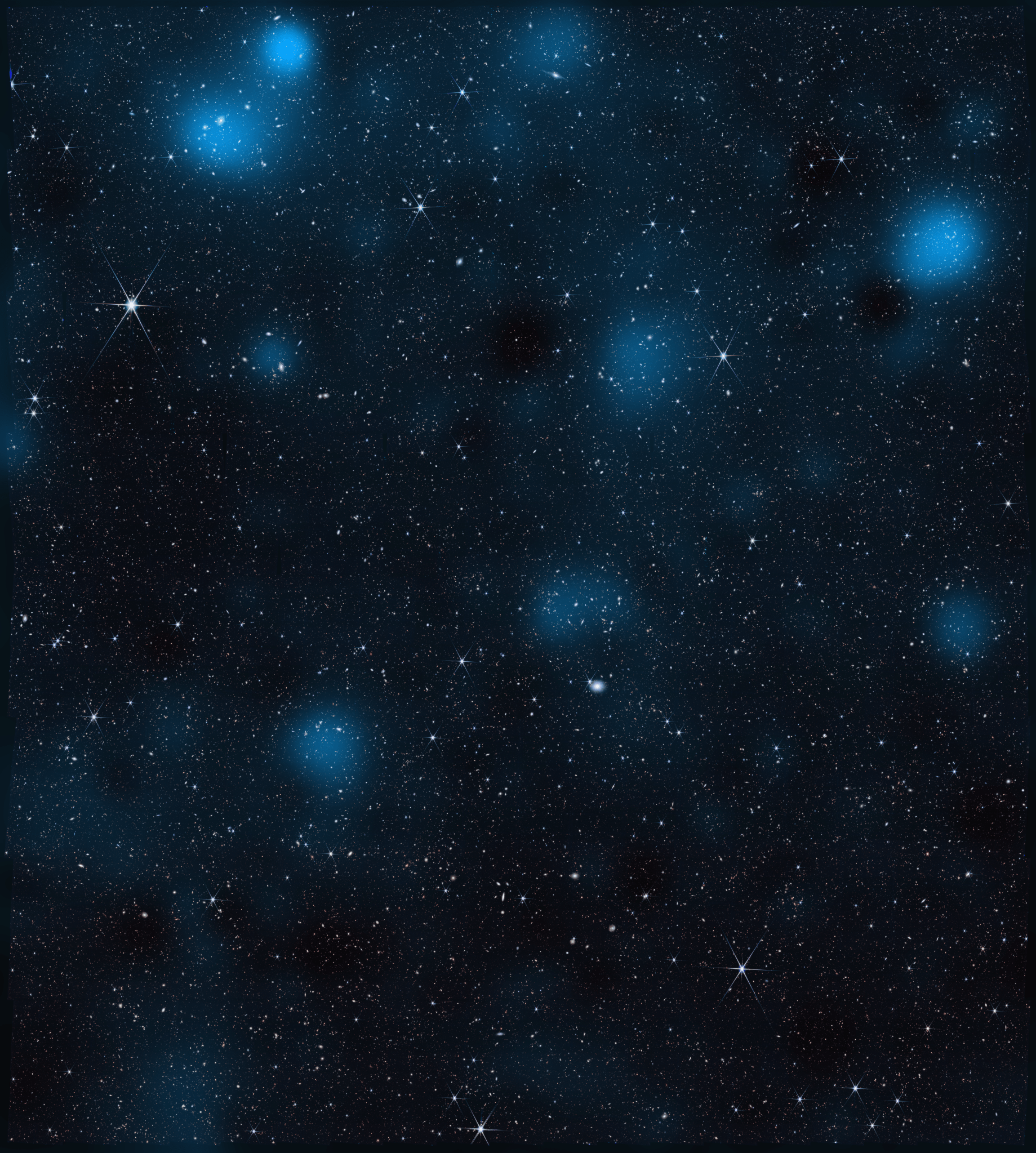
With the Webb telescope's unprecedented sensitivity, scientists are learning more about dark matter's influence on stars, galaxies, and even planets like Earth.
Scientists using data from NASA's James Webb Space Telescope have made one of the most detailed, high-resolution maps of dark matter ever produced. It shows how the invisible, ghostly material overlaps and intertwines with "regular" matter, the stuff that makes up stars, galaxies, and everything we can see.
Published Monday, Jan. 26, in Nature Astronomy, the map builds on previous research to provide additional confirmation and new details about how dark matter has shaped the universe on the largest scales - galaxy clusters millions of light-years across - that ultimately give rise to galaxies, stars, and planets like Earth.
"This is the largest dark matter map we've made with Webb, and it's twice as sharp as any dark matter map made by other observatories," said Diana Scognamiglio, lead author of the paper and an astrophysicist at NASA's Jet Propulsion Laboratory in Southern California. "Previously, we were looking at a blurry picture of dark matter. Now we're seeing the invisible scaffolding of the universe in stunning detail, thanks to Webb's incredible resolution."


