
An international research team reveals new molecular mechanisms associated with pathogenic mutations in the protein transthyretin that cause transthyretin amyloidosis (ATTR), a group of fatal progressive diseases. The results, obtained thanks to a new methodological approach, open the door to the development of drugs with higher therapeutic potential, designed specifically for the variants of the protein associated with the disease. The study has been published in the journal PNAS.
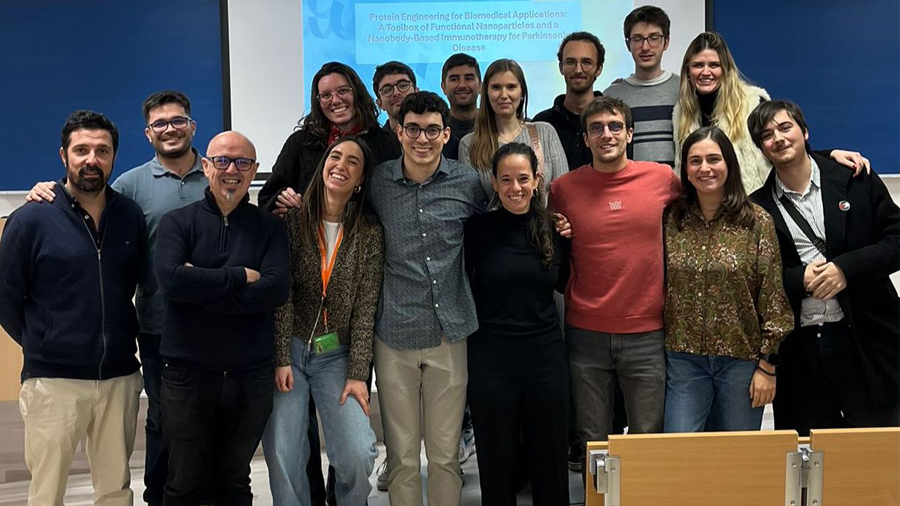
The study was led by researchers from the Institute of Biotechnology and Biomedicine of the Universitat Autònoma de Barcelona (IBB-UAB) and Washington University in St. Louis.
Transthyretin (TTR) is a protein produced primarily in the liver and, to a lesser extent, in the brain. A series of genetic mutations cause the misfolding and aggregation of TTR, which accumulates as amyloid fibers in various tissues. This accumulation causes a set of progressive and fatal clinical disorders known as transthyretin amyloidosis (ATTR), which can affect the nervous system, heart, and other vital organs.
High-resolution X-ray diffraction studies have determined more than 300 TTR structures, but these provide a static image of the protein and do not capture the effects pathogenic mutations cause on TTR stability and conformation. Some small molecules (binding ligands) have been developed to counteract the effects of these mutations, but currently approved drugs have a generic activity and do not offer specific therapeutic response for the different phenotypic variants of the disease. This highlights the need to design new stabilizers adapted to each specific mutation.
In this study, researchers focused on the analysis of pathogenic TTR mutations using a new methodological approach, which allowed them to make important findings regarding the conformational changes caused by pathogenic TTR mutations and, particularly, how their stabilizing ligands can counteract these effects. This method provides a dynamic view of the mechanism of action, comparable to a "movie" instead of a still image.
"By applying mass spectrometry (MS) combined with two biochemical techniques, such as hydrogen-deuterium exchange (HDX) and fast photochemical oxidation of proteins (FPOP), we were able to observe the changes in conformation induced by both mutations and ligand binding, which are invisible to X-ray crystallography", explains Irantzu Pallarès, researcher in the Protein Folding and Conformational Diseases Group at the UAB.
"We have revealed previously hidden destabilization mechanisms, which opens up new ground for the design of specific stabilizers for each mutation, with significantly improved therapeutic potential. The design of new ligands should therefore consider the dynamic characteristics of each pathogenic variant of TTR", says Salvador Ventura, professor at the Department of Biochemistry and Molecular Biology, researcher at the IBB-UAB, and director of the Parc Taulí Research and Innovation Institute (I3PT).
The researchers conclude that incorporating MS-based techniques for ATTR drug discovery will accelerate the development of inhibitors capable of preventing the aggregation of disease-associated variants in a much more precise manner.
Reference article: F. Pinheiro, R. Kant, S. Chemuru, N. Varejão, A. Velázquez-Campoy, D. Reverter, I. Pallarès, M.L. Gross, & S. Ventura, Mass spectrometry footprinting reveals how kinetic stabilizers counteract transthyretin dynamics altered by pathogenic mutations, Proc. Natl. Acad. Sci. U.S.A. 123 (1) e2519908122, https://doi.org/10.1073/pnas.2519908122 (2026).


