Wageningen researchers, together with colleagues in Amsterdam and China, have developed a new plant-based plastic that biodegrades naturally. The material is also stronger and more water resistant than existing biobased plastics. The researchers published their findings in Nature Communications.
Making plastic from plants is not new. But combining strength, water resistance and the ability to break down relatively easily in nature has proved far more difficult. A Dutch-Chinese research team has now achieved this with a material they named plantymers. It is transparent, just like conventional plastic, and has a thickness comparable to a heavy-duty bin liner. To develop the material, the researchers turned to nature and got inspired by the process spiders use to spin silk.
Structural changes create strength
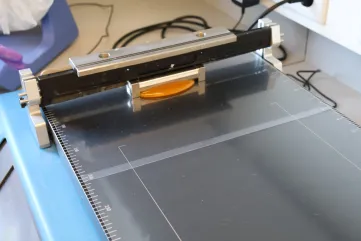
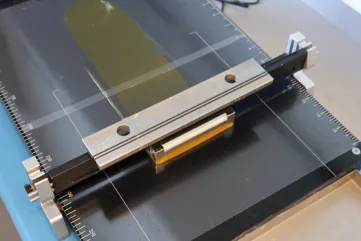
The team worked with zein, a protein from maize that has served as a raw material for fibres and bioplastics for decades. To create plantymers, the researchers dissolved the protein in a mixture of ethanol and water and brought it to a transition point. This produced a thick, viscous protein phase. PhD candidate Yijie Wang then either extruded the material through a small opening or rolled it out into thin sheets and left it to dry. These processes produced fibres for textiles and plastic films, respectively.
"The remarkable part happens during processing," says Renko de Vries, Associate Professor of Physical Chemistry and Soft Matter. The process resembles the way spiders pull silk from their bodies. Mechanical forces generated during extrusion or rolling alter the structure of the zein protein chains. It transforms them from spring-like shapes (alpha helices) into flat structures (beta sheets). These interlock and form cross-links without requiring chemical additives. The result is a plastic that is stronger than the widely used plastic polyethylene (PE) and slightly less strong than metal.
Qin Li
Rolling of the zein protein results in a strong plantymer plastic film.
Qin Li
De Vries was surprised when Wang succeeded in producing the material. "Nature uses the same strategy more often," he says. "Spider silk is the best-known example, but similar protein networks also give strength to mussel adhesive and the teeth inside squid suckers. We only knew this mechanism from animals. I didn't expect to achieve the same effect with a plant protein."
Plantymers create an effective barrier
One of the main challenges in bioplastics is achieving good water barriers while maintaining functionality. Plantymers may offer a solution: after one hour under water, the film absorbed 25 per cent of its own weight in water. By comparison, soy-based plastics absorb around 175 per cent. Conventional PET still performs better, absorbing no more than 0.1 per cent.
At the same time, most of the material biodegraded within four weeks without leaving microplastics behind. De Vries sees opportunities in agriculture, where biodegradability often matters more than peak performance. WUR researcher Wouter Post, who specialises in sustainable plastics technology and was not involved in the study, also sees broader applications. "Because these plastics biodegrade, they could become an interesting alternative for single-use products such as cutlery, plates and straws, where European regulations have become increasingly strict in recent years."
"We do not want plastic waste accumulating in nature. That is my main motivation."
- Renko de Vries
From laboratory to application
The material is still at an early stage. So far, the Chinese researchers have produced around one square metre of film. Scaling up appears technically feasible, but sourcing maize protein remains a challenge. "Proteins are valuable and compete with food and animal feed," says De Vries. The team is therefore already exploring alternative feedstocks, including feathers from the poultry sector and residual streams from beer production. Post adds that further applied research will be needed to translate both the material and the production process into real packaging products.
De Vries acknowledges that biobased plastics do not yet match the performance of conventional plastics. "Compared with traditional plastics, bioplastics are still relatively primitive," he says. "But we do not want plastic waste accumulating in nature. Biobased plastics that biodegrade naturally offer a promising solution. It will simply take time and further research."
Read the publication in Nature Communications: Silk-Inspired Design and Manufacturing of Robust Plantymers