
Postbiotics show promise as a safe and easy addition to current processing practices
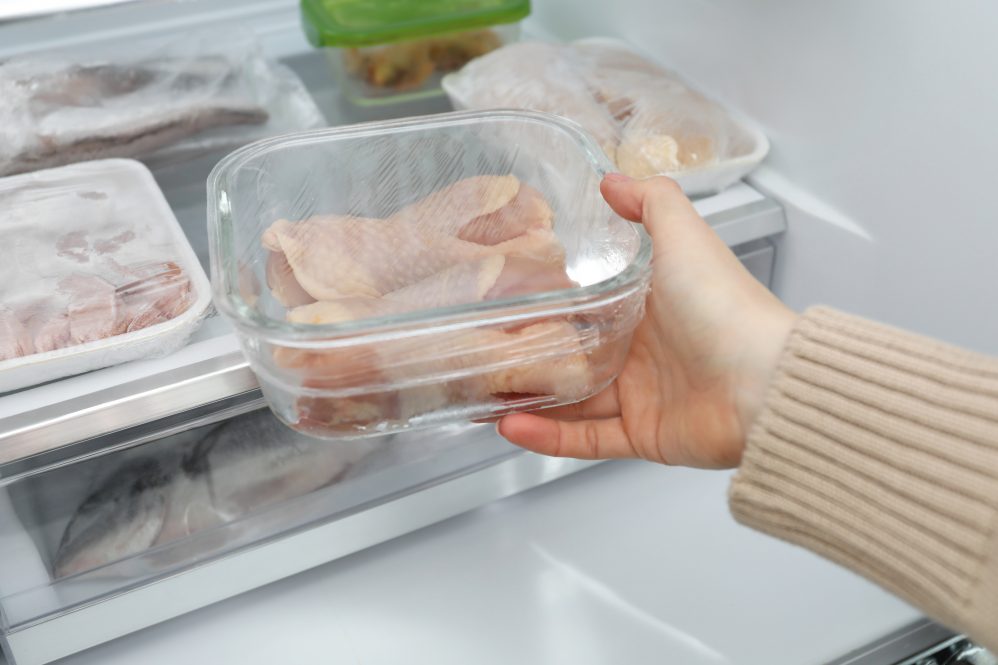
(Adobe photo)
Salmonella is a common source of food poisoning that leads to potentially life-threatening illnesses, widespread food recalls, and remains a consistent challenge for poultry producers. UConn Department of Animal Science associate professor Mary Anne Amalaradjou and her research team study ways to improve processing strategies to prevent foodborne illnesses by using probiotic bacteria. In a new study published in Poultry Science, they describe a method to use postbiotic compounds produced by probiotics species of Lacticaseibacillus to take the benefits one step further.
As one of the biggest challenges in poultry meat safety, Salmonella can persist through processing, because the bacteria are very effective at surviving in skin folds and feather follicles during washing, which means that contamination can happen anywhere along the line from farm to consumer. Amalaradjou says much of her lab's research has focused on using beneficial probiotic bacteria to help with raising healthier chickens, with promising results showing that probiotic supplementation also helps the birds eat less food while producing more meat or eggs.
Whether beneficial or pathogenic, as bacteria grow, they produce metabolites, Amalaradjou explains. In the case of Salmonella, these include virulence factors and toxins that lead to infection and illness, but in the case of probiotics, these include postbiotic molecules like antimicrobial compounds and growth promoting factors. With demonstrated success in probiotics, Amalaradjou says they were curious to see if postbiotics could be used for food safety interventions as well.
"We wanted to come up with a system that will help support production and also reduce the food safety risks," says Amalaradjou. "If they can use one tool to do both, something that helps them in terms of the feed costs or the overall economy of their production system, that's where we started working with probiotics."
An additional benefit is postbiotic molecules are soluble in water and, since they are not living organisms, they are not affected by temperature. Amalaradjou says at the processing plant, these qualities mean postbiotics could be incorporated into existing processes and do not require special formulations to make them shelf stable. In looking at the steps taken during processing, Amalaradjou says it made the most sense to try postbiotics in the post-harvest timeline.
"Once the bird is sacrificed, the carcass is chilled, which helps maintain the meat quality and it helps reduce bacterial growth. We thought that's a perfect vantage point. If something is added to that water while the carcass is chilling, it could also help control Salmonella," says Amalaradjou.
This pilot study focused on chicken skin, which the researchers inoculated with Salmonella. Then they simulated the chilling process and added the postbiotics to the chill water while also aerating the water using oxygen nanobubbles. They found the postbiotic-aerated water treatment helped reduce the level of Salmonella on chicken skin immediately after washing at the laboratory scale. Importantly, they found this strategy also did not have any perceived impact on the quality of the skin, which is vital for consumer acceptance of the end product. Amalaradjou says that following these promising results, the next steps include testing on chicken parts, and then full chicken carcasses to see if the process can be scaled up.
"It is important that this research is not just stuck in the lab, but that it is applicable. Otherwise, it serves little purpose," says Amalaradjou.
An important consideration for scaling up is that the probiotics the researchers use to produce the postbiotics are already generally regarded as safe (GRAS) by the FDA. The researchers are eager to move the method from the laboratory to processing facilities and for this, they collaborate with associate extension professor of Poultry Science and Food Safety Indu Upadhyaya to ensure they understand and help meet stakeholder needs. Through regular discussions, workshops, and surveys, they learn about what matters most to producers, says Amalaradjou, and this feedback plays a big role in helping to determine the direction of the research.
"The producers want more data to show it works at scale, so one of the questions we asked in our survey was, how likely are you to adopt this method, and 70% said that they would be open to adopting it into their current practices if we show it works," says Amalaradjou. "There is interest, we just have to refine it, show that it works in the processing setting, and then I think there are more opportunities for adoption."


