
Researchers at the Technical University of Munich (TUM) have identified a bacterial genus that promotes root growth and nitrogen uptake in plants. The findings open new possibilities for developing customized "plant probiotics" that could contribute to more resource-efficient agriculture by reducing the need for nitrogen fertilizer.
 Peng Yu / TUM
 Plants grow within a complex network of microorganisms. They can actively alter their surrounding microbiome while the microorganisms, in return, influence the plant's growth. "This interaction can be exploited by applying specific beneficial microorganisms - probiotics for plants" says Peng Yu, Professor for Plant Genetics at TUM.
To investigate the beneficial symbiotic relationship between microorganisms and plants, the research team investigated plant-microbe interactions at the genetic, metabolic and physiological levels.
45% of nitrogen uptake based on host and microbe genetics
Their analyses revealed that 203 bacterial gene sequences are strongly shaped by the host plant, for example through their metabolic products. This underlines that plants actively modulate the composition and function of their surrounding microbiome in line with their current needs. In addition, 45% of natural variation in nitrogen uptake can be explained by the combined host and microbe genetics.

Sphingopyxis as a candidate for plant probiotics
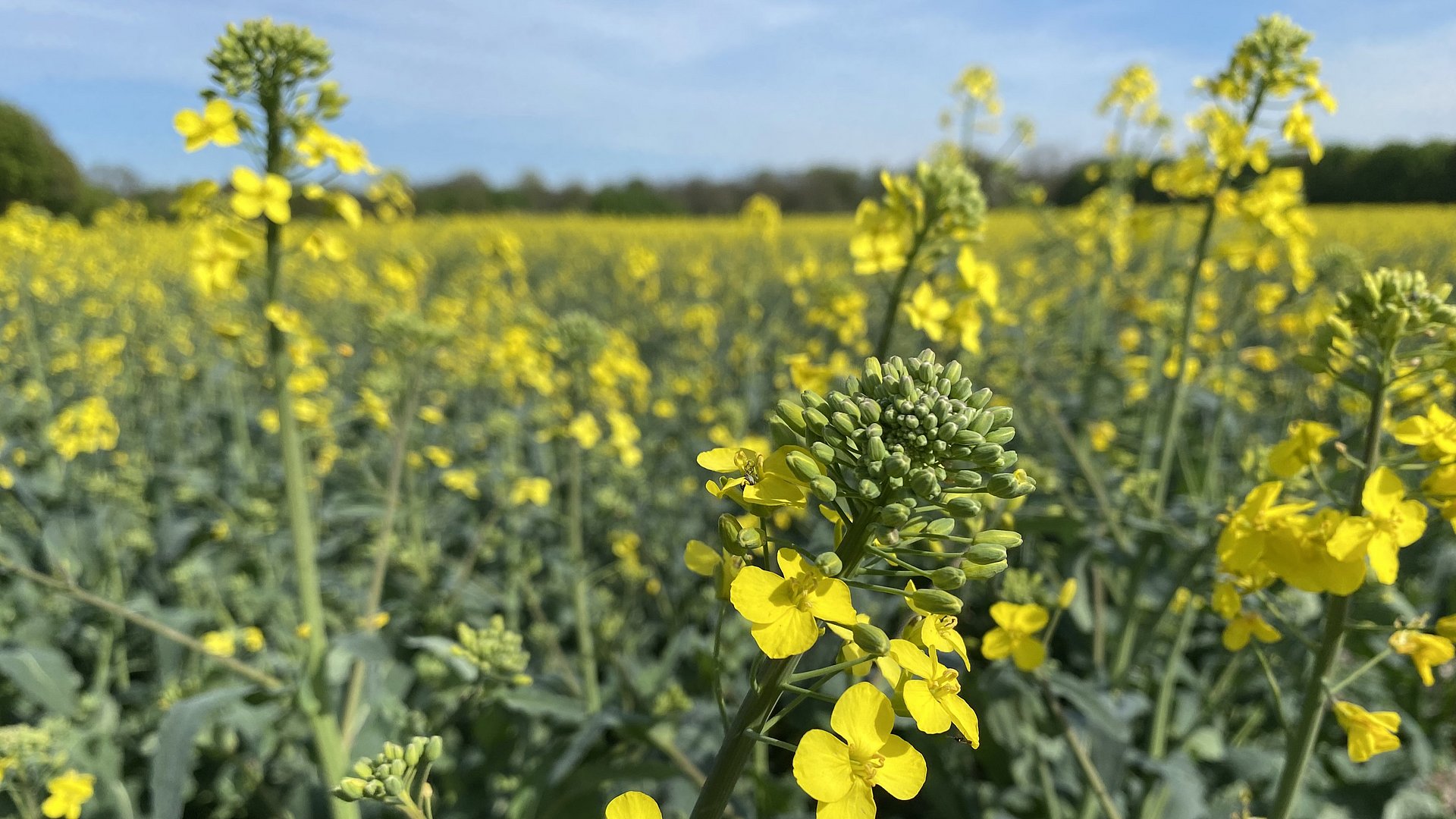
Particularly one bacterial genus was identified that supports plant function and growth: Sphingopyxis. Initial experiments with rapeseed indicate that applying these bacteria can enhance root development even in nitrogen-limited soils, thereby improving nitrogen uptake.
The findings suggest that the use of nitrogen fertilizer could potentially be reduced without compromising plant growth and yields. In this way, Sphingopyxis-based applications could help lower the environmental impact of agriculture by reducing excess nitrogen in soils.
"Our goal is to develop a probiotic mixture of several microorganisms that combines several benefits for the plants", says Yu. Further research will focus on identifying other microbes that go beyond the uptake of nitrogen and improve its utilization.
Li, N., Li, G., Huang, X. et al. Large-scale multi-omics unveils host-microbiome interactions driving root development and nitrogen acquisition. Nat. Plants (2026). https://doi.org/10.1038/s41477-025-02210-7
The professorship for plant genetics is part of the TUM School of Life Sciences and the World Agricultural Systems Center - Hans Eisenmann-Forum für Agrarwissenschaften .
The work was published in Nature Plants.


