
The world needs more critical minerals than ever before for electric vehicles, wind turbines, solar panels, batteries and smartphones.
They are all essential as part of the global shift away from fossil fuels towards cleaner energy sources
But there is a catch.
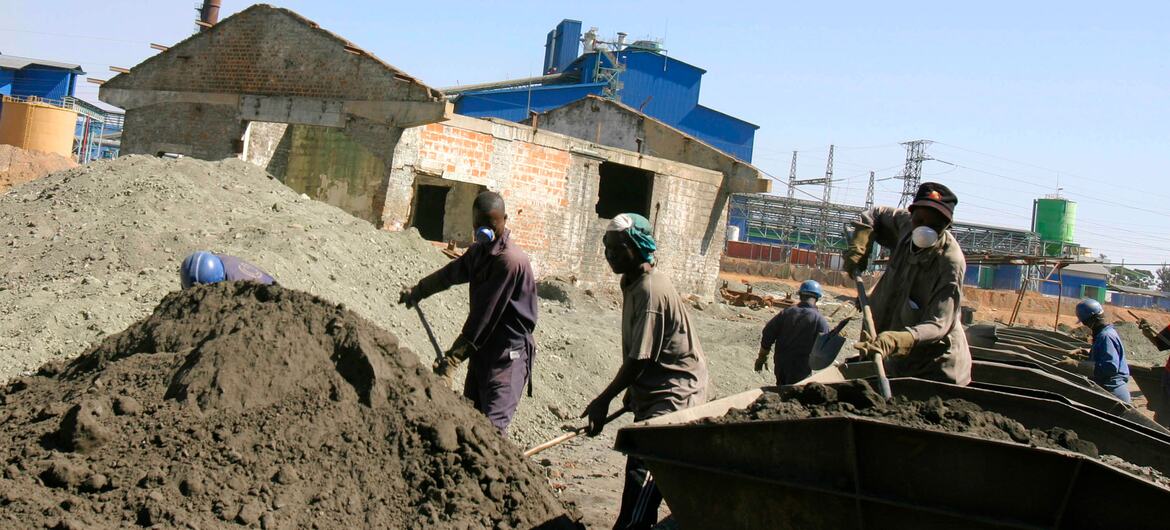
Many of these minerals are found in countries affected by conflict, weak governance or poverty.
What's at stake?
If these natural resources are poorly managed, they can fuel corruption, finance armed groups, damage the environment and leave local communities no better off than before.
Those competing realities dominated a day-long debate in the UN Security Council on Wednesday, where ministers and diplomats asked a simple but increasingly urgent question:
How can the world ensure that the race for critical minerals powers the clean energy transition without also driving conflict?
Here's what happened
The meeting marked a clear shift in how many Member States are framing critical minerals; not only as an economic issue, but as a question of peace, security, justice and shared prosperity.
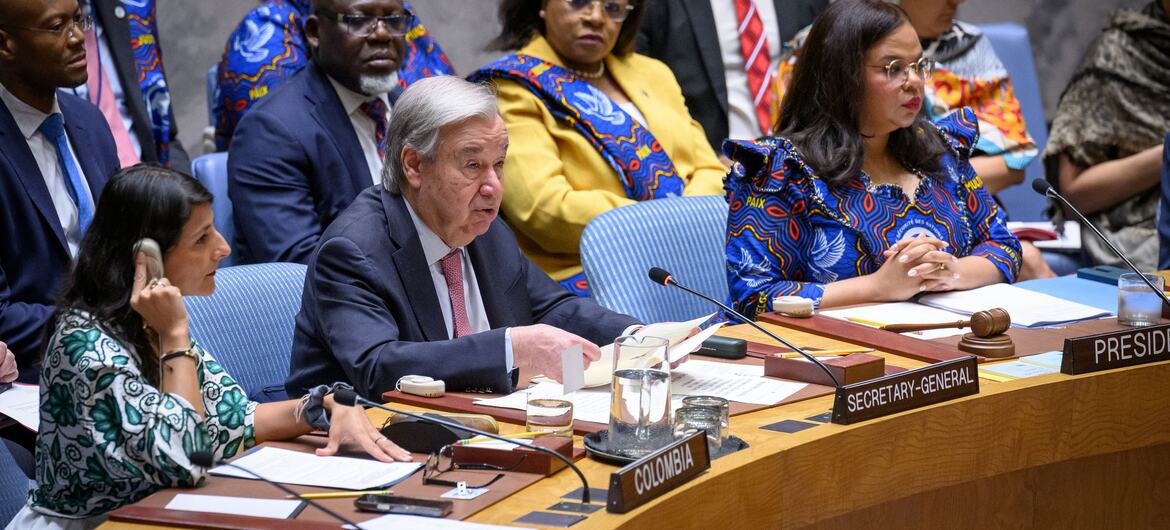
The strongest message to emerge was simple; the minerals powering the clean energy transition should benefit producing countries and local communities, not finance conflict, criminal networks or a new era of unequal extraction.
Key quotes
UN Secretary-General António Guterres
"Countries and communities must benefit, first and most, from the resources in their own backyard."
"No more exploitation. No more plundering."
China
"Countries have the sovereign right to independently choose the path of development and utilization of their natural resources."
Colombia
"We cannot allow this region once again to bear the environmental and social costs of extraction that colonialism taught us."
DR Congo
"Natural resources can be the foundation of shared prosperity or the engine of predation. Everything depends on how they are governed."
Liberia
"A diamond can fund a classroom, or it can fuel a militia. A forest can sustain a community, or it can finance a war. Geology does not choose. Governance does."
Pakistan
"The strategic importance of natural resources is increasing as the world transitions towards clean energy, artificial intelligence, advanced manufacturing, and digital technologies."
Somalia
"While the security dimension is critical, the African perspective also highlights that minerals are a strategic asset for development, industrialization, and shared prosperity."
Key themes and priorities that emerged
- Critical minerals are essential for renewable energy technologies and the wider energy transition.
- Poor governance can fuel conflict when armed groups and criminal networks profit from illicit extraction and smuggling.
- Producing countries want more value added locally, including processing, refining, manufacturing, jobs and revenue.
- Supply-chain transparency and traceability are essential.
- Communities affected by extraction should receive meaningful benefits and be protected from environmental and social harm.
International cooperation is necessary, but national sovereignty must be respected.
Was a plan of action agreed?
No formal Security Council resolution (which carries legal weight), declaration or binding plan of action was adopted.
However, the debate produced broad political convergence around the above priorities.
The current Security Council president, the Democratic Republic of the Congo, which hosted the meeting, proposed a Group of Friends on the Governance of Natural Resources as a possible follow-up mechanism.
The Group would bring together "interested" UN Member States, the United Nations, regional organizations, and international financial institutions, producing and consuming countries, responsible economic actors, and civil society.
Its mission would be to "sustain permanent dialogue, share best practices, strengthen existing mechanisms, and formulate in a progressive and pragmatic manner proposals to better integrate natural resource-related issues into the work of the UN."


