
In the split second after you hear a noise, your brain is already making a potentially life-or-death deduction: Did I do that, or did something else? Our nervous systems answer this question using something called corollary discharge, a copy of a motor command that tells sensory areas what to expect from our own actions.
This mechanism is at the center of a new study by biologists at Washington University in St. Louis, published in Current Biology.
"Corollary discharge is found in every animal, in every system, and that's because it solves a universal problem, which is: How do animals distinguish sensory inputs coming from the outside world versus sensory inputs caused by their own actions?" said Bruce Carlson, a professor of biology in WashU Arts & Sciences. "That's a universal problem, and it's something that our sensory systems can't solve by themselves."
This type of neuroscience research can help uncover mechanisms that afflict human sensory processing and prediction. Once scientists understand a brain circuit inside and out, they can better fix broken circuits.
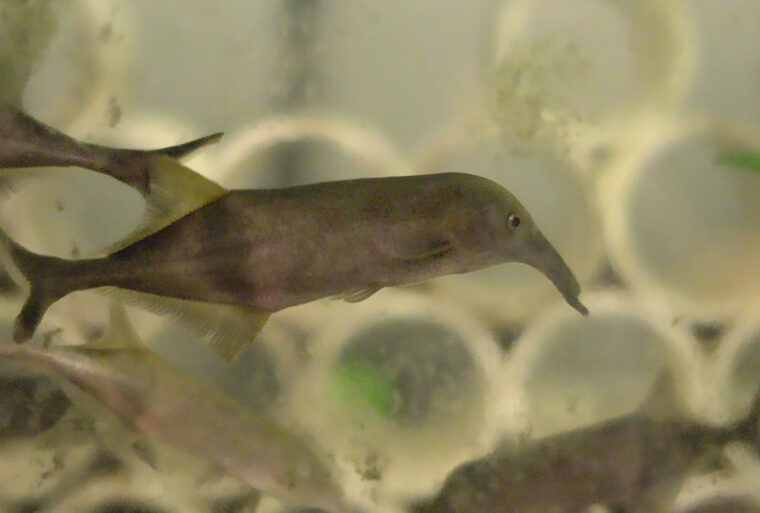
To study the inner workings of corollary discharge, Carlson and his team turned to weakly electric fish. These animals generate brief electrical pulses called electric organ discharges to communicate and sense their surroundings. But this form of communication presents a problem. Every time a fish sends out a pulse, it also "hears" itself. Without some way to filter its own pulse out, the sensory system would be overwhelmed.
That's the role of corollary discharge. When the fish's brain sends the command to produce an electric pulse, it also sends a predictive signal to cancel out the expected self-generated input. Thus, the fish remains sensitive to outside signals.
But as with everything else in nature, nothing is fixed. These electrical pulses vary widely from species to species over evolutionary timelines, but also within individual fish. Hormones such as testosterone can fluctuate over the course of days, lengthening the pulse, and signals can grow longer as an animal ages. So the question becomes: How does the corollary discharge system keep up with these timing changes?
For the new study, researchers recorded electrical activity in several brain regions involved in producing electric signals, comparing fish with short and long electric discharges, including hormone-treated fish and different species.
Martin Jarzyna, a graduate student in the Carlson lab and first author on the new paper, recorded the electrical activity at every step of the corollary discharge pathway within multiple individual fish. "It's a tortuous path from the motor area to the sensory area," Jarzyna explained. "Never before has anybody recorded from each area within an individual animal. We never had the full picture of activity across the entire circuit."
By measuring when neural activity occurred relative to the fish's motor command, they identified the brain region where timing shifts first appeared: a small population of neurons called the mesencephalic command-associated nucleus (MCA). Unexpectedly, they found that all three kinds of change they studied - hormonal, developmental and evolutionary - converged on this same mechanism.
In other words, MCA works as a kind of central timing hub. Rather than recalibrating multiple neural pathways independently, the brain can coordinate changes through a single structure. This is particularly important because the MCA branches into three pathways: one devoted to communication behavior, one involved in sensing behavior and one that regulates the production of electric signals.
These findings suggest evolution repeatedly relied on MCA instead of developing entirely new mechanisms. "A common solution evolved that can maintain these accurate sensory predictions, such that new solutions don't need to be reinvented," Jarzyna said.
Although this study was conducted in electric fish, the potential impacts extend beyond aquatic communication. Corollary discharge is essential for sensory processing in many animals, including humans, yet the underlying circuitry remains poorly understood.
"We've known about corollary discharge for a long time, but we know very little about the mechanisms operating that pathway," Carlson said.
He said this new work highlights the broader value of studying animals with unusual sensory abilities: "Studying animals that have unique behaviors can inform general questions in neuroscience. Whatever it is that's unique about their behavior can make them suited to asking certain sorts of questions that you couldn't ask in another system."
Looking ahead, researchers in the Carlson lab plan to investigate what is changing at the cellular and molecular levels within MCA neurons. Future work will involve intracellular recordings from MCA neurons to figure out not just where these events are taking place in the brain, but what is actually happening during them.
Jarzyna noted that this research also could help future researchers better understand disorders in which sensory predictions go wrong, such as schizophrenia. "Our study, while not directly addressing these conditions, is helping us to better understand the normal mechanism by which these sensory predictions operate," he said.
Jarzyna MW, Carlson BA. Developmental and evolutionary changes in sensorimotor integration to maintain coordination of corollary discharge and afferent input in electric fish, Current Biology, 2026. DOI: https://doi.org/10.1016/j.cub.2026.04.068
This work was supported by the National Science Foundation (IOS-2203122 to B.A.C.) and the National Institutes of Health (F31NS139904 to M.W.J.)


