
An undergraduate field seminar at Brown teaches aspiring biologists and backyard botanists alike how to identify the flora of the Ocean State and engage with the natural environment.
PROVIDENCE, R.I. [Brown University] - Along a nature preserve trail in Barrington, R.I., about nine miles from the Brown University campus in Providence, a group of Brown students worked through an in-the-field quiz.
As part of a course called Rhode Island Flora: Understanding and Documenting Local Plant Diversity, they were being tested on their ability to identify poison ivy, sugar maple and camphor weed and to distinguish between sedges, grasses and rushes. The students take quizzes seriously, said instructor Rebecca Kartzinel, an assistant teaching professor of ecology, evolution and organismal biology, and not just to avoid poison ivy rash - they truly want to understand local plants.
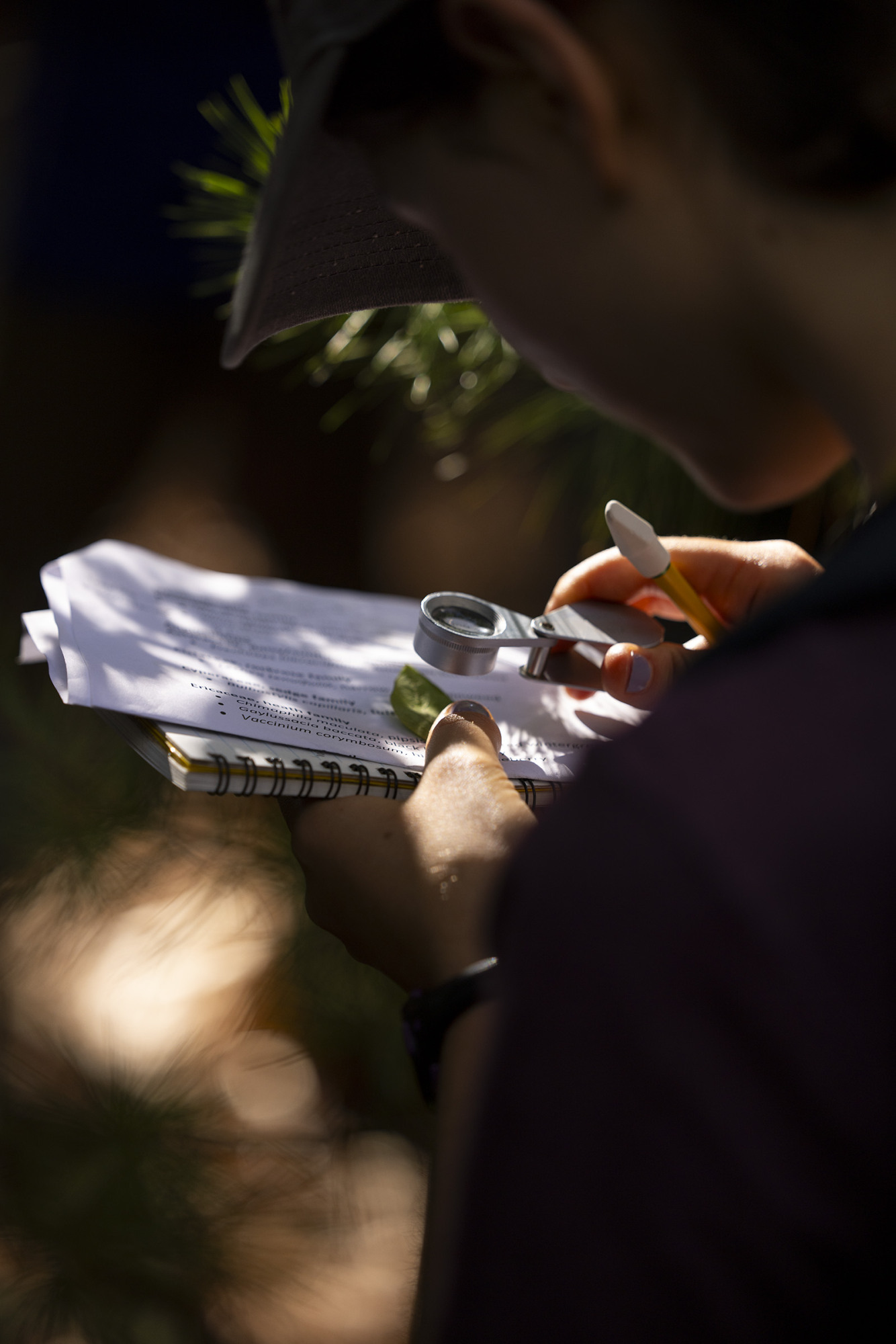
They progressed through a marsh and onto a Narragansett Bay beach, where students set out in pairs to collect plants. Kartzinel and teaching assistant Madeline JeBailey had scouted the site, and they'd found a surprise: a rare-in-Rhode Island plant, blooming on the beach.
"You will not collect this!" Kartzinel reminded students as they pressed in for a look.
Minutes later, a student exclaimed they'd found a beach rose, but upon closer inspection, it turned out to be wild sweet william. Still, a fun find.
"Science is so much more interesting when you're out in it - when you can pull plants out of the ground and look at their root structure," JeBailey said.
Brown students see grass every day as they stride across the College Green. The students taking the Rhode Island Flora class, however, have learned to really see the Poaceae - and they know Poaceae is the Latin name for common grasses. In this undergraduate biology course, one of the main goals, according to Kartzinel, is to help students develop an educated appreciation for the often-overlooked species that comprise the diverse flora of the Ocean State and to see how they fit into their environment.
"When you look at different habitats one after the other, you're able to notice differences and start to understand the features of a particular place, which helps inform you what's going on ecologically - for example, when you're near a saltwater marsh versus fresh water, or a broadleaf forest versus pine," Kartzinel said. "Living in a city in a built-up world, we're all so removed from our natural environments. Being able to go in the woods and find some aspect that's recognizable and familiar is really important to understanding where we are.


