
Beneath shallow coastal waters from Western Australia's southern coastline to the tropical lagoons of the Great Barrier Reef vast underwater meadows stretch quietly across the seafloor.
Most Australians will never see them and they rarely make headlines, but these seagrass meadows may be among the most important ecosystems on Earth.
Director of RMIT's Centre for Nature Positive Solutions, Professor Peter Macreadie, says they don't get anywhere near the attention they deserve.
"These underwater meadows are out of sight for most people, which is probably why they've been overlooked for so long," he says.
"But if you were designing the perfect coastal ecosystem - one that supports fisheries, protects shorelines, filters water and stores carbon - you'd end up with something that looks a lot like seagrass."
 Professor Peter Macreadie (centre) on a seagrass field trip. Credit: Leanna Crowley.
 A global ecosystem hiding in plain sight
Seagrasses occur in shallow coastal waters on every continent except Antarctica, forming extensive underwater meadows that support marine life and stabilise coastal environments.
Australia is a global stronghold for seagrass. The country supports roughly half of the world's seagrass species and some of the largest meadows ever recorded, including the vast seagrass landscapes of Shark Bay in Western Australia.
Northern Australia in particular is recognised as a global hotspot for seagrass diversity.
"Australia holds an extraordinary share of the planet's seagrass ecosystems," Macreadie says.
"We also carry a major responsibility for protecting them."
"These meadows are the ecological engine rooms of our coasts: they underpin fisheries, support biodiversity and help keep coastal waters healthy."
Globally, scientists recognise more than 60 species of seagrass, forming one of the ocean's most productive ecosystems.
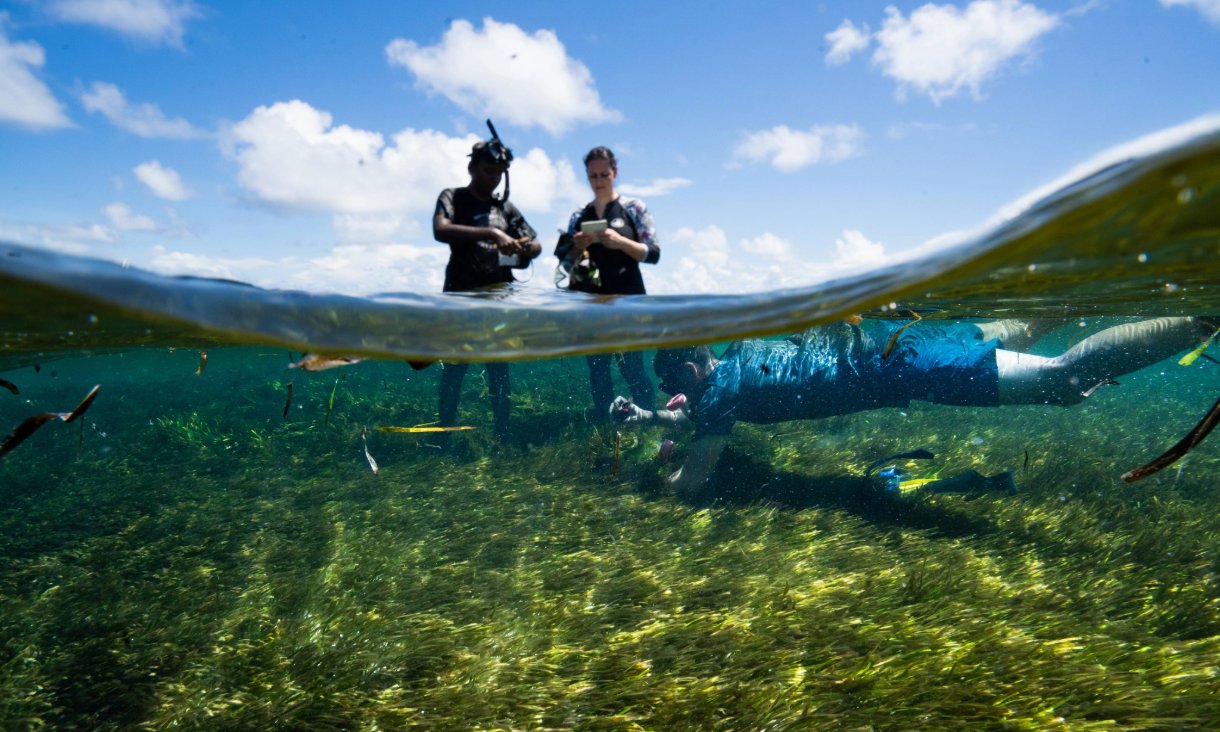 Centre for Nature Positive Solutions researchers surveying seagrass. Credit: Leanna Crowley.
 The nurseries of the sea
Seagrass meadows act as nursery habitat for many marine species.
Their dense leaves create shelter where juvenile fish, prawns and crabs can hide from predators while they mature.
Many species that support commercial and recreational fisheries depend on seagrass habitats during early life stages.
"When you lose seagrass, you're not just losing plants," Macreadie says. "You're losing the nursery grounds that sustain fisheries."
Seagrass meadows also support iconic wildlife. Green turtles feed on seagrass leaves, while dugongs depend heavily on seagrass meadows for food.
"These animals are sometimes described as the grazers of the sea," he says.
"Where you have healthy seagrass meadows, you often see healthy populations of turtles and dugongs."
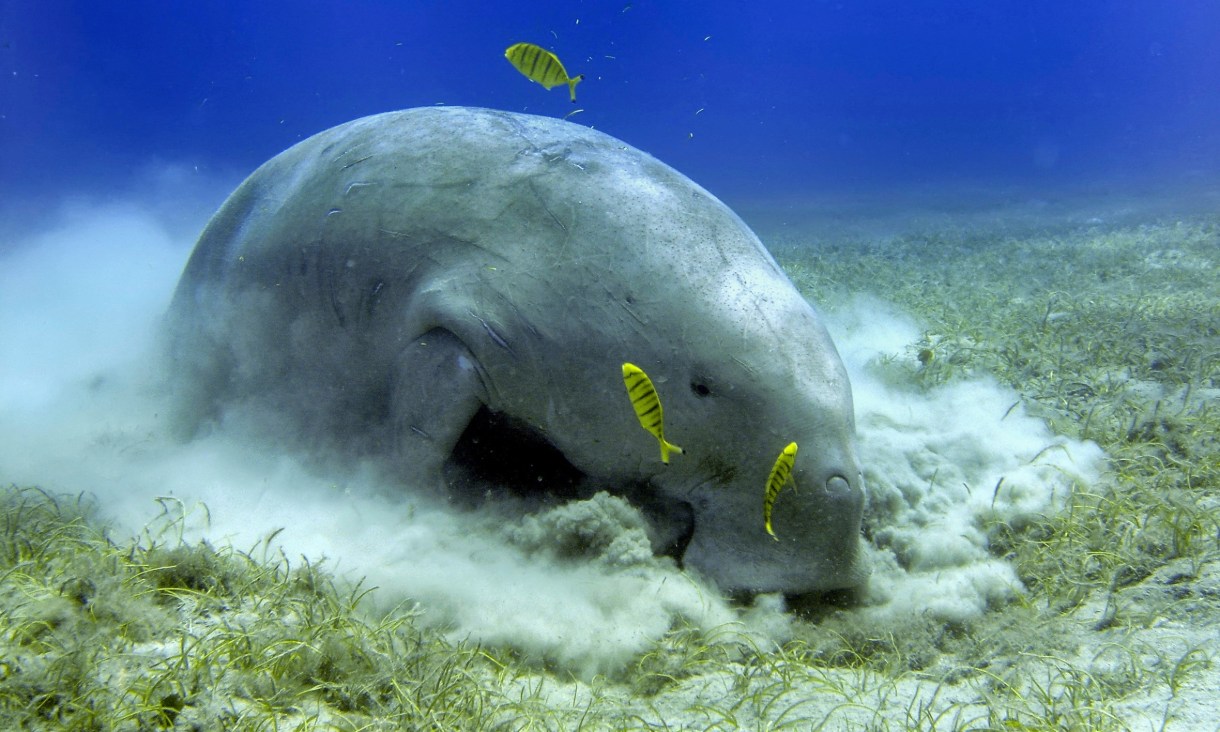 Dugongs - also klnown as 'sea cows' - eat almost exclusively seagrass and are the world's only strictly herbivorous marine mammal. Credit: Adobe Images.
 Natural coastal protection
Seagrass also plays a critical role in stabilising coastlines.
Its root and rhizome systems bind sediments together while the leaves slow water movement, helping to reduce erosion and keep coastal waters clearer.
In combination with coral reefs and mangroves, seagrass ecosystems can reduce wave energy and protect shorelines from storm impacts.
"In a world where we spend enormous sums building coastal defenses, it's easy to overlook the protection that natural ecosystems already provide," Macreadie says.
A powerful carbon sink
Seagrass ecosystems also play a significant role in climate regulation.
Like plants on land, seagrasses absorb carbon dioxide through photosynthesis. Much of this carbon becomes trapped in the sediments beneath the meadows, where it can remain stored for millennia.
"Seagrass ecosystems are among the most efficient natural carbon sinks on the planet," he says.
"They capture carbon and lock it away in coastal sediments for thousands of years."
Because of this ability, seagrass ecosystems are recognised as an important component of the world's blue carbon systems, alongside mangroves and salt marshes.
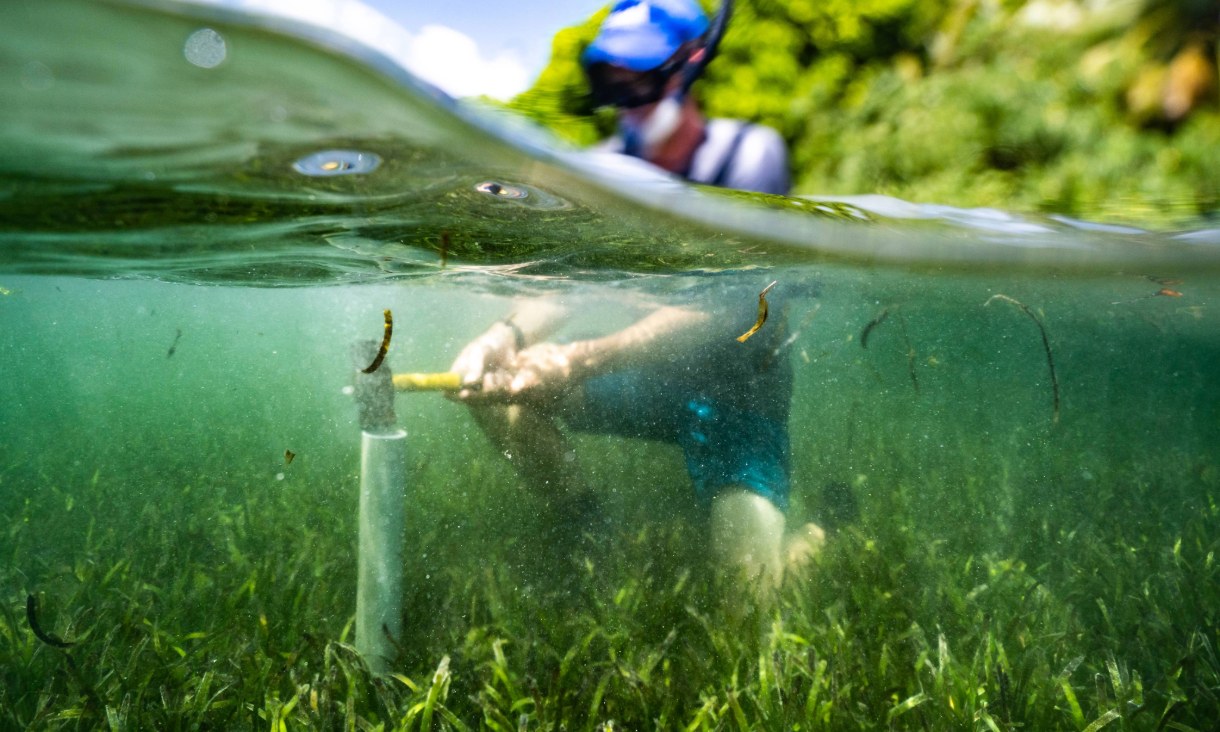 Professor Peter Macreadie measures carbon sequestration in the seagrass meadows. Credit: Leanna Crowley.
 A disappearing ecosystem
Despite their importance, seagrass ecosystems have declined in many regions around the world.
Coastal development, declining water quality, sediment runoff, dredging and climate change have all contributed to losses.
Scientists estimate that globally, seagrass meadows have been disappearing for decades, with significant declines documented across many coastal regions.
"These ecosystems are incredibly valuable, yet historically we've treated them as expendable," Macreadie says.
Turning the tide: seagrass as critical natural infrastructure
In encouraging news, when pressures are reduced, seagrass ecosystems can recover.
Improving water quality, protecting coastal habitats and restoring damaged areas have already helped seagrass recover in several regions.
"In places where we reduce pollution and protect habitat, seagrass can return," Macreadie explains. "That shows us these ecosystems are resilient if we give them the chance."
For Macreadie, the next step is recognising seagrass meadows as critical natural infrastructure.
"If we want resilient coastlines, healthy fisheries and meaningful climate action, protecting seagrass needs to be part of the solution. Seagrass might not be as famous as coral reefs, but its importance is enormous. These underwater meadows quietly support the health of our oceans and our coastlines."
Macreadie says there is no silver bullet.
"If seagrass is seen as conservation, it competes for limited public and philanthropic funding. Treat seagrass as infrastructure, and it becomes part of how we manage coasts, economies and risk."


