"What We Saw in Gaza" was the title of a seminar organised on 21 April by the Centre for Health Crises and the research group Global Disaster Medicine - Health Needs and Response. Researchers and healthcare professionals who had recently been working in humanitarian healthcare in Gaza, shared their experiences and answered the many questions posed by the engaged audience. The closing words - never to accept that a situation like this becomes normalised - echoed through the hall.
The centre and the research group, and in particular their expert coordinator and affiliated researcher Märit Halmin , an anaesthesiologist who herself have worked in Gaza recently, hosted the seminar to bring attention to the dire health care situation in Gaza, the consequences of the repeated attacks on health care, and the consequences of destroying a health care system. Attacks on health care and the threat of normalising it, disregarding international laws on the subject, is an issue that they have raised repeatedly, often in collaboration with others, in relation to various conflicts over the last few years.
In this seminar, people who work, or have recently worked, in Gaza, spoke about what they have seen. Over 85 people, many of them students at KI, gathered in the Andreas Vesalius lecture hall to listen.
Attacks on health care counted in their hundreds
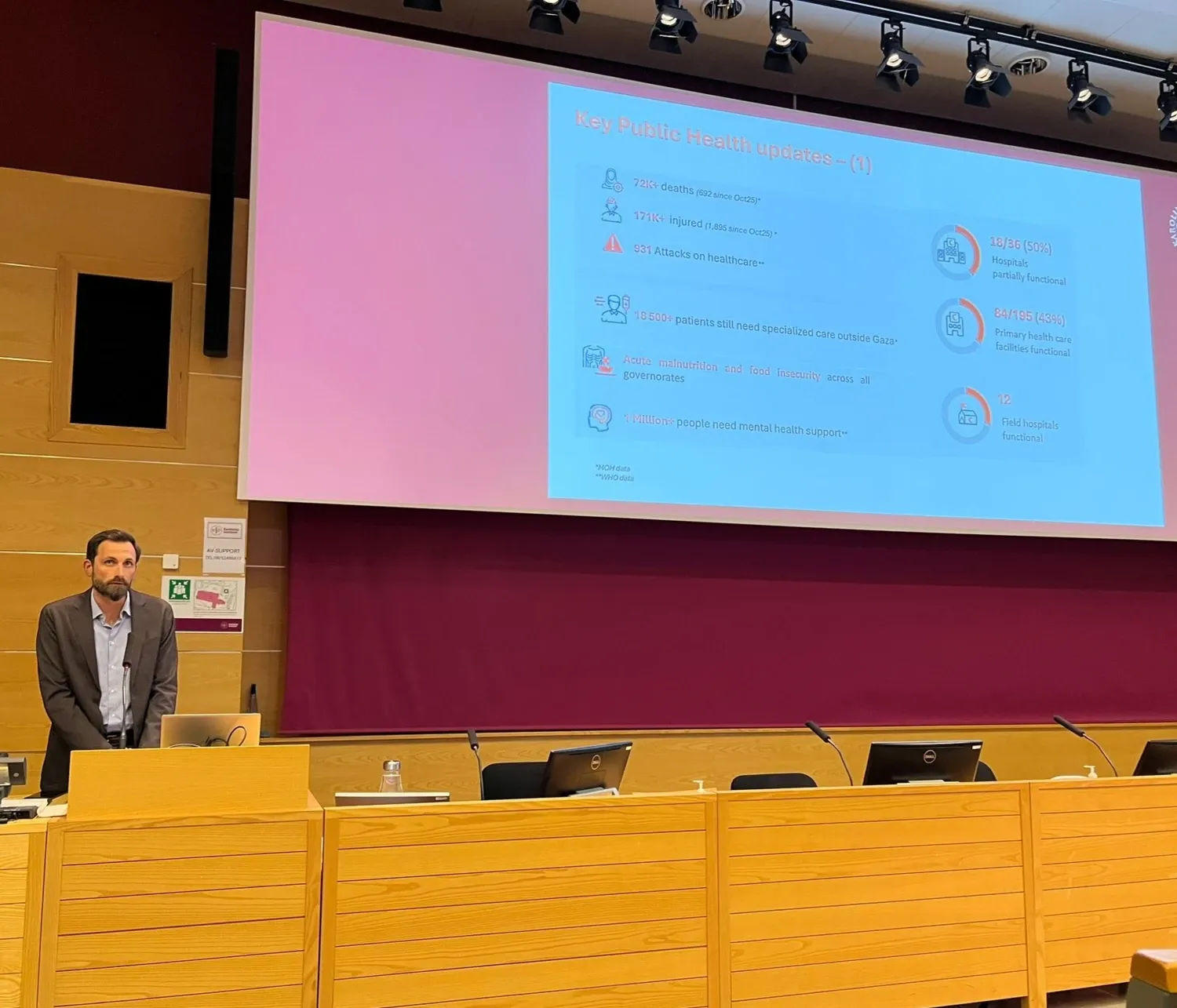
Luca Pigozzi , an emergency medicine physician, has worked as the WHO's Emergency Medical Team coordinator and then team leader in Gaza since 2024. He had come from Gaza to KI to lecture and participate in the seminar. He is currently also a PhD candidate with the University of Oviedo, and before working in Gaza, he has been working in complex emergencies around the world for the last decade. He described a health care system, and in particular the people who work in it, that has been put under unprecedented strain, but at the same time refuses to give in.
In his presentation, he highlighted the repeated attacks on health care in Gaza. According to official WHO figures, there have been 931 attacks on health care, resulting in over 2000 directly injured.
- Attacks on health care are a major obstacle to delivering health care along with the lack of entry points for aid and the fragile ceasefire, that is also repeatedly violated, says Luca.
Attacks have significant consequences
The attacks take not just a direct toll on health care - in Gaza for example, over 300 health care workers and 70 patients have been detained - but also puts health care staff under immense pressure. Something that the other two presenters at the seminar, Martina Gustavsson and Buster Sandgren, have witnessed first-hand.
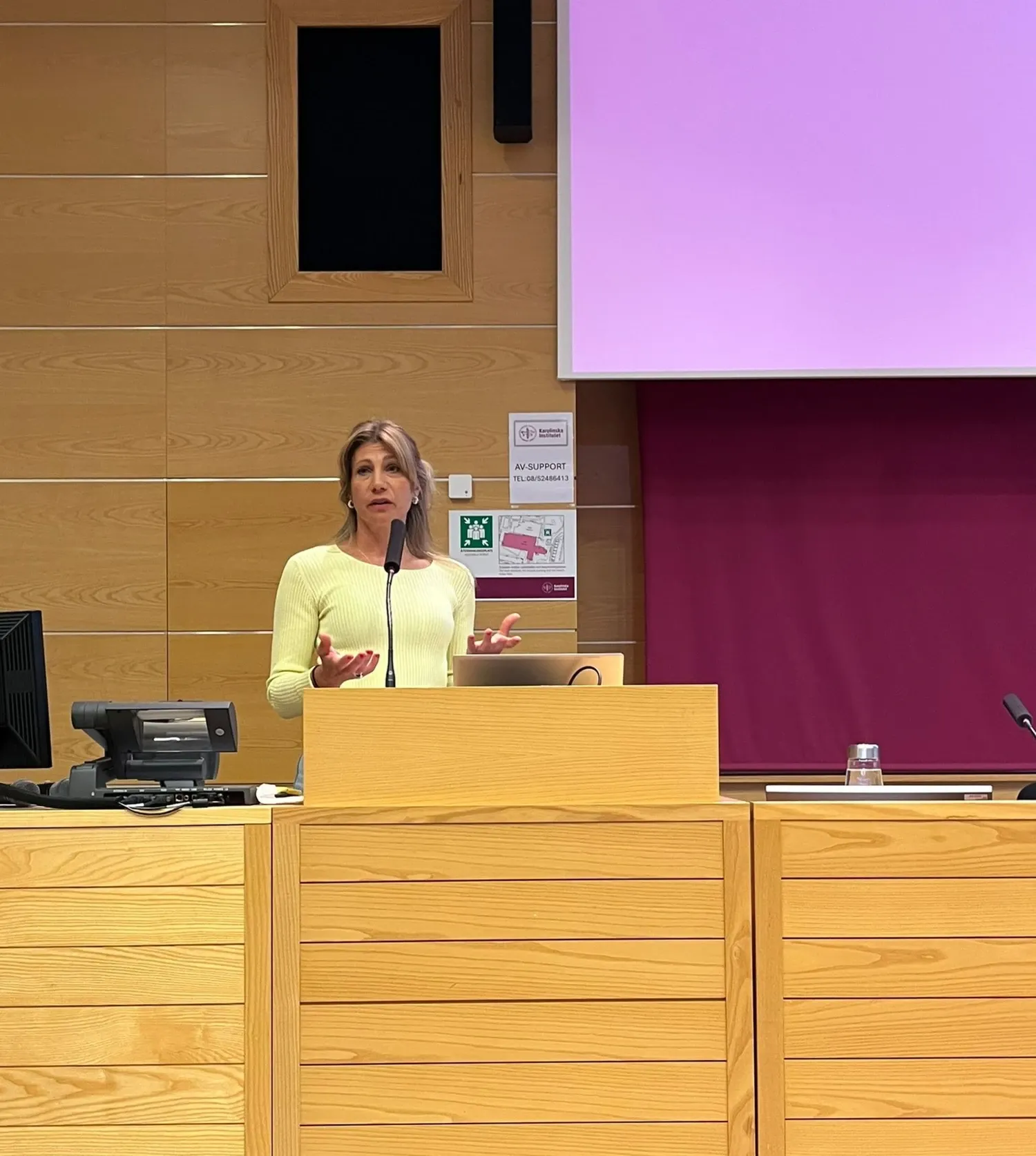
Martina Gustavsson is a nurse, currently working as a postdoctoral researcher at the Department of Global Public Health, who worked closely with local staff during her time in Gaza over Christmas and New Year. She highlighted how the conflict and attacks on health care had affected her Palestinian colleagues:
- Without health care workers, you can't do anything. But we need to be aware of the enormous pressure and daily ethical challenges they work under, due to the constant shortages and restraints on healthcare, but also because they themselves were dealing with their personal experiences of the war.
Important to not normalise
Buster Sandgren, orthopaedic surgeon, who also worked in Gaza over Christmas and New Year 2025, has worked in the region previously and highlighted the stark contrast between Gaza's well-functioning health care system, with highly skilled staff, that existed before the war, to the state of destruction that the last years of attacks have led to.
After the presentations, the seminar concluded with an engaging Q&A session where topics ranged from negotiating access to the need to prioritise staff, not just stuff, in preparedness and management of a crisis such as this. The three speakers emphasised that it is important not to normalise the destruction of, and the attacks on, the healthcare system that they have witnessed in Gaza.