Trying to untangle a knot in a mess of strings can be frustrating and time-consuming. But not so for molecular machines - molecules that convert chemical energy into mechanical work and motion. Machines from the AAA+ family, which exist in the cells of all living organisms from bacteria to humans, can, among their many functions, recognize misfolded protein chains and swiftly unravel them.
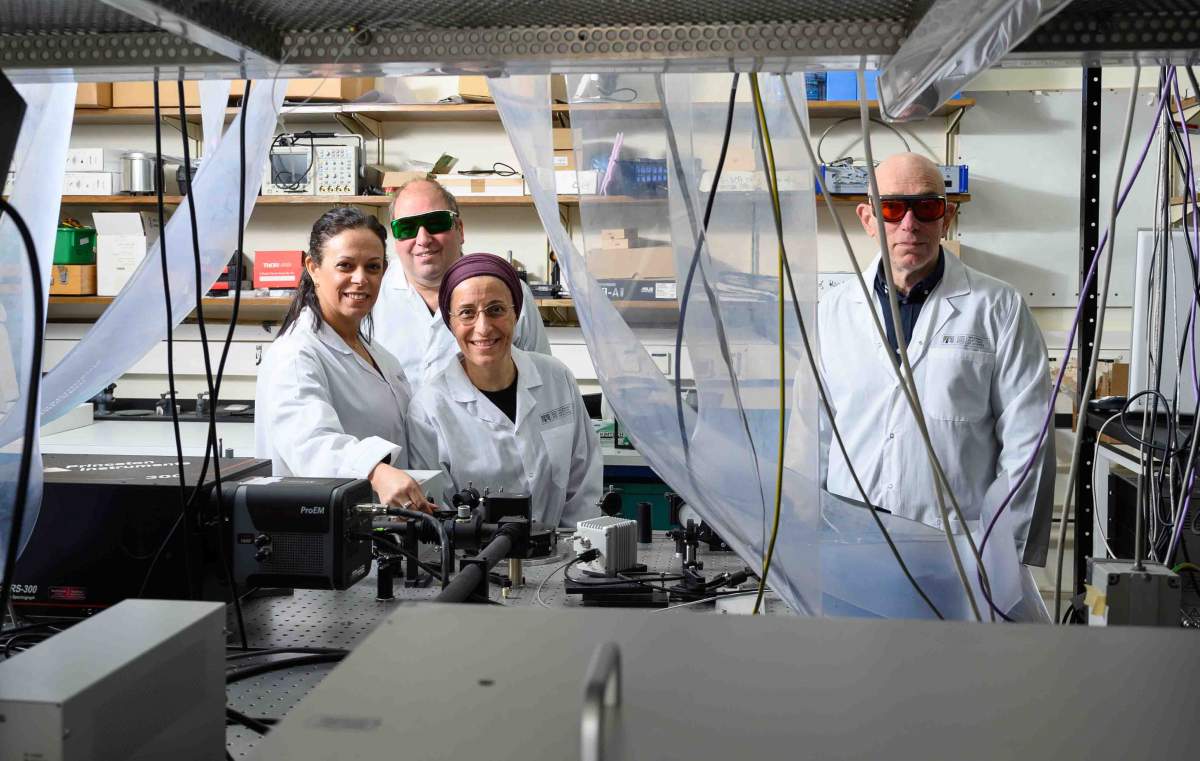
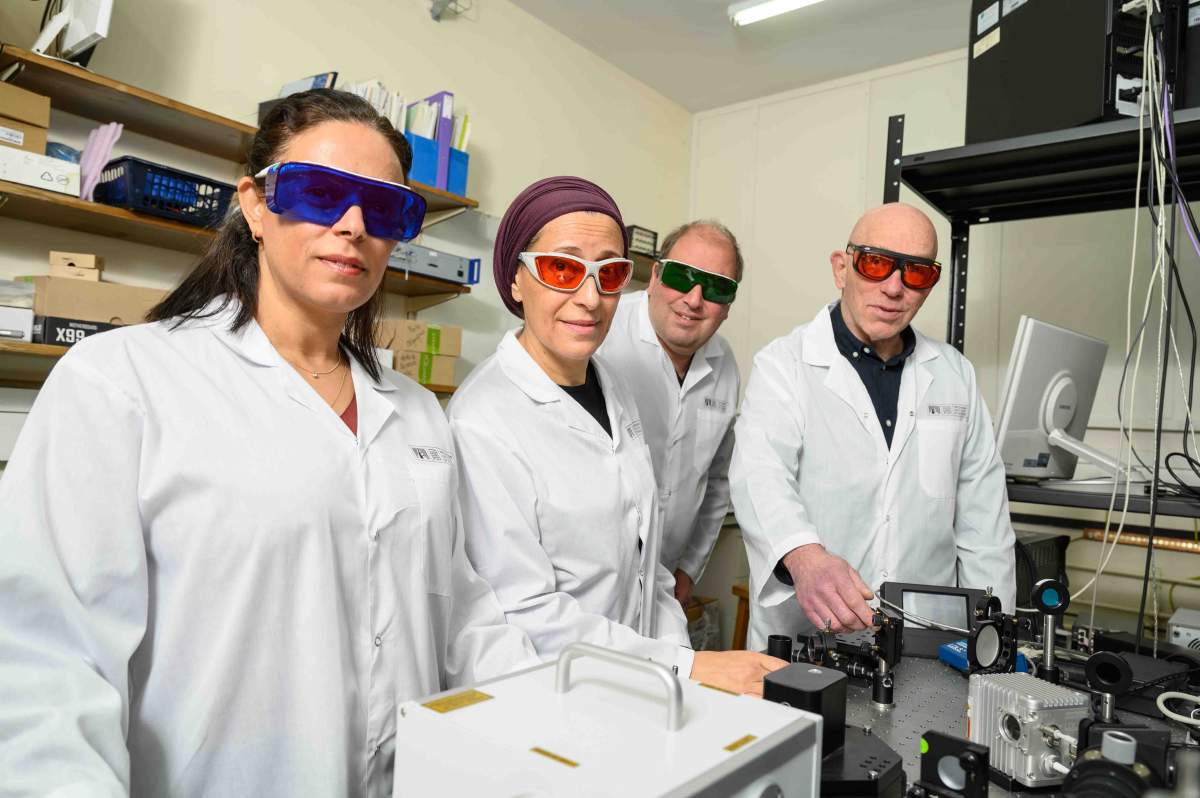
Researchers in the laboratory of Prof. Gilad Haran at the Weizmann Institute of Science have deciphered this sophisticated mechanism, which is both fast and remarkably efficient. Their findings, recently published in Nature Communications, reveal how cells perform quality control on their proteins, and may help explain why this control fails in diseases such as neurodegeneration and cancer. They may also provide inspiration for the development of highly efficient artificial molecular machines.
Over the past decade, scientists have succeeded in imaging the three-dimensional structures of the tiny AAA+ machines by freezing them and examining them under electron microscopes. They found that each machine consists of six protein subunits arranged in a ring, forming a central channel. When a protein chain in the cell becomes entangled or misfolded, these machines come to the rescue, unraveling the chain by threading it through the channel.
But what force pulls the chain through? Until now, it was unclear how a tiny molecular machine converts chemical energy within the cell into an effective mechanical pulling action. The prevailing hypothesis proposed a "hand-over-hand" mechanism: In each cycle, the machine would use a burst of energy to thrust one "arm" (a subunit) forward, grasp the protein chain and pull it through, repeating the cycle until the entire chain had passed through. However, this model did not align with several biophysical observations reported in scientific literature.
To address this question, the researchers - led by Dr. Remi Casier from Haran's lab in Weizmann's Chemical and Biological Physics Department - developed a method that allowed them to monitor, in real time rather than through frozen snapshots, the passage of a protein chain through the molecular machine. They used fluorescent sensors attached to the milk protein casein and to the AAA+ machine that processes it. A green sensor was attached to the casein, an orange sensor to the machine's entrance and a red sensor to its exit.
In 2016, the Nobel Prize in Chemistry was awarded for the development of artificial molecular machines. The new findings may enable engineers to improve the design of such machines
When the sensors were far apart, only the green fluorescence was visible; but as the protein moved through the channel, it transferred energy to the orange or red sensor. By measuring the intensity of each color, the researchers could determine precisely where the protein was at any given moment. To ensure repeated encounters between the protein and the machine, the researchers confined them within a tiny lipid bubble (a liposome) that prevented them from drifting out, while allowing the entrance of ATP molecules, the "fuel" used by most molecular machines.

"The labeled protein segment shot through the channel at tremendous speed, within just a few milliseconds - despite the fact that it takes the machine more than half a second to break down a single ATP molecule and extract energy from it," says Haran. "This revealed just how energy-efficient the machine is - and made the 'hand-over-hand' model, which relies on energy bursts and big leaps, less plausible. We had to rethink the entire mechanism."
A molecular revolving door
To better understand the role of ATP in the machine's activity, the researchers performed two experiments. In the first, they replaced ATP with similarly structured but largely inactive molecules and saw that movement within the channel became directionless. In the second experiment, they gradually reduced ATP concentration without eliminating it entirely. They observed a dramatic drop in the number of threading events, but to their surprise, the speed of each threading hardly changed.
"We discovered that the machine uses energy to initiate the threading process and maintain directional motion, but not to forcibly pull the chain or accelerate its movement," explains Haran. "We propose that the molecular machine operates like a revolving door. When the protein enters, it can attempt to move in any direction. But the machine is structured so that in the presence of ATP, only movement in one direction results in forward motion, while attempts to move in the opposite direction are blocked." Because proteins are naturally in constant random motion, this mechanism - known as a Brownian motor, named after Robert Brown, who was the first to observe the random motion of small particles under a microscope - is highly energy-efficient.
"Based on these findings and previous research, we can now speculate in detail about what happens inside the molecular machine," Haran adds. "Loops in the channel wall protrude into its interior and, like the wings of a revolving door, determine the preferred direction of movement. The machine uses energy to ensure that these loops oscillate in the correct direction."
In the final stage of the study, the researchers focused on failure events, in which threading through the channel was not completed. "These events lasted a relatively long time," says Haran. "We found that in their course, the protein moved back and forth within the channel until it mistakenly exited from the same end where it had entered. This indicates that there are no large energy fluctuations or powerful forces inside the channel, but rather a subtle motion-guiding mechanism that is occasionally prone to error."
"In this new study, we were able to glimpse the inner workings of an important molecular machine that has been operating in cells for billions of years," says Haran. "In many disease processes, including neurodegeneration and cancer, the quality control of cellular proteins fails, leading to the accumulation of misfolded proteins. Understanding the control mechanisms is crucial for discovering why this happens and how it might be prevented. Moreover, AAA+ machines perform many roles beyond quality control: They transport proteins and genetic material and move them across membranes, and we hypothesize that the Brownian mechanism we identified drives these processes as well."

Science Numbers
The channel used by the ClpB molecular machine from the AAA+ family is only about 13 nanometers long, but it can efficiently untangle protein chains that are much longer than that.
In 2016, the Nobel Prize in Chemistry was awarded for the development of artificial molecular machines, such as a tiny elevator, an artificial muscle and nano-cars. The new Weizmann Institute findings may enable engineers to improve the design of such machines.
"The energy efficiency of the Brownian motor could allow a major leap forward in the development of artificial molecular machines," says Haran. "In the future, such machines may carry out practical tasks and be integrated into engines and computers."
Also participating in the study were Drs. Dorit Levy and Inbal Riven of Weizmann's Chemical and Biological Physics Department; and Dr. Yoav Barak of the Institute's Chemical Research Support Department.
Prof. Gilad Haran is the incumbent of the Hilda Pomeraniec Memorial Professorial Chair. His research is supported by the Ilse Katz Institute for Material Sciences and Magnetic Resonance Research.