
Thirty teams, fourteen countries and six solutions heading to the Youth Food Lab. The Food Systems Innovation Challenge 2026 reached its finale in Wageningen, but the work continues.
Can cactus become a new source of food? Can jute help protect a fishpond? And can agricultural waste help farmers grow healthier crops?
For six months, 164 students from 16 universities worked on questions like these through the challenge, jointly organised by Wageningen University & Research and Netherlands Food Partnership (NFP). They tested ideas, listened to farmers and changed course when something didn't work. With more teams and universities joining than in previous editions, this year's Food Systems Innovation Challenge brought its growing community together in Wageningen for one packed week.
There were research visits, from algae facilities to the horticulture centre in Bleiswijk, a trip to Amsterdam, and cultural evenings where teams shared a piece of home. But one moment was on everyone's mind: the Grand Finals.
Behind that week was a wider partnership: the Foundation for Food & Agriculture Research (FFAR), University Fund Wageningen (UFW) and Wageningen Ambassadors supported the challenge, with the Global Network of Lighthouse Farms as knowledge partner. In Vietnam, the challenge also partnered with Nuffic Southeast Asia's Empower Youth4Food campaign.
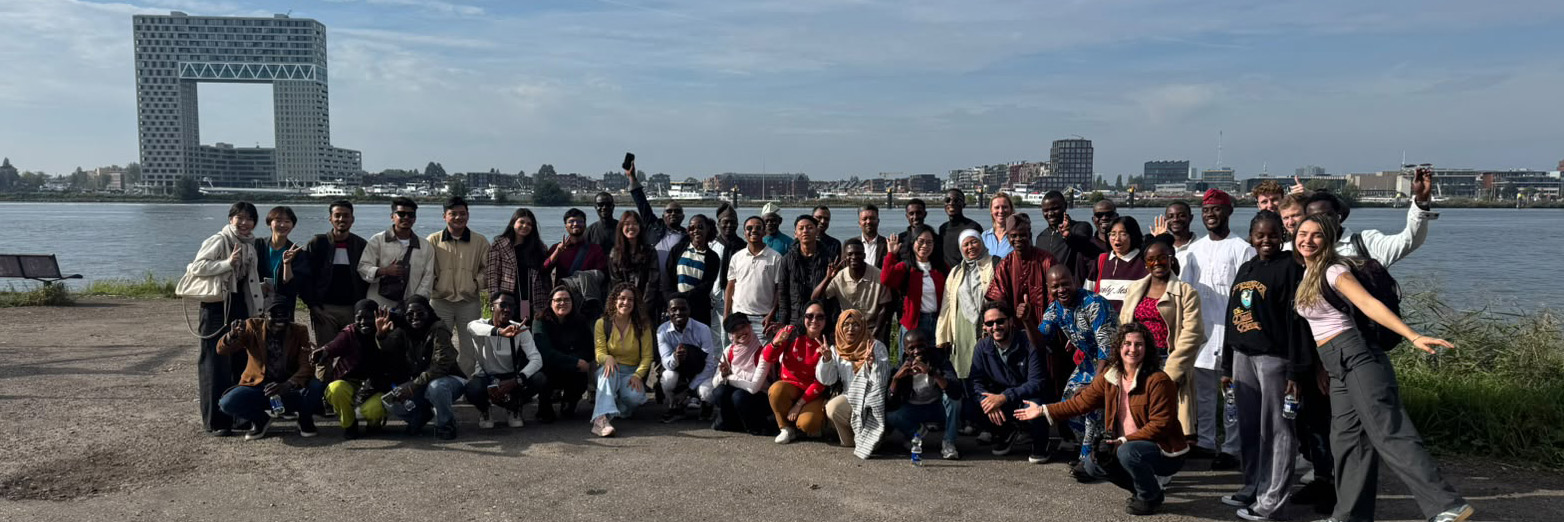
Challenge participants & coordinators visiting Amsterdam
Six teams, one next step
On 29 September at Omnia, the teams faced the jury in the Dragon's Den. Months of work had to stand up to questions about their solutions, their business plans and the people they hoped to reach.
Then the pitches were over. The jury had made its decision. All that remained was to hear the names.
The Top 3:
- Eureka | Ethiopia: Turning cactus into products such as juice, jam and fibre-rich foods. The jury saw a low-cost solution with strong market potential and a clear connection to climate resilience.
- ABEL | South Korea: Identifying spoiled meat to help reduce food waste. Its focused approach, research and plans to scale stood out.
- FertiSoyaPlus | Benin: Turning soy whey and poultry manure into Croptonic, an insect-repellent biofertiliser designed to nourish crops and save farmers time.
Completing the Top 6:
- BioCoat | Uganda: Using a cassava-based coating to keep tomatoes fresh for longer.
- Golden Loop | Bangladesh: Using jute-based materials to prevent fishpond erosion, alongside biochar-filled bamboo structures that improve water quality and support natural fish feed.
- SoilPulseAI | Ghana: Combining real-time soil monitoring with training to help farmers decide what to grow and how to use fertilisers.
The teams were assessed by an international jury: Dhanush Dinesh (Clim-Eat), Emil John Cabrera (SEARCA), Maria Kolesina (FAO), Pascal Murasira (African Food Fellowship), Sharmila Pun (Welthungerhilfe), Moussa Bathily (Delphy International), Jean Muthamia-Mwenda (SNV), Jacobine Mannak (GNT Group) and Bas Evers (Rabo Foundation).
"We need to listen to the people we're designing for"
For FertiSoyaPlus team member Kévin Hounnou, the route to the Top 3 involved going back to the people who would use the product. Farmers' experience helped the team turn its initial formulation into something better suited to their needs.
Listening to farmers helped the team refine Croptonic and gave Kévin a lesson he will take into the next stage: "As researchers and designers, we need to listen to the people we're designing for. That's how we develop solutions that address their needs."
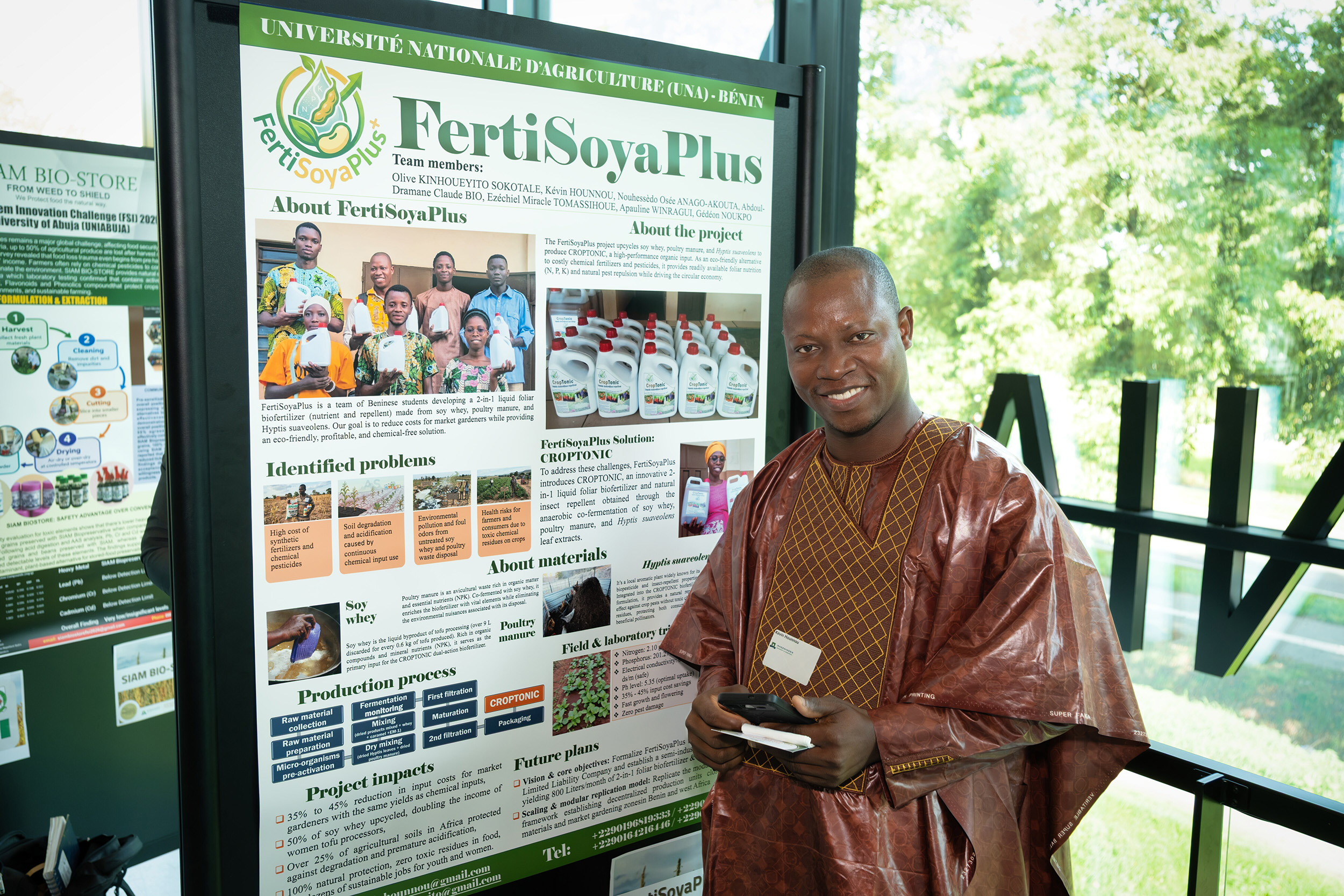
Kévin Hounnou presenting FertiSoyaPlus during the Info Market
All six teams now continue in the Youth Food Lab, jointly established and run by Wageningen University & Research, the World Food Forum (WFF) and IAAS. Kévin hopes it will help FertiSoyaPlus build the business skills needed to establish a company and bring its product to farmers.
After six months of hard work, would he take a little time to celebrate before getting back to the project? Kévin's answer was clear: "We'll keep working. We're not waiting for the Youth Food Lab to get started."
Beyond the finals
Some of the challenge's most interesting outcomes never make it onto an awards list. An introduction becomes a partnership, a student idea opens up a new research question, or a project reaches an audience far beyond its university. Here are a few of the collaborations and stories that have grown along the way.
Combining soil and crop intelligence
For Ghana's SoilPulseAI, an introduction through the challenge led to a long-term collaboration with DeepLeaf, bringing together the team's soil-monitoring technology and the company's crop intelligence. The partnership has helped the students explore how satellite data could strengthen their solution, while joint applications are opening up opportunities to develop it further.
Starting with cocoa farmers in Ghana, the partners hope to expand into other crops and sectors. For team member Timothy Dzedey, the ambition already stretches beyond the competition: "The challenge has been a stepping stone for us, a place to grow. Now we're looking at how we can build something bigger together."
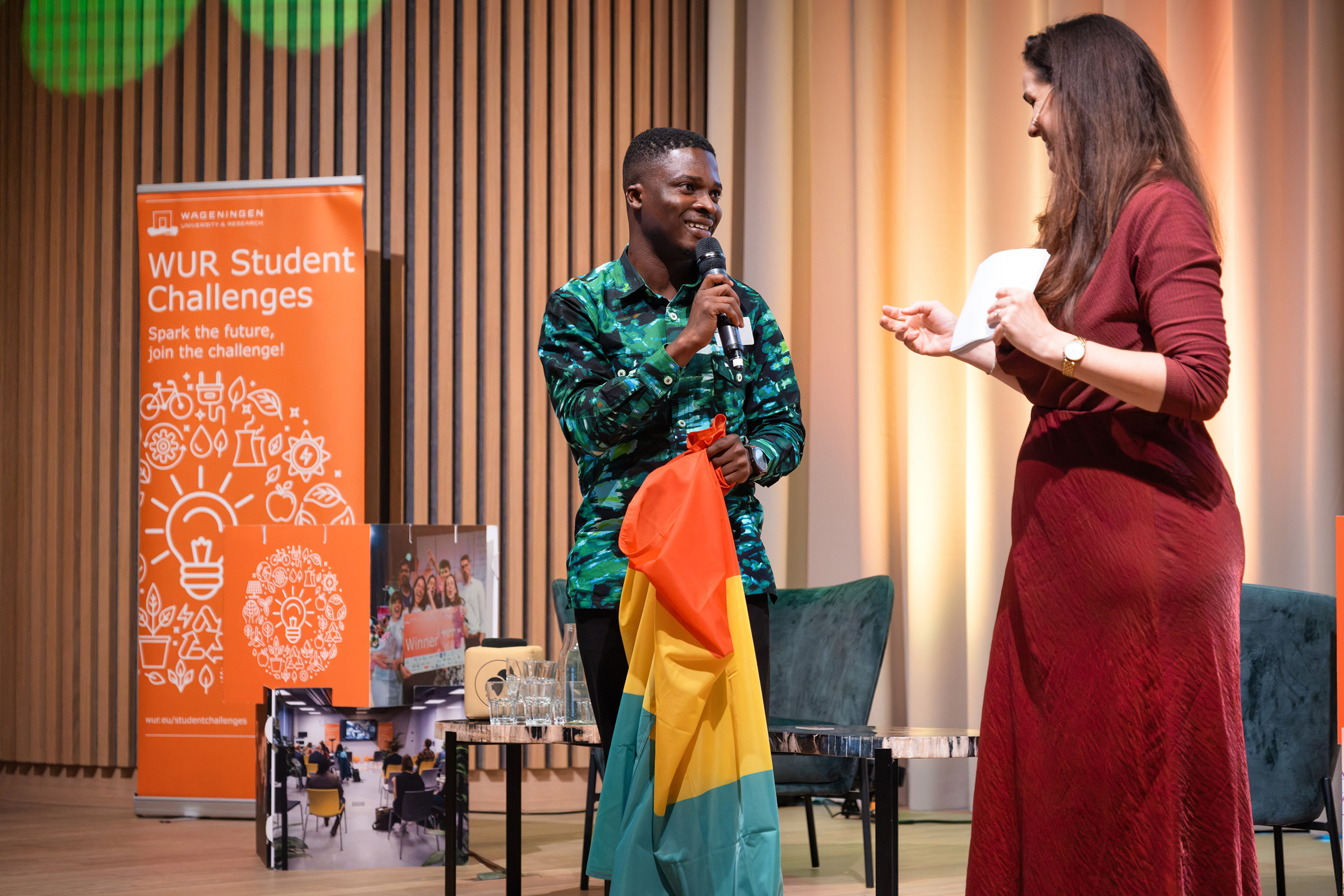
Timothy Dzedey on stage during the Grand Finals
A fresh set of minds on a practical problem
How do you turn a liquid coating that keeps tomatoes fresh into a powder that is affordable, easy to store and ready to mix with water? That was one of the questions taken up by WUR students through the Case Studies Product Quality course. In a pilot connecting coursework with the challenge, seven FSI teams submitted research questions about hurdles they were facing, giving students real problems to investigate and the teams fresh input on their solutions. The collaboration began in September, and at the Grand Final, the students got to meet the teams behind the questions they had been working on.
A whole community behind one team
When Luisa Coelho from Brazil's Kindred Ora asked her community to help share the team's post featured in the competition for the Audience Award, she didn't expect a call from a television reporter. Soon, the team's story was on Brazilian national television, and Luisa had become something of a local star. In her city of around 30,000 inhabitants, people stopped her in the street to wish her luck for the Grand Finals. That support has given her fresh motivation: she is now thinking about how to bring the team's solution into her neighbours' homes. We'll be following what she does next. With a community like that behind her, there is plenty to look forward to.


