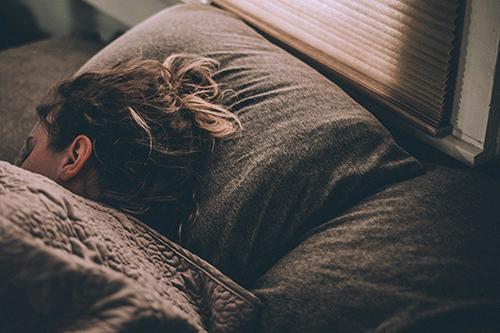
Early school starts and weekend lie ins could be contributing to anxiety in teenagers, a new study has found.
Researchers found that 'social jet lag' - different sleep timings between weekdays and weekends, had a small but consistent effect across twelve studies encompassing over 230,000 participants.
The findings are published in the journal Sleep Medicine Reviews .
We know how changing time zones can impact our body clock, but changing social schedules - dictated by school, work and other social commitments, could have a similar effect.
"During puberty, the body's internal clock usually shifts back by a few hours, meaning teenagers naturally don't start feeling sleepy until later and would ideally wake up later too," Dr Sarah Chellappa , a co-author on the paper from the University of Southampton.
"But teenagers also face demands on their time, from early school starts to socialising online, which can rob them of sleep, especially during the week."
"Many teenagers 'lie in' on the weekends to catch up on missed sleep, but this mismatch between weekday and weekend sleep schedules can worsen social jet lag."
Researchers at the University of Southampton wanted to find out how social jet lag might be linked to anxiety in teenagers - one of the most prominent mental health problems affecting this age group.
The team conducted a systematic review bringing together 18 studies and then combined the results of 12 similar studies in a meta-analysis.
They found a small correlation indicating that teens experiencing greater levels of social jet lag are more likely to report higher levels of anxiety and vice versa. While the association was small, the overall pattern of findings consistently indicated this relationship.
"The findings highlight the importance of maintaining regular bedtimes and wake times throughout the week, even at weekends," says Dr Hannah Ravenhall, lead author of the paper, who undertook the research as part of her doctorate at the University of Southampton.
"It's important to look beyond what individuals can do alone and recognise how broader societal systems can influence sleep. This starts with acknowledging the biological sleep changes that occur in adolescence, advocating for their sleep needs, and reconsidering secondary school start times to support young people's wellbeing."
The research team also included Dr Alessio Bellato and Prof Matthew Garner from the University of Southampton.