
Key points
- Each year the Australian Museum Eureka Prizes award excellence in science, research and innovation.
- CSIRO researchers are part of three teams recognised as finalists in this year's awards.
- They have been recognised for societal impact in science and environmental research.
AI doesn't choose who to include or exclude; we do

Artificial intelligence (AI) systems are increasingly shaping decisions in employment, healthcare and public services, but many AI systems reinforce social inequalities when diversity and inclusion are not explicitly designed into them. Research has shown that up to 47 per cent of all documented AI incidents involve diversity and inclusion failures causing harms, such as financial loss, psychological distress, wrongful arrest and unequal access to employment and healthcare.
The problem is not a lack of ethical principles, but the absence of practical tools and guidance to operationalise them.
CSIRO researchers are developing tools that help organisations build AI from the ground up that's inclusive, transparent and equitable by combining technical expertise with deeper insights from the social sciences to address bias.
2026 Eureka Prize finalists recognised for Societal Impact in Science, Professor Didar Zowghi and Dr Muneera Bano, have pioneered a visionary approach where diversity and inclusion in AI is treated as an engineering problem.
Incorporating diversity and inclusion considerations at the outset enables software engineers to develop and deploy AI systems that are inclusive by design and avoid addressing bias and harms retrospectively.
Professor Zowghi said selection of her team's work reflected a "growing recognition that the future of AI will be defined not only by what it can do, but by equity and the diversity of the people it is designed to serve."
"Leading the vision for Diversity and Inclusion in AI research has been one of the most exciting challenges of my career," she said. "Our ambition was to make inclusive AI an ethical safeguard, a framework for justice, and an engineering practice, not simply an aspiration."
Dr Muneera Bano said: "AI doesn't choose who to include or exclude; we do."
"Every dataset, every requirement and every design decision is a human choice. I hope this recognition encourages more people to build AI that reflects the diversity of the communities it serves."
Marine heatwave forecasts give advance warning of coral bleaching, fishery impacts and aquaculture risks
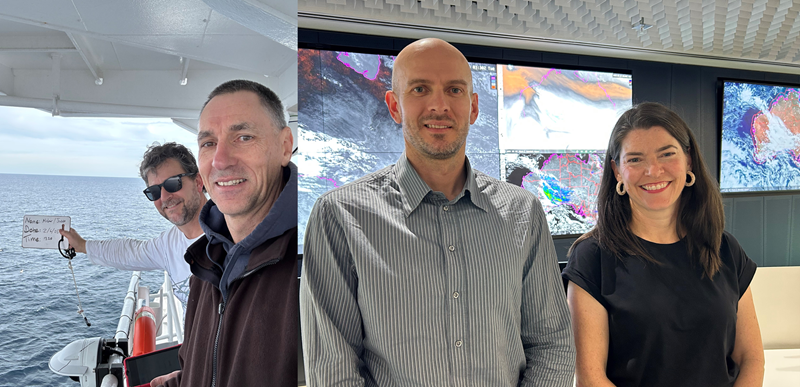
Marine heatwaves are a well-established cause of coral bleaching. They also contribute to biological disruptions affecting marine species, ecosystems and coastal communities - fish kills, species migrating out of their usual range, and extra pressure on endangered species.
Finalists in the 2026 NSW Department of Climate Change, Energy, the Environment and Water Eureka Prize for Environmental Research, the CSIRO-Bureau of Meteorology team has developed Australia's first operational long-range forecasts for unusually warm ocean temperatures.
The forecasts provide up to four months' advance warning of ocean temperature extremes, known as marine heatwaves. Forecasts of the likelihood and location of marine heatwaves give marine industries, conservation managers and coastal communities weeks to months of warning, helping them prepare early and protect vulnerable species and ecosystems.https://www.bom.gov.au/climate/ocean/long-range-forecasts/?variable=ssta®ion=AUS
Dr Hobday said once-rare marine heatwaves now occur with alarming regularity.
"However, marine heatwave forecasting provides the opportunity to develop rapid responses before events even occur," Dr Hobday said.
The long-range marine heatwave outlooks are now a regular fixture over the Australian summer with forecasts made available publicly since the 2025-26 summer season. They are available on the Bureau of Meteorology website. Following the release of these forecasts, most States have now developed response plans, which set out the actions to be taken when an event is forecast.
"Over the past five years, this project has shown how a strong relationship between CSIRO and the Bureau of Meteorology (BOM) can result in world-leading scientific breakthroughs," Dr Hobday said.
"But it's the connection we developed with the forecast users that has created the real-world impact and is also helping the long-range game – adapting to climate change."
Protecting Australia's Waterways Through Real-Time Monitoring
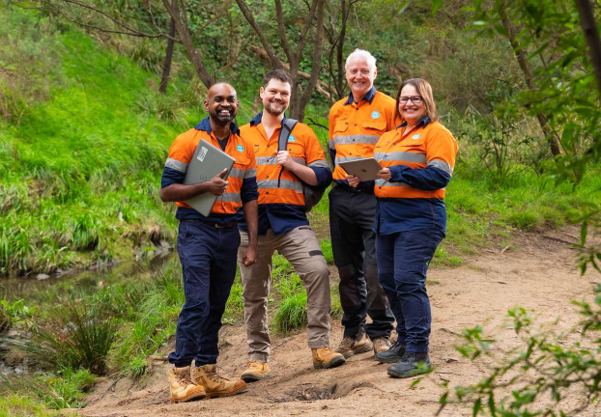
Water is one of Australia's most precious resources supporting communities, ecosystems, agriculture, and industry. Protecting it depends on understanding what is happening beneath the surface -in groundwater systems, waterways, wastewater streams, tailings dams and other complex environments.
Traditional water quality monitoring often relies on periodic sampling and laboratory analysis, providing only snapshots of conditions and potentially missing important changes between sampling events. Monitoring can also be difficult in remote, hazardous or industrial environments, where frequent site visits are costly, challenging, or unsafe.
The Vesi™ Field Innovation and Environmental Monitoring Team, part of the Sensor Development Team in CSIRO's Mineral Resources Research Unit, has spent the past four years deploying and validating a new generation of water quality monitoring technology across Australia. Working closely with industry and water utility partners, the team has demonstrated Vesi™ in challenging environments including acid mine drainage systems, groundwater aquifers, wastewater infrastructure and mining operations.
Finalists in the 2026 NSW Department of Climate Change, Energy, the Environment and Water Eureka Prize for Environmental Research, the team has shown how continuous, real-time environmental monitoring can help identify water quality risks earlier and support faster, more informed management decisions.
At the heart of Vesi™ is a patented solid-state reference electrode that enables reliable electrochemical sensing in environments where conventional sensors often fail. This breakthrough has enabled the development of a rugged, field-deployable monitoring platform capable of operating for extended periods with significantly reduced maintenance and calibration requirements.
Dr Krishnan Murugappan said: "Vesi™ helps turn water monitoring from a delayed snapshot into a real-time early warning system, giving industries and water managers the information they need to act sooner and better protect water resources."
By enabling long-term monitoring in environments that have traditionally been difficult to observe, the technology helps operators detect changes earlier, reduce environmental and operational risks, and improve protection of waterways, aquifers and ecosystems.


