
The Universitat Autònoma de Barcelona (UAB) for the first time has detected the presence of the spring mountain butterfly (Erebia epistygne), a species under threat of extinction in Catalonia, under the electricity transmission lines of Red Eléctrica, Spain's transmission system operator.
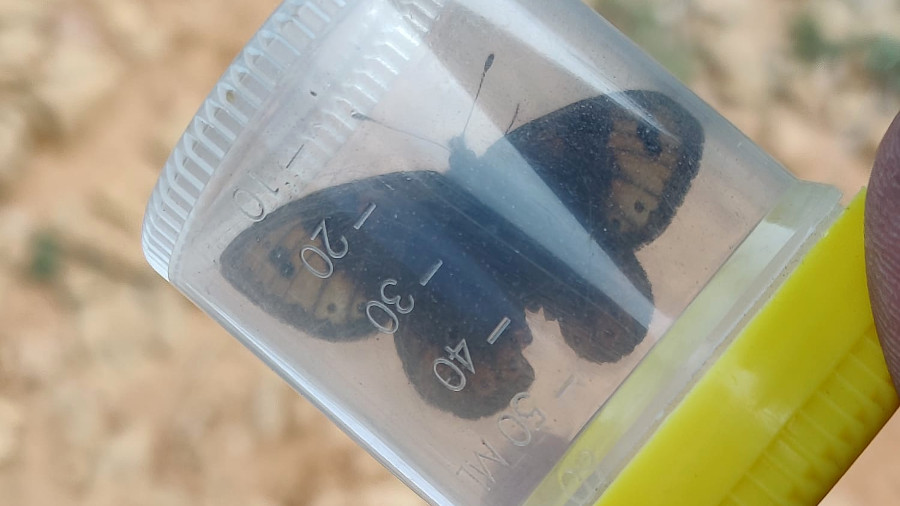
The discovery was made during the third phase of "Naturaleza en Red", a joint research project between the UAB and Redeia, through its subsidiary Red Eléctrica, which since 2020 has been studying the role played by safety corridors beneath power lines as safe havens for biodiversity. This involves analysing the flora and fauna present in these environments, assessing the greatest impact of forest management, and mapping the sections of greatest environmental interest.
Red Eléctrica's collaboration with the UAB has made it possible to identify this butterfly, which is mainly located in mountainous areas of Catalonia. As a result of the abandonment of traditional livestock practices, which have favoured the expansion of forest and scrub, this species has been exposed in recent decades to the loss and fragmentation of open habitats, which has caused a notable decline in its population.
The presence of this species beneath high-voltage power lines is a further example of the ecological value that such managed areas can offer, providing a safe haven for numerous species of flora and fauna typical of open habitats, which are becoming increasingly scarce.
Laura Quintana del Val, director of sustainability at Redeia, points out that: "With Naturaleza en Red we demonstrate that electrical infrastructures can generate opportunities for biodiversity when they are managed with scientific criteria. The continuity of this agreement allows us to continue expanding the knowledge about these ecological corridors, as well as the species inhabiting them, and transfer it to specific conservation actions through our Comprehensive Impact Strategy."
Expanding scientific knowledge of biodiversity under power lines
Since its beginnings in 2020, the "Naturaleza en Red" project has focused on the study of pollinators and the flora associated with open spaces generated by forest management under electric transmission lines. Thanks to these works, the richness and abundance of butterflies, hymenoptera and dipterans has been evaluated, as well as identifying numerous species of unique flora, among them different orchids. The recent detection of Erebia epistygne adds to the previous finding of the ant butterfly (Phengaris alcon), also threatened in Catalonia, reinforcing the interest of these corridors as reservoirs of biodiversity.
The third phase of the project will run until 2029. It marks a significant step forward for this initiative towards the validation and implementation of management measures that promote the conservation of the most vulnerable pollinator species and biodiversity as a whole.
Among the new objectives of the project are the implementation of pilot forest management tests, the creation of a network of sampling points in different regions of Spain, and the development of new tools for the transfer and visualisation of the knowledge generated.
The results will help to identify the sections of the network with the greatest ecological value, improve the criteria for managing vegetation beneath the power lines, and establish a methodology that can be progressively extended to the whole of the country.
The research team of the Universitat Autònoma de Barcelona, made up of Maria Font, Xavier Munill and Ana Morton, highlights the importance of continuing to study the biodiversity present in these spaces: "The detection of Erebia epistygne highlights the importance of studying the biodiversity present in the safety zones of power lines. The scientific monitoring of these spaces allows us to better understand the species they harbour and evaluate how their management can contribute to the conservation of biodiversity."


