
Three University of Oregon faculty members will take their research abroad for the 2026-2027 academic year, serving as cultural and academic ambassadors for the United States, after receiving Fulbright U.S. Scholar Awards.
Awarded grants by the U.S. Department of State and the Fulbright Foreign Scholarship Board, two of UO's scholars will head to Iceland together to advance scientific understanding of the region's diverse volcanic and seismic activity. Another will take his expertise in cybersecurity and AI to build high-tech partnerships in Finland.
The Fulbright Scholar Program is the U.S. government's premier international and cultural exchange program. Designed to reinforce mutual understanding and collaboration between people of the United States and other countries, the program offers awards to more than 160 countries that enable 800 U.S. Scholars to go abroad and 900 visiting scholars to come to the U.S. every year.
Since 1950, the UO has produced 320 Fulbright scholars and 286 Fulbright students, while welcoming 198 international scholars and 109 international students. Alongside their academic and professional achievements, Fulbright U.S. Scholars are selected based on the potential impact of their proposed projects abroad.
Leif Karlstrom: Forecasting the end of a volcanic eruption
Iceland is no stranger to volcanic activity. Sitting atop a hot spot, the island nation is home to 35 active volcanoes and has experienced 12 eruptions in the last five years.
The recent volcanic activity may be the start of recurring eruptions expected to last decades, perhaps centuries. UO volcanologist Leif Karlstrom is focusing on the other side: predicting when those eruptions might stop.
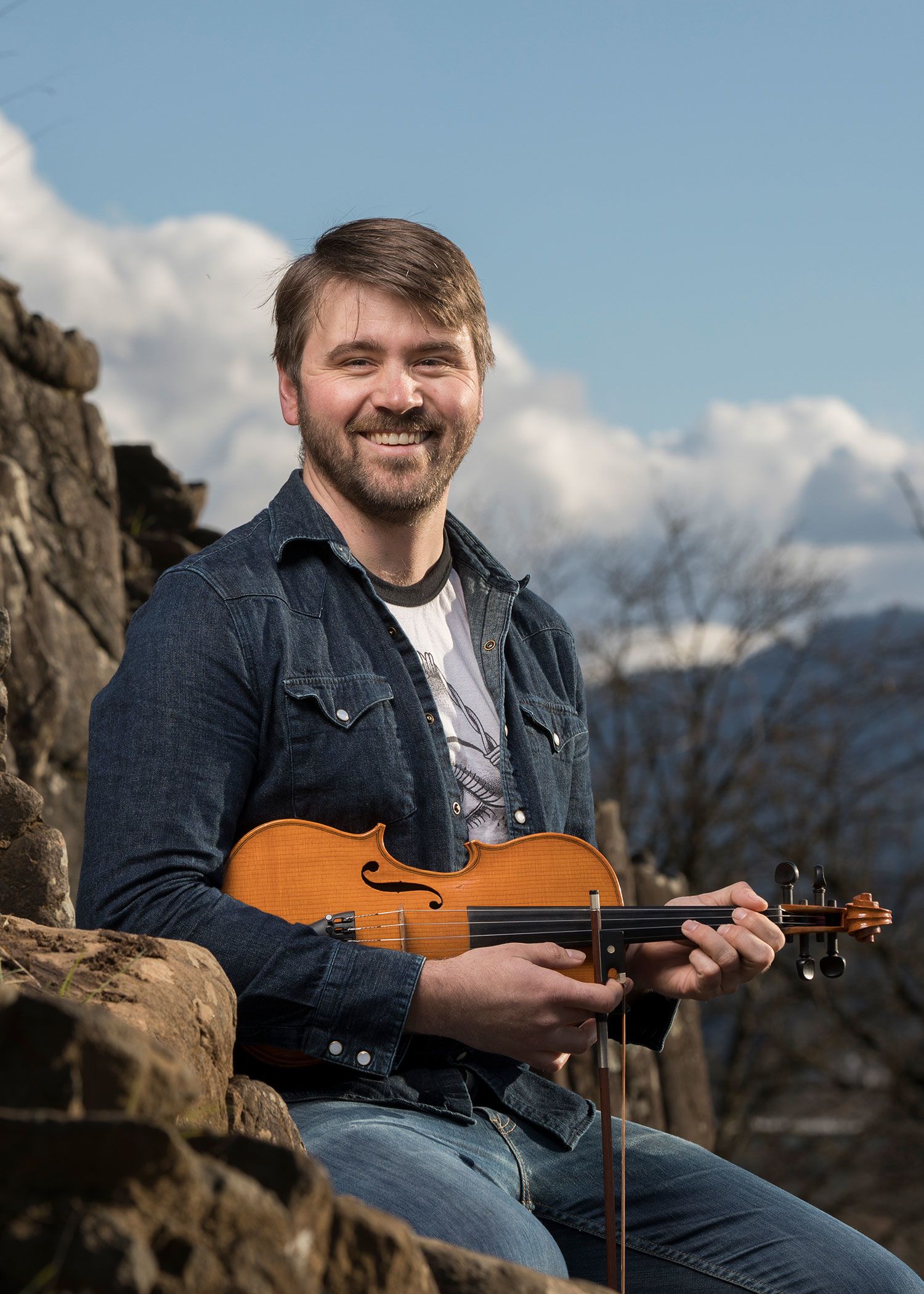
Leif Karlstrom is a geoscientist and associate professor of earth sciences, specializing in volcanology. (Photo by Charlie Litchfield)
"There's a lot of interest in understanding why volcanic eruptions start, of course, but when they end is also important because they can last a very long time, sometimes decades," said Karlstrom, an associate professor of earth sciences in the UO College of Arts and Sciences. "The longer they last, the greater the impact. Depending on the nature of the eruption, the impact can be huge economically - reaching billions of dollars - so there's a real need to understand the tail end of these events."
Karlstrom comes from a line of earth scientists. His grandfather worked for the U.S. Geological Survey, and his father was a field geologist who took a young Karlstrom along on research trips to the Grand Canyon.
Karlstrom was convinced he wouldn't follow in their footsteps and instead explored physics in college. But he fell back into earth sciences after realizing he could apply physics techniques to earth systems questions.
"I guess it's the family business, right?" Karlstrom said.
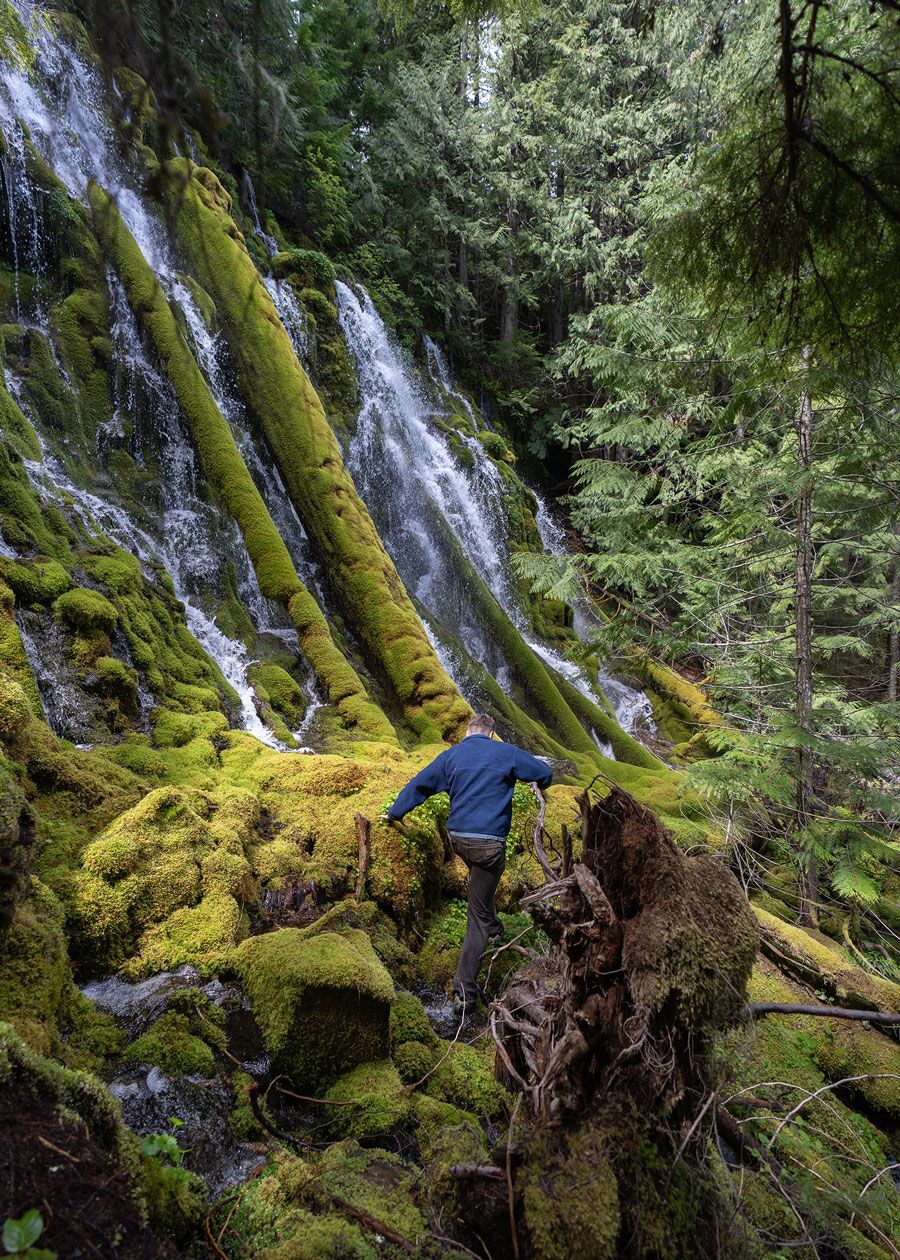
Leif Karlsrom studies the flow of magma and water in various volcanic zones. (Photo by Charlie Litchfield)
At the UO, Karlstrom applies fluid dynamics to understand how magma moves through the earth's crust and drives volcanic eruptions. His work can get tricky, he said, because to characterize and prepare for present-day volcanic hazards, he needs to think about magma motions on timescales from seconds to millions of years ago.
"What you really have to wrestle with as a volcanologist is that the processes you're studying include timescales that are way longer than human timescales," he said.
Hosted by the University of Iceland and supported by the Fulbright-National Science Foundation Arctic Research Grant, Karlstrom will also study how the massive, ancient volcanic events that formed the island may have shaped Earth's climate over time. The work could offer insight into the similar volcanic system in our backyard: the Columbia River flood basalts.
Karlstrom won't be going to Iceland alone. He'll be spending the fall semester with his wife, who's also a UO Fulbright awardee this year, and their two kids.
Leif Karlstrom is a geoscientist and associate professor of earth sciences, specializing in volcanology. (Photo by Charlie Litchfield)
Leif Karlsrom studies the flow of magma and water in various volcanic zones. (Photo by Charlie Litchfield)
Brittany Erickson is an applied mathematician developing computational models and simulations for earthquake and volcano processes. (Photo courtesy of Brittany Erickson)
Brittany Erickson: Using math to model the forces behind volcanic unrest
Brittany Erickson's connection to Iceland goes back to graduate school. Her doctoral advisor was an Icelandic mathematician who developed theories and tools for studying unpredictable systems like turbulence and earthquakes. Under his mentorship, Erickson spent two summers in Iceland, taking her mathematics research from the lab into a volcanic landscape.
"I rode on a Jeep around the hills outside of Reykjavik, installing seismometers near volcanoes," Erickson said. "That was the first time I ever got to do fieldwork."
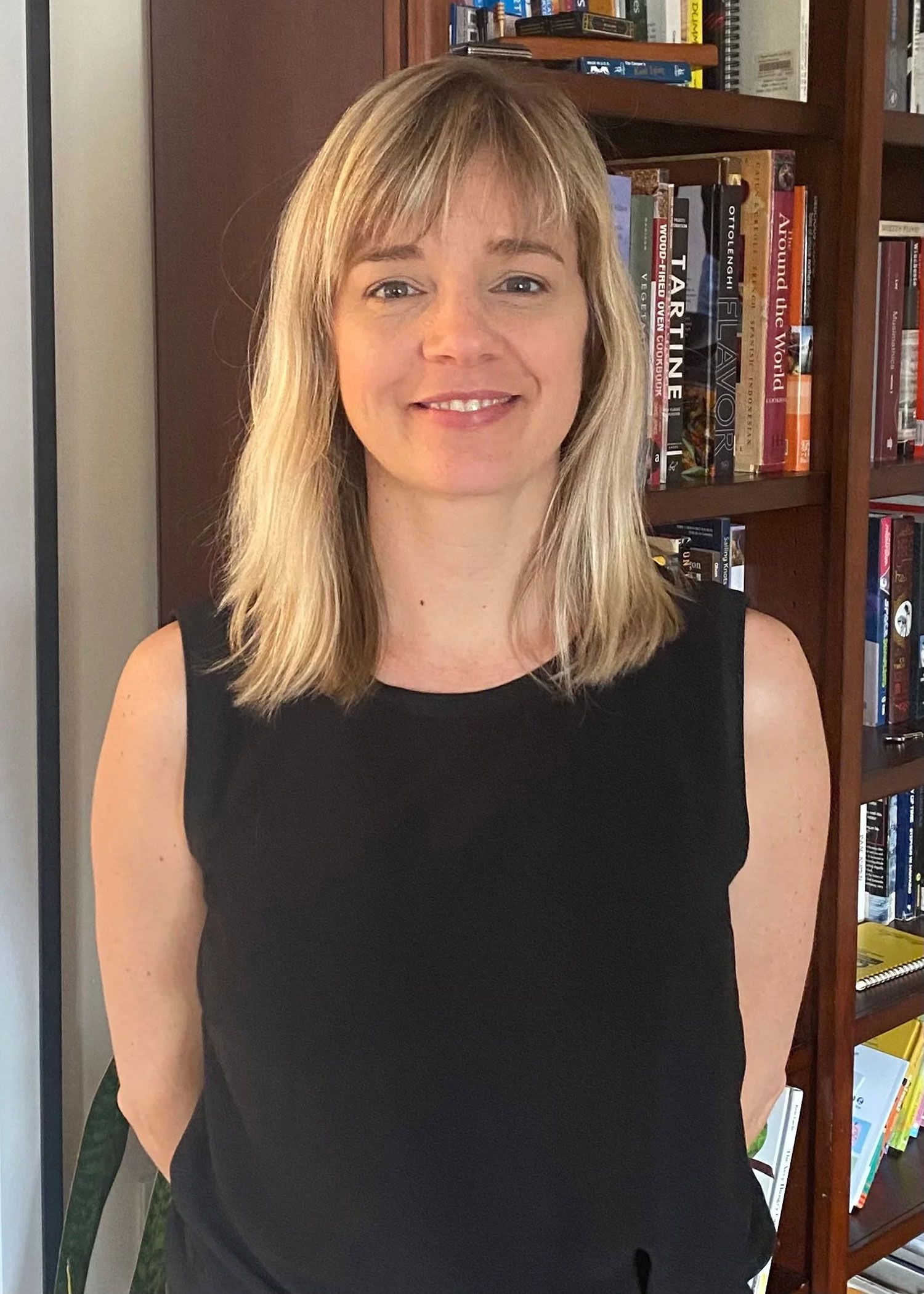
Brittany Erickson is an applied mathematician developing computational models and simulations for earthquake and volcano processes. (Photo courtesy of Brittany Erickson)
With the country's recent volcanic unrest, it made sense for Erickson to return, now as a Fulbright Iceland-Ministry for Foreign Affairs Arctic Scholar. Equipped with her own numerical models that untangle geological processes, she seeks to investigate the origins of the physical instabilities within Earth's crust that give rise to natural disasters in Iceland.
The work will provide insights for engineers designing resilient infrastructure in a country where roughly 70% of the population lives in the geothermally active Reykjanes Peninsula.
"Iceland has volcanic activity of sort of all different flavors," said Erickson, an associate professor in computer science and earth sciences. "But I really wanted to approach this through a mathematical lens and look at the equations and physical factors that govern volcanic and seismic activity."
Erickson has always been a math person, and growing up in the San Francisco Bay Area made earthquakes a familiar part of her life. When her advisor asked if she wanted to work on equations describing the friction at earthquake faults in California, she jumped at the opportunity.
Since coming to the UO, she's developed large-scale computational models for seismically active regions, including the Cascadia subduction zone and the Kilauea volcano in Hawaii. Her lab uses them to answer questions like why some subduction-zone earthquakes rupture differently than others and what conditions give rise to large tsunamis.
"It's so exciting to explore what is physically possible and probable," Erickson said, "and to see how applied mathematics research can help communities develop resiliency to natural disasters."
In addition to research, Erickson is eager to teach in a new country and reconnect with the Icelandic scholars she met during graduate school, who are now professors at the University of Iceland.
"I'm continually floored by the generosity, kindness and ingenuity of the Icelandic people," she said. "Iceland is an incredible country."
The move also brings a mix of nerves and excitement about what the trip will bring for her and Karlstrom's two-year-old and seven-year-old.
"I really appreciate the fact that the Fulbright program supports families, and I'm excited to help give my children the experience of being international humans," Erickson said. "It's good to do that at any age."
Reza Rejaie: Building lasting connections
Reza Rejaie and his longstanding expertise in computer networking have helped put the UO and its School of Computer and Data Science on the map for the growing field.
For his 25th year at the UO, the professor of computer science is spending his sabbatical as the Fulbright-Nokia Distinguished Chair in Information and Communications Technologies, hosted by the University of Helsinki. Among the most prestigious appointments in the Fulbright program, the Nokia Chair is awarded to a single scholar from the U.S. each year and includes a three- to six-month residence to perform research and lecture at a Finnish higher education institution and engage with the country's high-tech community.
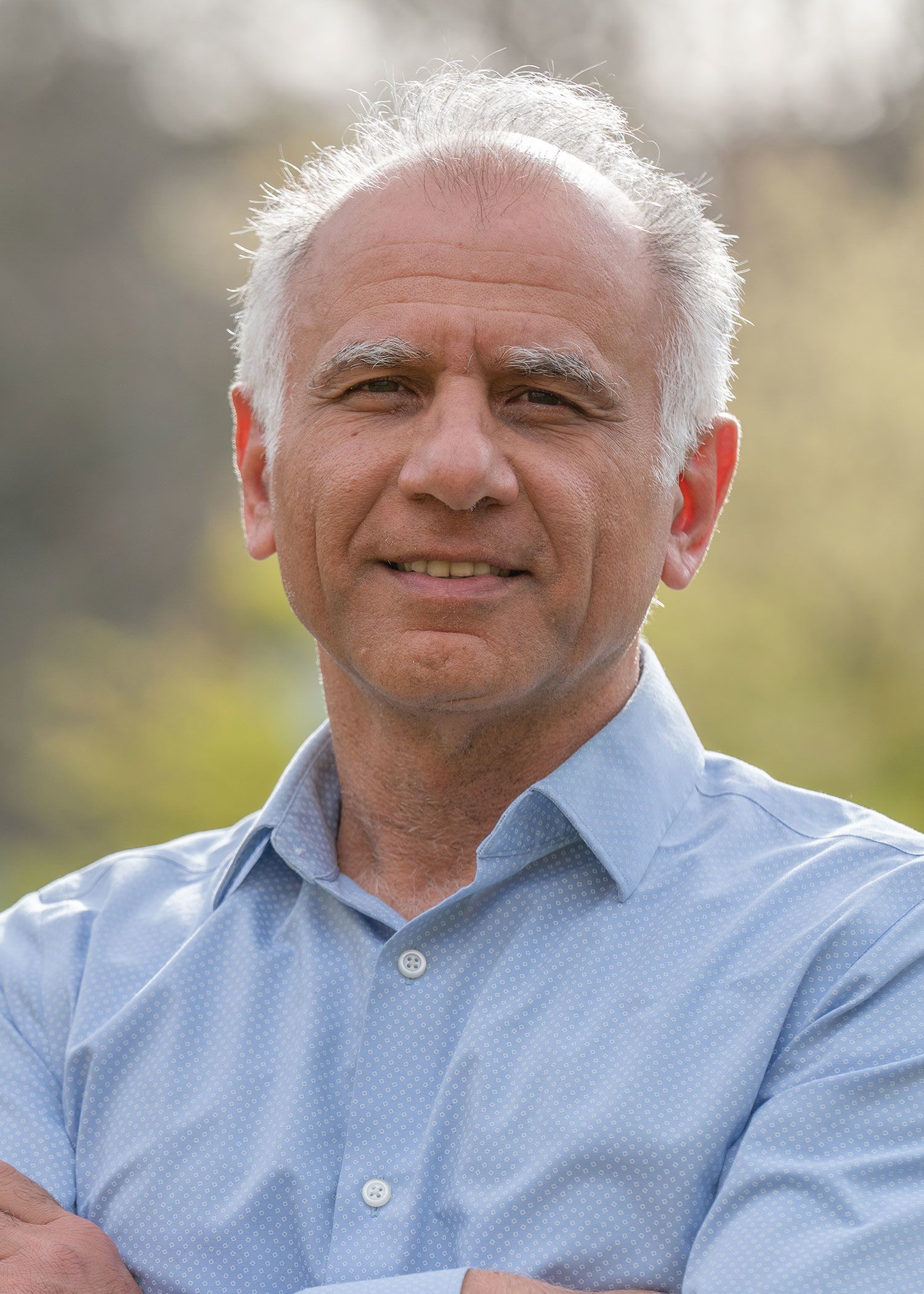
Reza Rejaie, a professor of computer science, came to the UO in 2002 to found a new program in computer networks. (Photo by Charlie Litchfield)
"It's exciting that the award is jointly supported by the Fulbright Finland Foundation and Nokia," said Rejaie, who recently completed six years as department head. "It creates an opportunity to connect academic research with one of the world's leading technology companies."
In Finland, Rejaie's research will focus on an emerging approach to cybersecurity that combines artificial intelligence with a sophisticated way of monitoring networks for threats. Because modern computer networks carry enormous volumes of data, it's impractical to examine all traffic in detail, he said. His approach will be more flexible: first broadly identifying potentially important patterns in traffic, then collecting more detailed information on specific slices of traffic when needed - with AI helping direct and adjust the focus.
Rejaie views the trip as more than a six-month technical project. He plans to forge connections with researchers at Finnish universities and leading technology companies, as well as the broader Nordic research community.
He's approaching his time in Finland as much a cultural and learning experience as a professional one.
"What excites me about the Fulbright experience goes well beyond the research," Rejaie said. "It's an opportunity to learn how people in another country approach their work, their communities and their lives, while also sharing something of my own experience in the United States."
He continued: "I see that cultural exchange as an important part of what it means to be a Fulbrighter."
Reza Rejaie, a professor of computer science, came to the UO in 2002 to found a new program in computer networks. (Photo by Charlie Litchfield)
Meet UO's 2025 Fulbright Scholars
A university librarian, biochemist, media law expert and food studies researcher head to Taiwan, Japan, Denmark and Brazil, respectively.


