
California's processing tomato industry for the first time this past harvest season agreed to voluntary equipment cleaning and notification guidelines to prevent the spread of branched broomrape, a parasitic weed that attaches to roots and sucks out key nutrients.
The weed's tiny seeds can be smaller than finely ground spices, survive dormant in soils for decades and be carried by wind, footwear and other methods. Its resurgence in 2017 in Yolo County threatens the productivity of an industry that brought in $1.6 billion in 2024.
The University of California, Davis, in conjunction with industry, federal authorities and state regulators, is playing a key research role in the battle against broomrape by testing and developing in-field sanitation guidelines for tomato harvesters and other field equipment. Researchers across campus are also evaluating herbicide treatments, weeding methods, ways to detect the weed and disrupt its ability to affect crops.
Harvesting with conditions
Under former state quarantine rules, any broomrape detection would require a field be destroyed before harvest. With the new guidelines, growers may harvest if they adhere to certain management practices, including equipment cleaning standards developed by the California Broomrape Board, formed in 2024 to advise the California Department of Food and Agriculture.
"There's 1,000 acres that are actually reported but we know from observation that it's probably much greater than that," said Cassandra Swett, a UC Davis plant pathologist who is leading efforts to sanitize field equipment. "There are two main goals: reduce the economic impacts of broomrape on growers in the affected region by allowing them to harvest, and on the other side, keep broomrape out of the regions that do not currently have it."
In 2025, nearly all growers and processors in the state signed on to compliance agreements regarding cleaning and notification, and this year the California Department of Food and Agriculture is expected to require them, said Zach Bagley, managing director of the California Tomato Research Institute, which has been working on broomrape control issues since 2018.

"It's overall seen as a positive in the industry," Bagley said. "The driver for sanitation is not just the biology of this weed and the reality in the field, but it also has regulatory components."
Also, this year, all processing tomato canneries in the state have agreed to build on-site wash stations or set up cleaning protocols for the 2026 season to help stop the spread from harvest trailers.
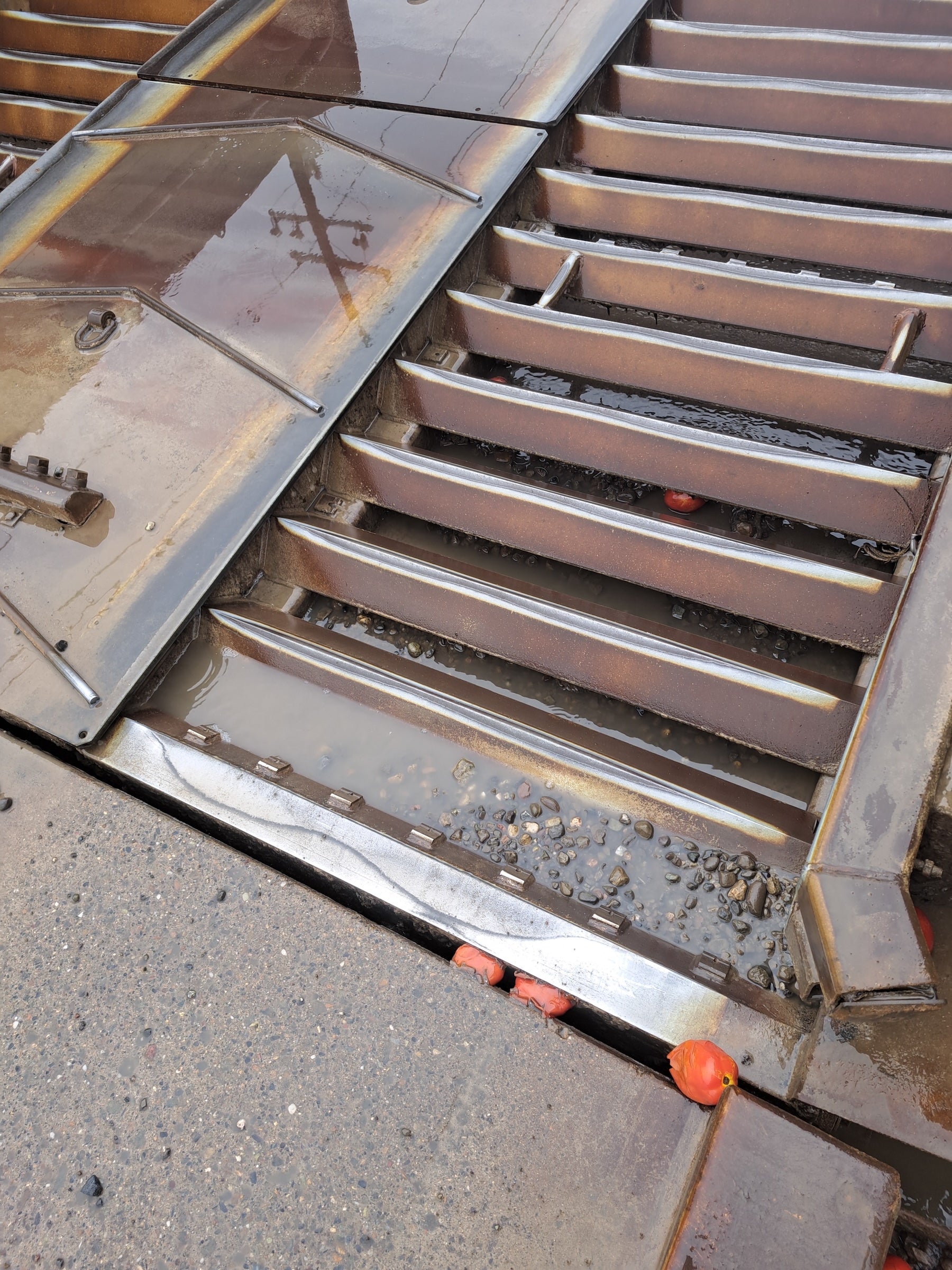
"We can never have a 100% guarantee that we're not moving seed, but we can do our best to take it off in the fields where we know we have a problem, and that's where the research comes in," said Bagley, whose organization helps fund related UC Davis research.
Effectiveness and timing key
Swett, fabricators with the Department of Biological and Agricultural Engineering, a Cooperative Extension farm advisor and others in the industry are working on prototypes of sanitizing equipment, evaluating spray nozzle size, water pressure, aim and other factors.
Cleaning is no simple task, and it consists of removing debris with physical cleaning and sanitizing. The right combination of debris removal followed by a sanitizer can substantially reduce dispersal risk, Swett said.
The goal is to reach under and around tractors and remove mud, soil, plant material or anything that can collect and carry broomrape seeds. Some versions of these prototype cleaning systems are in the field and others roll under the equipment.
"These machines are running 24 hours a day," Swett said. "Taking that downtime to clean the machine is really messing up harvest schedules."
At present, cleaning a tomato harvester can take hours, but industry is hoping it can get to less than an hour to meet labor, costs and logistics needs. "One of the drivers of this work has been, 'How can we make it faster but still be acceptable at the end of the day?" Bagley said. Agricultural engineer Dan Frank and crop advisor Patricia Lazicki have developed and are testing prototypes of automated systems that can improve cleaning time and coverage, Swett said.
A better picture
Before the broomrape compliance agreements, it was difficult to determine how many of the 185,000 to 250,000 tomato production acres might be infected because reporting would mean losing a crop and the money invested on planting, irrigation and other efforts with no hope of insurance covering the loss.
The agreements have changed that, said Brad Hanson, a professor of Cooperative Extension in plant sciences who is an ad hoc member of the Broomrape Control Board.
"With the risk of crop quarantine off the table for growers under the compliance agreements, we can talk about the problem out in the open," Hanson said. "The daylighting part of this has been really helpful because for the last five years, we've been really in the dark."
Now it's about working toward a common solution, said Neil McRoberts, a UC Davis plant pathologist who researches ways to support plant health and regulations. He is also a non-voting member of the board and familiar with pests that have caused widespread damage to other crops. With broomrape, the attention is focused before the weed has spread widely across fields in California and potentially to other crops like carrots, potato and sunflower.
"I'm hopeful because the issues are being faced very early on," he said.


