
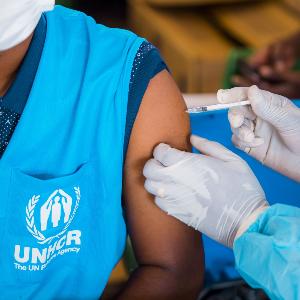
© picture alliance / AA | Habimana Thierry
Certainly, aid spending is far from trifling. But global health needs are great and the situation is nothing short of dramatic. Measured by the UN Sustainable Development Goals, global health is not on a good course. This applies especially to low- and middle-income countries, where massively underfunded health systems come up against high disease burdens, as the jargon has it. The number of new HIV infections is well above target, the number of malaria cases has risen, and progress in reducing the tuberculosis mortality rate is lagging far behind the set goals. Furthermore, recent cuts to health aid - in particular by large donors such as the United States - are further widening the gap between demand and resources.
But does the allocation of aid correspond to disease burden? Which countries receive how much? And to combat which diseases? An LMU team has developed a so-called machine learning pipeline, that compares disease-specific aid funding at the country and disease levels against the respective disease burden. With their multi-stage approach, the researchers led by Professor Stefan Feuerriegel, Director of the Institute for AI in Management, are able to track relative discrepancies in the global allocation of aid money.


