
Using a new method to track groundwater levels and greenhouse gas emissions, researchers uncover the climate impact of Southeast Asia's peatlands.
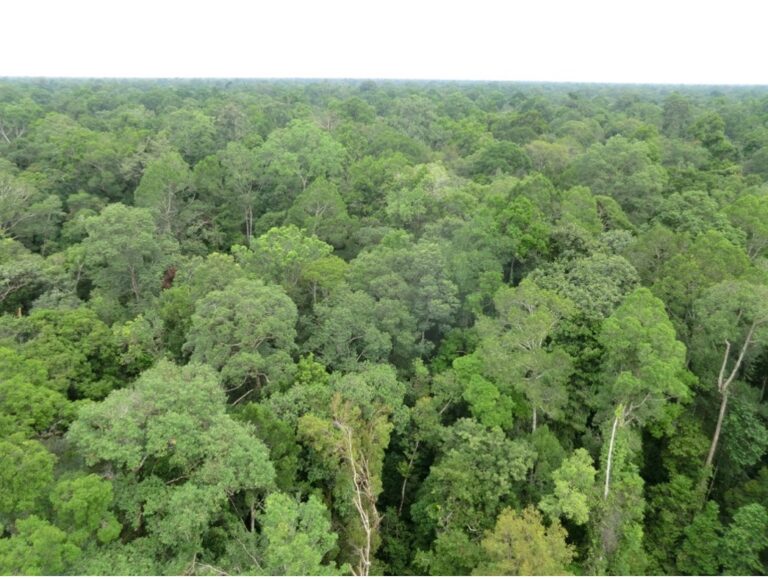
In Indonesia, Malaysia, and other parts of Southeast Asia, vast areas spanning up to 300,000 square kilometers have emerged over thousands of years as plants grow and thrive in dense tropical peat swamp forests, then die and slowly decompose in waterlogged, low-oxygen conditions. As a result, large amounts of carbon get stored in the soil rather than released into the atmosphere. Heavy rainfall keeps these landscapes flooded for much of the year, allowing layers of dead vegetation to build up and gradually compress into dense, carbon-rich peat. New research from Hokkaido University suggests that the climate impact of these peatlands could be significantly higher than previously thought.
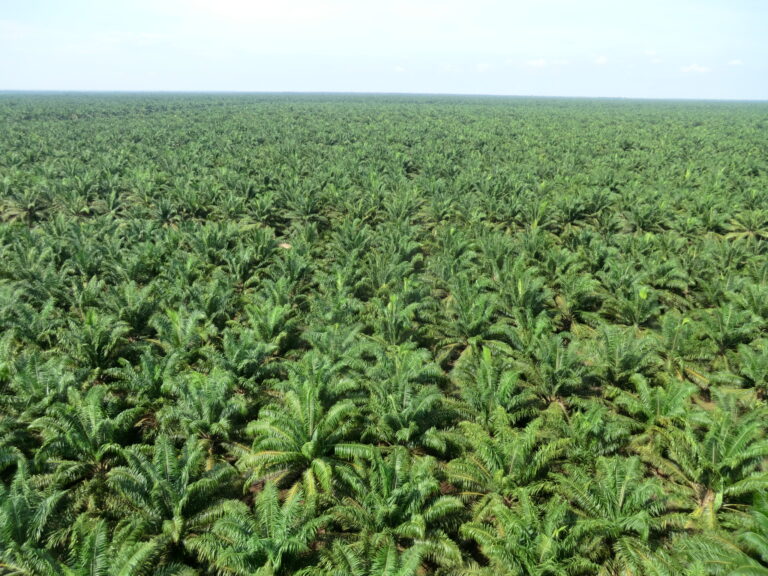
In the past few decades, many peatlands in this region have been drained and converted for agriculture. "Draining these peatlands lowers groundwater levels, exposing the carbon-rich peat to air," explains lead author Professor Takashi Hirano of the Research Faculty of Agriculture at Hokkaido University. "This accelerates peat decomposition and releases carbon dioxide into the atmosphere but reduces methane emissions," he adds.
"Tropical peatlands have attracted attention as a significant source of CO2 emissions, but there are still many uncertainties," says Prof. Hirano. One reason is that measuring exactly how much greenhouse gas is emitted from peatlands is challenging. With changes in rainfall across regions and seasons, groundwater levels fluctuate, leading to variations in greenhouse gas emissions. To address this, the researchers developed a new method to map groundwater levels across peatlands and estimate the associated greenhouse gas emissions. The study was published in AGU Advances in December 2025.
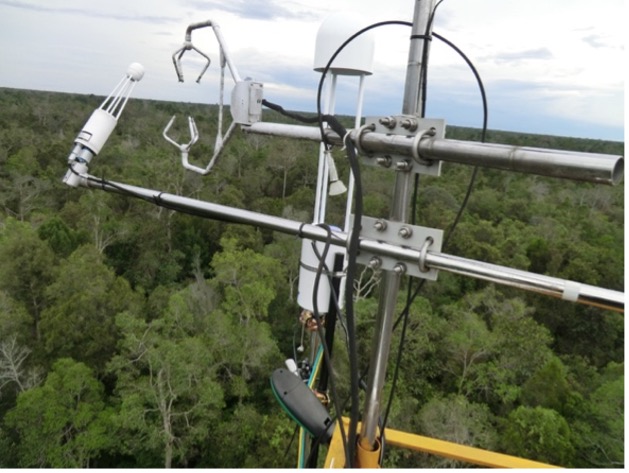
The team studied peatlands covering roughly 180,000 square kilometers across Southeast Asia. "Using satellite data from the Japan Aerospace Exploration Agency (JAXA), we first tracked rainfall variation across the region and then used this information to map groundwater levels," he says. By combining this with direct observations of carbon dioxide and methane levels from 11 monitoring sites, they were then able to create monthly emission maps showing how much carbon dioxide and methane are released into the atmosphere from peatlands, capturing differences across locations and seasons.
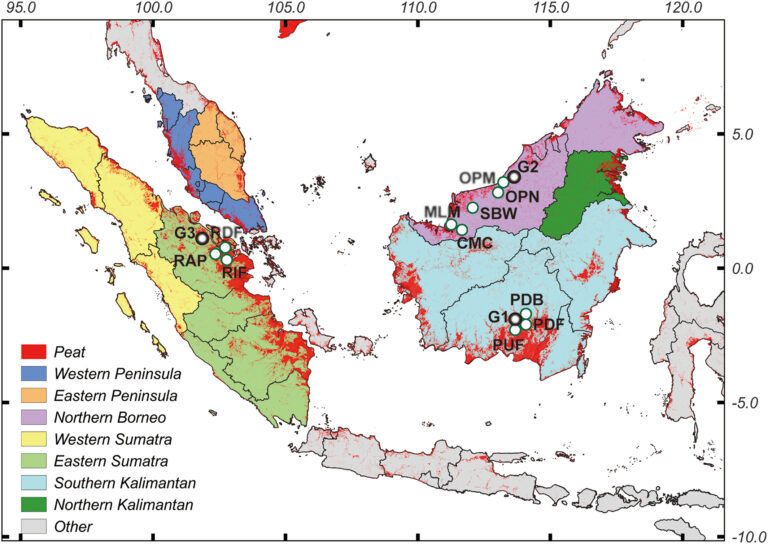
Peatland areas are shown in red. (Photo credit: Takashi Hirano)
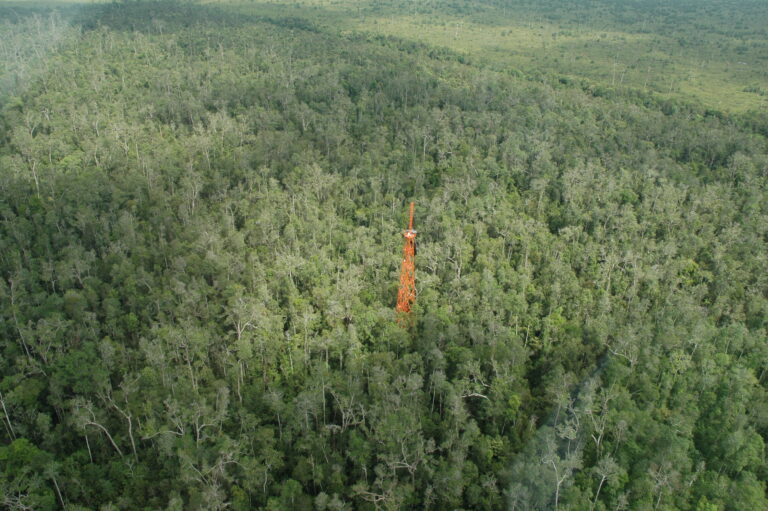
When the researchers applied their new method to peatlands across Sumatra, Borneo, and the Malay Peninsula for the period from 2011 to 2020, they were surprised to find that even in their natural, waterlogged state, peat swamp forests release more greenhouse gases, carbon dioxide and methane combined, than they absorb. This means they contribute to climate change rather than acting as carbon sinks, as previously thought.
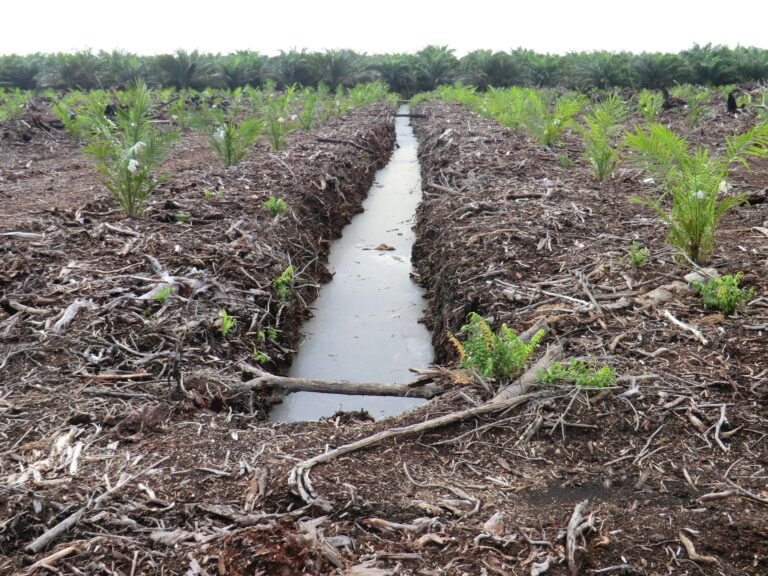
Human intervention and extreme climate events increase these emissions significantly. Data from the decade-long study show that simply draining these peat swamp forests nearly triples their greenhouse gas emissions, while converting them to agricultural land increases emissions by more than sixfold. Greenhouse gas emissions from peatlands in this region are equivalent to about 30% of Japan's annual emissions. Climate change further adds to the problem: droughts linked to El Niño events raise emissions even more, increasing annual greenhouse gas output across the region by roughly 16%.
Looking ahead, climate models predict that rainfall in this region will increase in the mid-21st century. Increased rainfall could raise groundwater levels, which in peatlands may slow down peat decomposition and consequently reduce greenhouse gas emissions under certain conditions. Although peatlands cover just about 3% of the Earth's land surface, they store more than twice as much carbon as all the world's forests combined, according to the United Nations Environment Programme. How these ecosystems are managed and how rainfall patterns evolve will be crucial in shaping the future impact of peatlands on the global climate system.
Original article:
Takashi Hirano et al. Impact of Land Use Change and Drought on the Net Emissions of Carbon Dioxide and Methane from Tropical Peatlands in Southeast Asia. AGU Advances. December 16, 2025
DOI: 10.1029/2025AV001861
Funding:
This work was supported by JSPS KAKENHI Grant Number 19H05666, the Sarawak State Government, and the Federal Government of Malaysia.


