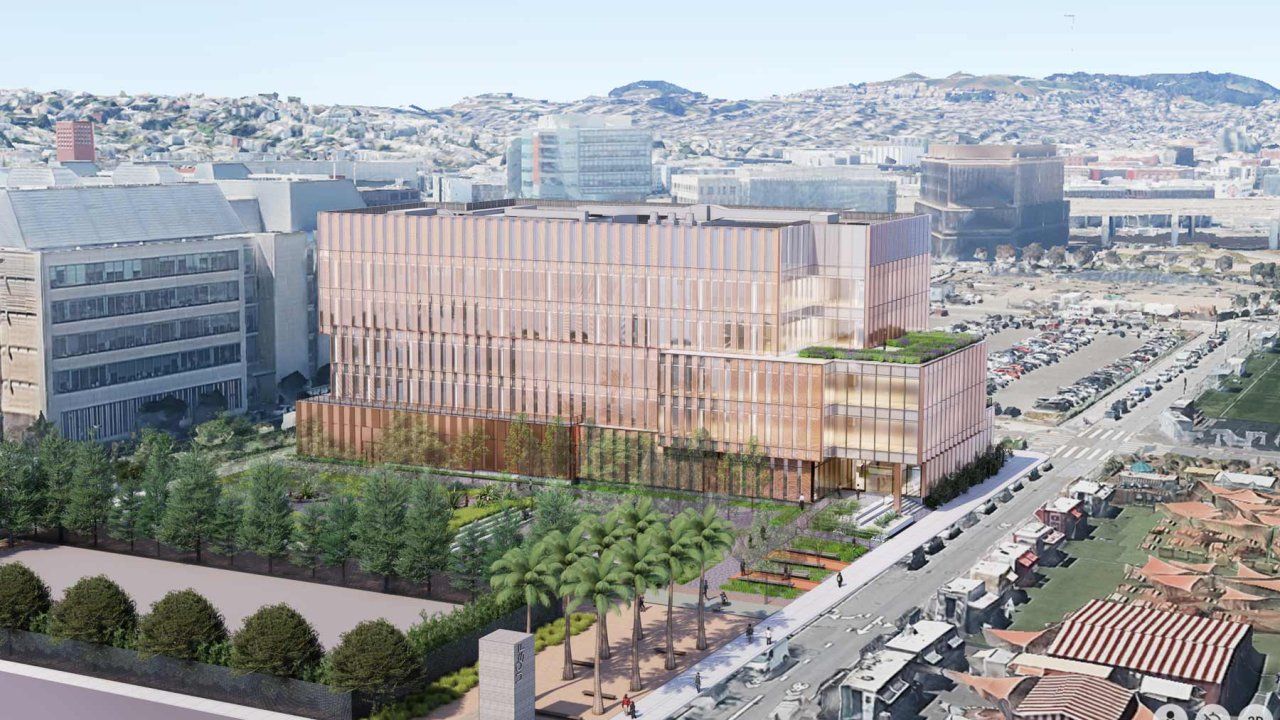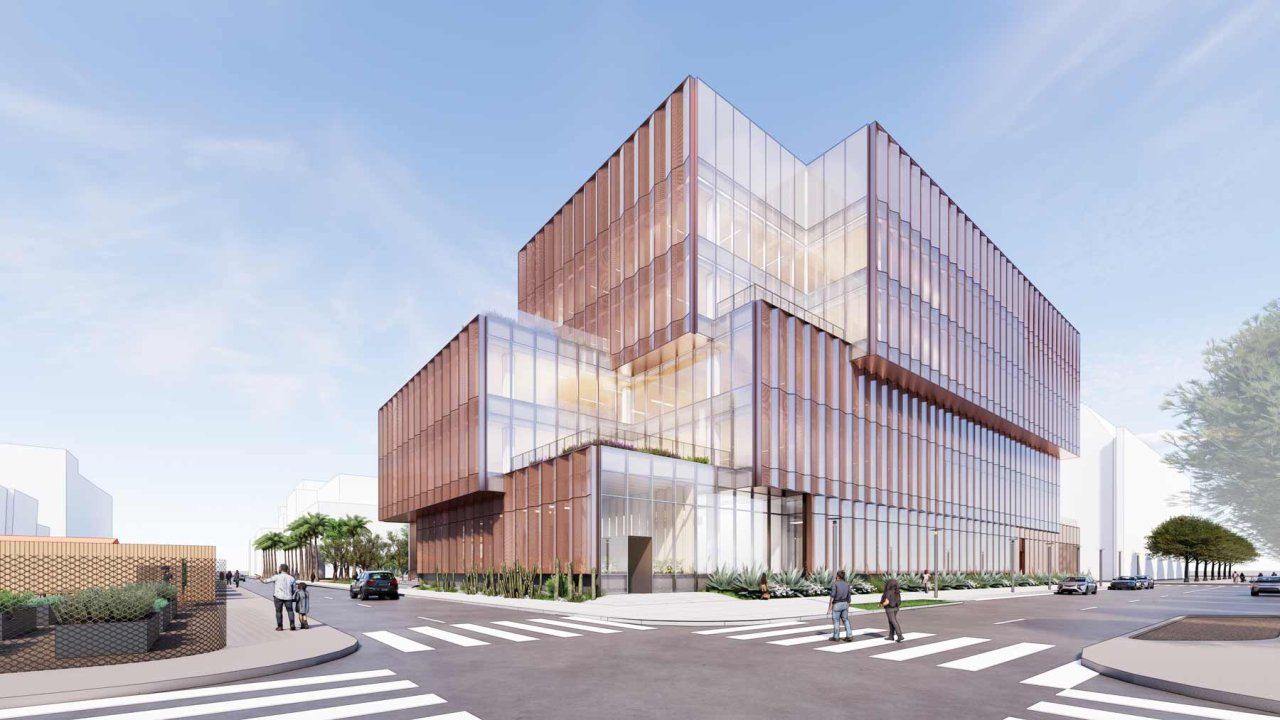
The University of California Board of Regents has approved plans for a new, state-of-the-art ear and hearing institute at UC San Francisco's Mission Bay campus, taking the first step to creating one of the world's leading centers for advancing research and care for hearing and balance disorders.
The UCSF Bakar Ear & Hearing Institute will bring together scientists, clinicians, and educators in a five-story, 150,000 square foot building to accelerate the development of new therapies while delivering highly specialized, patient-centered care.
"This new institute reflects UCSF's deep commitment to tackling one of the most widespread yet under-recognized health challenges," said UCSF Chancellor Sam Hawgood , MBBS. "By uniting leading researchers and clinicians in a purpose-built environment, we will accelerate discoveries and translate them into meaningful improvements in care for patients locally and around the world."
Hearing loss is one of the most common chronic conditions worldwide. According to the National Institute on Deafness and Other Communication Disorders (NIDCD) , about 15% of American adults - more than 37 million people - report some trouble hearing, and the prevalence increases sharply with age. Despite its scale, the field has historically lacked effective medical therapies. The new institute is designed to address that gap.

A new model for collaboration and discovery
For the first time, there is real momentum toward developing therapies that could restore hearing.
Charles Limb, MD
The institute will serve as a hub for interdisciplinary collaboration, bringing together experts in otology, neurotology, audiology, neuroscience, engineering, and public health. Its design emphasizes openness and connectivity, with research spaces organized to foster interaction among scientists and clinicians working toward shared goals.
"This is an opportunity to fundamentally change how we approach hearing loss," said Charles Limb , MD, the Francis A. Sooy Professor of Otolaryngology - Head and Neck Surgery and chief of the Division of Otology, Neurotology, and Skull Base Surgery at UCSF, who leads the effort to create the new institute. "We are creating a place where the best scientists, clinicians, and surgeons work side by side to develop new therapies, test them, and deliver them to patients. That level of integration is what's been missing in our field."
The institute will support a wide range of research, including inner ear biology, gene therapy, implantable hearing devices, and population health. Recent advances, such as early successes in gene therapy to restore hearing, have opened new possibilities for treatment, making this a pivotal moment for the field.
"We're at a turning point," Limb said. "For the first time, there is real momentum toward developing therapies that could restore hearing. This institute is designed to take full advantage of that moment and push the field forward."
Designed for patients with hearing loss
A defining feature of the new building is its focus on the needs of patients with hearing impairment. Unlike traditional medical facilities, which often rely heavily on auditory communication, the institute will incorporate design elements and technologies that make navigation and care more accessible.
The clinical environment will minimize reliance on auditory cues for scheduling, check-in, and patient flow, using visual systems and assistive technologies instead.
"We want patients to feel that every aspect of their experience has been designed with them in mind," Limb said. "From the moment they enter the building, it should be clear that this is a place that understands hearing loss and is committed to addressing it."
The institute will also consolidate services that are currently dispersed across multiple locations. Patients will be able to access otological care, audiology, imaging, vestibular (balance) services, rehabilitation, and research trials in one coordinated setting, streamlining their care into a cohesive whole.
Advancing innovation, care, and training
The new institute reflects UCSF's commitment to translating discoveries into patient care through a fully integrated, "bench-to-bedside" model. By co-locating laboratory research, dedicated space for clinical trials, and clinics equipped with advanced diagnostic and imaging technologies, the facility will streamline the path from early discovery to clinical application.
This integration is designed to accelerate the development and testing of new treatments to create a continuous pipeline from discovery to delivery.
Building on UCSF's strengths in hearing science - including a leading cochlear implant program and expert clinicians - the institute will also serve as a hub for education and training. Specialized facilities such as a temporal bone lab will support advanced surgical training, helping attract global talent and position UCSF as a leader in ear and hearing medicine.
"We want this to be the place where people come - whether they are patients seeking the best care, scientists pursuing breakthrough discoveries, or trainees looking to learn from leaders in the field," Limb said.
By attracting top talent from around the world, UCSF aims to establish the institute as a global leader in ear and hearing medicine.
The project is supported through philanthropy and external financing and will be located on Fifth Street at Nelson Rising Lane, close to UCSF's research and clinical facilities at Mission Bay. Construction is expected to begin in late 2026, with completion anticipated in 2029 and occupancy in 2030.