CHAPEL HILL, N.C. - Researchers at the UNC School of Medicine and the UNC Eshelman School of Pharmacy have made a breakthrough that could modernize treatment for glioblastoma, a fast-growing and deadly form of brain cancer.
In a new study published in Proceedings of the National Academy of Sciences, they found that combining a common chemotherapy drug with a chemical called EdU provided unprecedented survival and cancer remission in various preclinical glioblastoma models.
"We did a number of preclinical studies: Some with EdU alone, some with TMZ alone, and others with both together," said Nobel laureate Aziz Sancar, MD, PhD, who is a biochemist and member of UNC Lineberger Comprehensive Cancer Center. "The concept is simple. When we combined TMZ with EdU, we found that the two drugs acting together can destroy these tumors and prevent death."
Why EdU and TMZ Together?
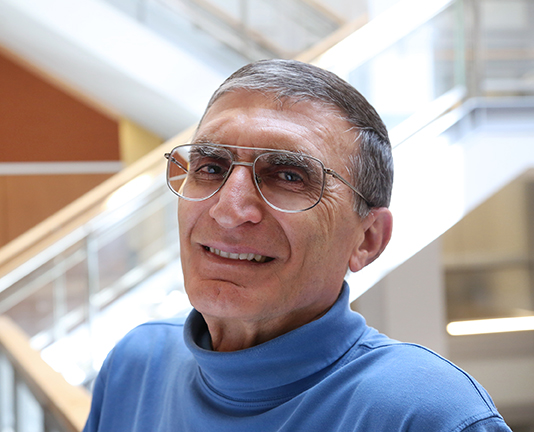
Aziz Sancar, MD, PhD
Glioblastoma is a fast-growing and deadly form of brain cancer.
Today, only ~7% of patients survive more than five years after diagnosis. And, despite much research into the aggressive cancer, treatments for glioblastoma have stayed the same for the past 20 years.
Temozolomide (TMZ), an oral chemotherapy used in conjunction with radiation therapy, is the only FDA-approved treatment for glioblastoma. But the standard therapy doesn't work for everyone, and it is common for tumors to come back at full force after treatment is stopped.
Glioblastoma is difficult to treat for a variety of reasons:
- It grows rapidly in the brain
- It is difficult to fully remove the tumor due to the risk of harming vital brain structures
- There are many genetic mutations that cause glioblastoma, making a "one-size-fits-all" treatment next to impossible.

Figure S4 showing EdU (green) within a patient-derived glioblastoma cell line. Credit: Kaanoğlu et al. (2025)
Basic and translational scientists at UNC have spent years searching for better therapeutic approaches.
This October, Sancar's lab and other collaborators discovered that a commonly used lab chemical called EdU, or 5-Ethynyl-2′-deoxyuridine, has much potential to treat glioblastoma.
Their paper showed - in actual tumors removed from glioblastoma patients - that EdU can successfully get into the brain and kill cells within the tumor, while leaving healthy brain tissue unharmed.
This success led Sancar's lab to begin a new study to test the effects of EdU with TMZ as a potential combination therapy.
Results from the Study
Sancar tested different amounts of combination therapy in three glioblastoma cell lines: U87, GBM8, and LN229. These cell lines once belonged to patients with glioblastoma and are now grown in the lab to study cancer in test tubes and living models, like mice.

Fig. 5. Combination of TMZ and EdU synergistically suppresses tumor growth, prevents tumor recurrence, and achieves complete survival in mice bearing orthotopic GBM8 xenografts. Credit: Kaanoğlu et al. (2025)
Researchers first injected a bioluminescent chemical into each cell line, which glows strongly in the presence of cancer, to clearly observe cancer growth and shrinkage.
Sancar and colleagues made the following observations in mouse models with U87 tumors:
- Controls (no treatment): Death within 30 days
- EdU alone: Lived for just under 45 days
- TMZ alone: Lived for about 53 days
When treatments were combined (200 mg/kg EdU and 5 mg/kg TMZ), researchers observed complete cancer reduction by day 23. Every single mouse model lived until the end of the study, onwards of 250 days. They were, in essence, cured.
Researchers tested this same approach on models with GBM8 cell lines. All mice treated with combination therapies-either 1 mg/kg TMZ plus 200 mg/kg EdU, or 5 mg/kg TMZ plus 200 mg/kg EdU-remained alive and tumor-free after 170 days.
Beyond effectiveness, the researchers also needed to understand whether the treatment caused harmful side effects to the body, such as the small intestine, kidneys, spleen, liver, lungs, and blood.
The therapy only resulted in mild, reversible changes to the small intestine, spleen, and blood, similar to typical reactions seen from chemotherapy. Results from the toxicity studies further supported the strong therapeutic potential of this drug combination.
Evidence of Synergism

A fluorescence microscopy image showing brain immune cells (astrocytes) engulfing GBM8 tumor cells (red) four days after seeding on brain tissue. Credit: Project Brainslice
The results of U87 and GBM8 studies also showed that there was a "synergistic effect" in combining TMZ and EdU. Synergism occurs when two treatments work better together than either would alone, or, in other words, the drugs have a stronger therapeutic effect when combined.
"When a combination works synergistically, it is like one plus one equals three, instead of something that is additive that is just one plus one equals two," said Sancar. "In the other three tumors, there was an additive effect to where they still acted and killed cells, but it was not synergistic."
Surprised by the finding, researchers wanted to see if they got similar results when treating living glioblastoma tumor samples just after tumor removal surgery from patients at UNC Hospitals.
The unique tumor model, used at the Screening Live Cancer Explants (SLiCE) Core Facility at UNC, led by cancer researcher Andrew Satterlee, PhD, is made up of patient tumor cells and living healthy brain tissue, making it the closest and most realistic model of a living cancerous tumor.
They saw strong synergy in one of the four patient glioblastomas treated on the SLiCE model, and an additive effect in the other three glioblastomas.
"These experiments demonstrate the power of our SLiCE model to develop and validate new therapies and therapeutic combinations" added Satterlee, who is an assistant professor of pharmacoengineering and molecular pharmaceutics at UNC Eshelman School of Pharmacy. "We also envision a future where SLiCE can identify the most robust responders to certain therapies to aid therapeutic decision-making in the clinic.
Satterlee adds that using SLiCE to identify the patients most sensitive to EdU-TMZ combination therapy before their treatment begins may give patients a better chance to find the best therapeutic to kill their tumor.
The Future of Personalized Treatments for Glioblastoma
The UNC researchers have their sights set on human clinical trials and FDA approval for the combination therapy.
In the meantime, Sancar and his lab are focusing on performing more studies into EGFR-mutation glioblastoma, the most common type of glioblastoma seen in patients today.

Dr. Aziz Sancar with his lab members. Credit: Seth Foley
Because not all patient samples responded the same way, the study further underscores the importance of personalized therapies and the use of patient-derived tissues to address complex diseases like glioblastoma. The Sancar lab is currently investigating treatments that are customized to each patient's tumor.
"We found patient-specific sensitivities to different combination therapies," said Hümeyra Kaanoğlu, co-first author on the study and graduate student in the Sancar lab. "Such personalized combination therapies in glioblastoma treatment could provide much-needed alternative therapies for this terrible condition."
UNC Health and the UNC Lineberger Comprehensive Cancer Center offers numerous clinical trials to explore advanced diagnostic procedures and new treatments for glioblastoma, including CAR-T immunotherapy, a SonoCloud® device that helps in delivering chemotherapies to the brain, radiation sensitizer therapy, and more.