
The University of South Florida Foundation and USF Research Foundation have awarded Bull Ring Accelerator Grants to Digitomy, GlaucHome and Panthea, three early-stage USF start-ups seeking to commercialize technologies in mosquito detection, optometry and women's health. The Foundation Bull Ring Accelerator Grant program (BRAG) is designed to support early-stage start-up companies that were formed on the basis of licensed USF technologies. The three companies will each receive up to $25,000 to advance their health-related technologies to market. The BRAG program helps bridge the "valley of death" experienced by early-stage technology companies, considered to be the point between when academic research funding runs out and when a team is credible enough, with sufficient customer and market knowledge, to raise private capital or license/partner with existing companies. The goal is not to replace private capital, but to help reduce risk and develop USF start-ups to a point where they can attract other sources of funding.
Each of the selected companies is supported by USF Innovation & Commercialization's Ventures Launch program. This new program identifies high-potential university-borne technologies and provides a structured, repeatable pathway for evaluating, shaping and launching new ventures around the technologies. The USF Ventures Launch Program connects each promising technology with dedicated venture development resources, including hands-on operational support from acting executives and executives-in-residence, as well as access to a curated network of corporate, FDA reimbursement, and intellectual property specialists, all designed to help transform early-stage research into investment-ready startups.
digitomy
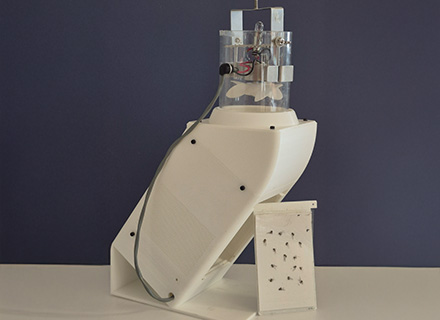
Faculty inventor: Ryan Carney, associate professor in the Department of Integrative Biology in the College of Arts & Sciences, and Sriram Chellapan, professor in the Bellini College of Artificial Intelligence, Cybersecurity & Computing
Digitomy has developed the SmartTrap, a technology that captures mosquitoes then uses artificial intelligence to determine if they are disease-carrying breeds. The invention was developed by the two professors while collaborating with an interdisciplinary team of researchers in 2024 developing innovative solutions to target malaria-infected mosquitoes in west-central Africa. Digitomy plans to deploy SmartTraps at sites across Florida to identify mosquitoes known to carry diseases such as malaria, West Nile virus and dengue. Local counties will receive this information in real-time for early detection and eradication of disease-spreading mosquitoes.
GlaucHome
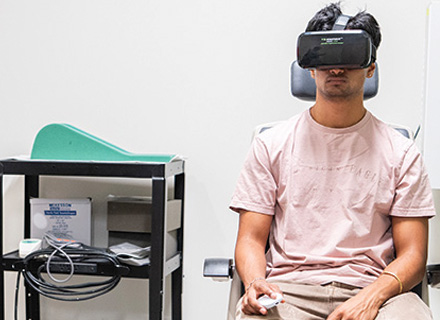
Faculty inventors: Ramesh Ayyala, James P. and Heather Gills Endowed Chair and chair of the Department of Ophthalmology in the USF Health Morsani College of Medicine
GlaucHome received BRAG support for an at-home glaucoma test designed to improve access to screening and enable earlier detection and monitoring of a leading cause of irreversible blindness. Professor Ramesh Ayyala is leading a study of GlaucTest, an investigational AI-powered app that allows patients to perform visual field testing at home using their own smartphone, a low-cost virtual reality headset and a handheld clicker. He aims to replicate the gold-standard Humphrey Visual Field Analyzer currently used in clinics with the goal of transforming a test that typically costs $30,000 in equipment into an at-home experience for about $42.
panthea

Faculty inventors: Sophie Darch, assistant professor in the Department of Molecular Medicine, and Jasenka Zubcevic, associate professor in the Department of Neurosurgery, Brain and Spine at the USF Health Morsani College of Medicine
Panthea is developing Core, a probiotic formulated to support women experiencing the menopausal symptoms of sleep disruption, weight gain, brain fog, mood swings, anxiety and elevated heart rate. Core works by resetting the vagus nerve signal between the brain and gut, leading to improved mood, lower blood pressure and improved focus and memory. Panthea, which recently pitched its product at the Nault Center for Entrepreneurship's Hafer THRIVE Seed Award Program, aims to bring Core to market in March 2027.


