
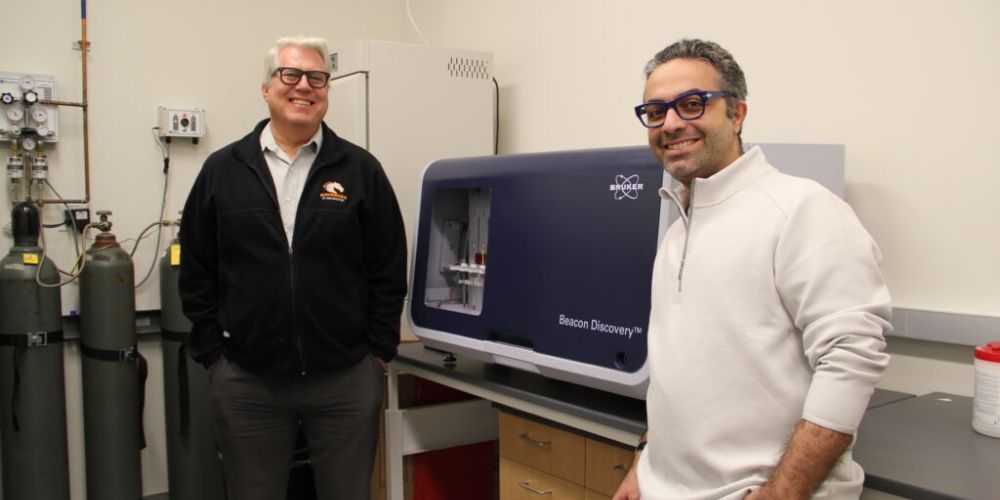
The University of Texas at Arlington, a Carnegie R1 research institution, continues to expand its research capabilities as the first U.S. university to acquire the Beacon Discovery instrument from Bruker Cellular Analysis.
The technology is now being used by researchers at UT Arlington's Institute of Biomanufacturing and Precision Medicine for North Texas (IMPRINT) to speed the discovery of new antibodies. It helps connect early-stage antibody discovery more directly with existing drug-development pipelines, supporting both academic and industry partnerships.
"We aimed to overcome bottlenecks in antibody discovery, particularly the time and cost associated with traditional screening methods," said Jon Weidanz, senior associate vice president for research, professor of kinesiology and bioengineering at UTA, and founding director of IMPRINT. "Additionally, we wanted to create a scalable solution for contract research, workforce training, and collaborative projects with industry partners."
Dr. Weidanz has spent more than two decades developing T-cell receptor mimic (TCRm) antibodies, molecules designed to precisely target cancer and immune-related diseases.
With the upcoming Texas Life Science Summit in Austin March 31–April 1, Weidanz discussed UTA's acquisition of the Beacon Discovery and how it expands the University's research capabilities.
How does this new capability advance UTA's long-term vision for biomedical innovation?
Weidanz: This represents a significant step forward for UTA as it continues its trajectory toward becoming a leading research and translational biotechnology institution. This technology is more than just a new piece of equipment—it positions UTA as a regional center for discovering new antibodies, developing next-generation biologic medicines and advancing biomanufacturing innovation in North Texas.
How are UTA researchers leveraging this technology?
Weidanz: Our goal is to create an end-to-end ecosystem where discoveries in immunology, genomics and bioengineering can rapidly move toward therapeutic development and scalable production. This capability allows our team to perform rapid single-cell analysis and quickly isolate B cells that produce antibodies with very specific functions or targets. At UTA, the system is already being used in cancer immunotherapy research, including projects focused on discovering new therapeutic antibodies. Beyond our own work, we plan to support contract research for biotechnology companies, helping them identify and develop new antibody-based treatments more efficiently.
What advantages does this offer UTA students and researchers?
Weidanz: One of the most significant impacts for students and trainees is hands-on experience with cutting-edge biotechnology tools. They will gain experience with technologies that are widely used in the pharmaceutical and biotechnology industries. Our goal is not only to make discoveries, but to train the next generation of scientists and engineers who will help grow the biotechnology sector in Texas.
What could this mean for the future of research at UTA?
Weidanz: It helps the University expand its role at the intersection of academic discovery, biotechnology innovation, and medical translation. It also greatly shortens the time between detecting immune response and identifying a promising therapeutic candidate. This accelerates progress in cancer immunotherapy, precision medicine, infectious disease response, and gene and RNA therapeutics.
How will it help advance the mission of IMPRINT?
Weidanz: IMPRINT was established to build a comprehensive ecosystem for therapeutic innovation and biomanufacturing in North Texas. Our aim is to create a streamlined pipeline that moves scientific discoveries quickly from idea to therapeutic candidate, and this system plays a crucial role in achieving that mission.
About The University of Texas at Arlington (UTA)
The University of Texas at Arlington is a growing public research university in the heart of Dallas-Fort Worth. With a student body of over 42,700, UTA is the second-largest institution in the University of Texas System, offering more than 180 undergraduate and graduate degree programs. Recognized as a Carnegie R-1 university, UTA stands among the nation's top 5% of institutions for research activity. UTA and its 280,000 alumni generate an annual economic impact of $28.8 billion for the state. The University has received the Innovation and Economic Prosperity designation from the Association of Public and Land Grant Universities and has earned recognition for its focus on student access and success, considered key drivers to economic growth and social progress for North Texas and beyond.


