
From helping municipalities advance toward net-zero emissions to improving homelessness policy, understanding the societal impacts of artificial intelligence and building more resilient communities, University of Waterloo researchers have secured more than $8 million in new funding through Social Sciences and Humanities Research Council of Canada (SSHRC) competitions.
The funding supports projects across the University's six faculties and reflects Waterloo's strengths in uncovering solutions to address complex local and global challenges.
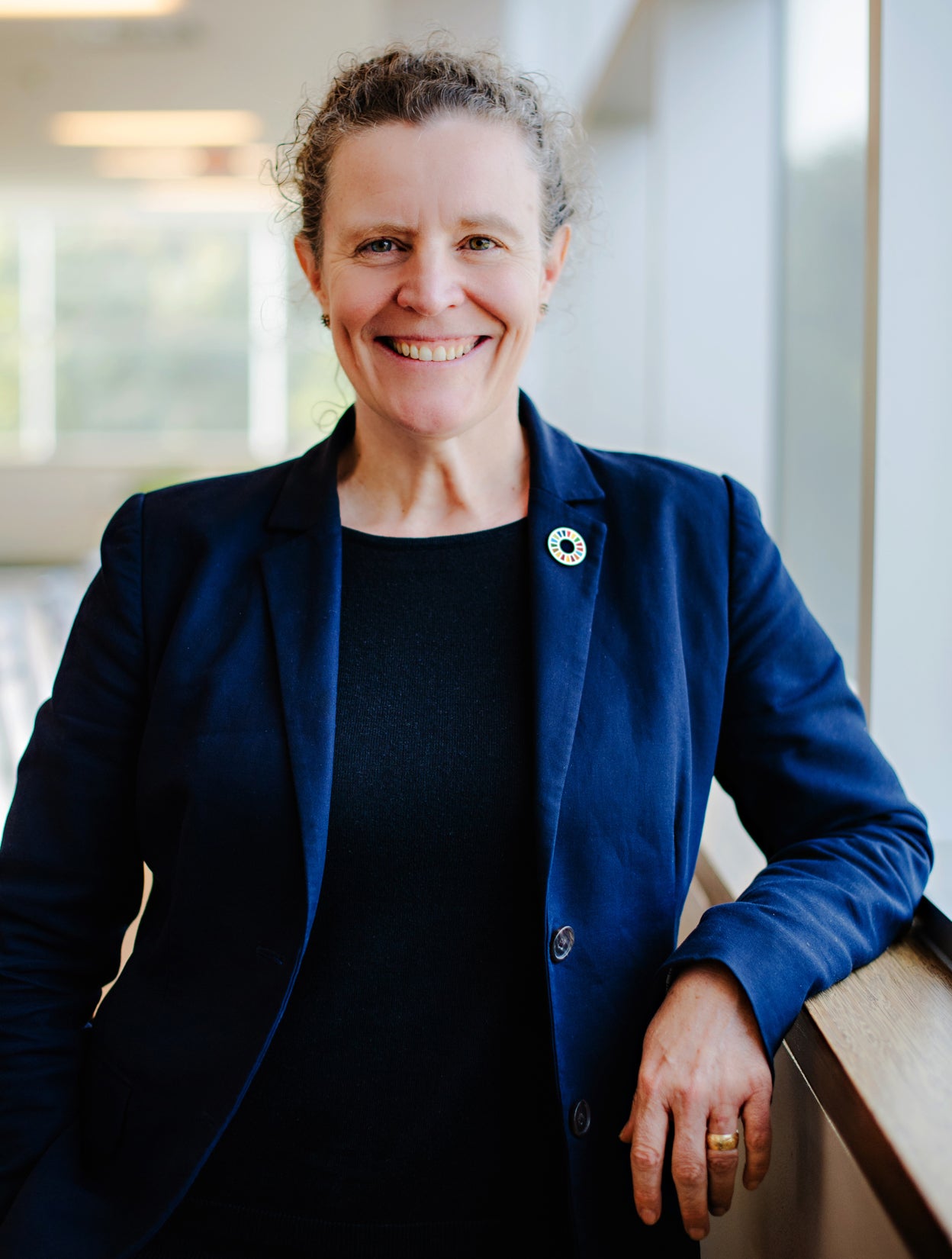 Among this year's recipients is Dr. Amelia Clarke, a Professor in the School of Environment, Enterprise and Development, who earned a $2.5 million SSHRC Partnership Grant to lead one of Canada's largest municipal climate action research collaborations supporting Canadian municipalities to accelerate climate action and achieve net-zero goals by 2050.
Building on an existing national research partnership, Clarke's project will work with 38 partner and collaborator organizations and approximately 250 municipalities to identify, measure and accelerate effective local climate action.
The six-year initiative will help municipalities improve climate-related measurement, budgeting and financial disclosure, while generating new evidence on what works in reducing emissions and building local capacity. The project will also create extensive training opportunities for students and municipal practitioners, helping communities across Canada advance toward national net-zero goals.
Beyond Clarke's Partnership Grant, Waterloo researchers received funding through SSHRC's Insight Grant, Insight Development Grant and Partnership Development Grant programs, supporting projects focused on climate resilience, health, public policy, innovation and the societal impacts of artificial intelligence.
Other major SSHRC-funded projects include:
Dr. Jason Thistlethwaite (Faculty of Environment) received $471,302 to develop an AI-powered platform designed to improve flood-risk assessment and support climate resilience planning across Canada.
Dr. Michelle Rutty (Faculty of Environment) received $412,284 to create tools that use immersive virtual reality to help communities evaluate and implement climate adaptation strategies.
Dr. Igor Grossman (Faculty of Arts) received $398,489 to combine AI and cross-cultural research to understand how cultural narratives shape cooperation, fairness and social decision-making around the world.
Dr. Janice Barry (Faculty of Environment) received $331,267 to investigate how planners navigate emerging ethical challenges such as climate justice, reconciliation and artificial intelligence.
Dr. David Moscovitch (Faculty of Arts) received $329,864 to explore how positive memories can strengthen social resilience and reduce isolation.
Dr. Sara Hart (Faculty of Arts) received $322,399 to investigate how genetics and family environments influence children's literacy development.
Dr. Felix Arndt (Faculty of Engineering) received $312,476 to study the factors that have contributed to Waterloo's emergence as one of the world's leading innovation hubs.
Dr. Elen MacEachen (Faculty of Health) received $226,822 to examine the employment risks and regulatory protections facing low-wage remote workers in the post-pandemic economy.
Dr. Cameron McCordic (Faculty of Environment) received $198,944 to explore how futures thinking and artificial intelligence can help southern African cities strengthen climate adaptation and cyclone response planning.
Dr. Heather Henderson (Faculty of Arts) received $198,430 for a project with community partners to develop and evaluate strategies to foster belonging and social connection among youth.
Dr. Suzan Ilcan (Faculty of Arts) received $124,639 to undertake a comparative study of how displaced people experience legal, spatial and social precarity in different regions of the world.
Dr. Andrea Collins (Faculty of Environment) received $122,495 to investigate the growing influence of anti-gender movements within international food and agriculture policy institutions.
Dr. Andrew Cooper (Faculty of Arts) received $120,484 to examine how leader-centred diplomacy affects international relations and global governance.
Dr. Jennifer Clary-Lemon (Faculty of Arts) received $111,951 to explore how environmental storytelling and field-guide practices can foster engagement, efficacy and hope in the face of climate change.
Dr. Steffanie Scott (Faculty of Environment) received $111,437 for a community-engaged project examining how Waterloo Region can build more sustainable, equitable and relational local food systems.
Dr. Tim Bauer (Faculty of Arts) received $110,147 to study how difficult client interactions influence auditor decision-making and professional judgment.
Dr. Galen Watts (Faculty of Arts) received $108,404 to explore the cultural and social forces reshaping political conflict and identity in Canada.
Additional SSHRC-funded researchers:
- Dr. Will Zhao (Faculty of Arts) - Multimodal Optimal Distinctiveness in Creator Economy Entrepreneurship: A Verbal-Visual Alignment Approach ($93,990)
- Dr. Kaishu Wu (Faculty of Arts) - The Influence of Information Environments on Tax Efficiency and Use of Tax Planning Channels ($92,764)
- Dr. Jingjing Huo (Faculty of Arts) - How Has Population Aging Changed the Politics of Inequality in Advanced Industrialized Nations? ($85,892)
- Dr. Jordana Cox (Faculty of Arts) - Radical Edits: Reimagining News Participation in Contemporary Visual and Performing Art ($81,591)
- Dr. Winfried Siemerling (Faculty of Arts) - Critical Theory, Blackness, and Anthropocene Poetics ($78,980)
- Dr. Tisha King (Faculty of Arts) - Balancing Roles in Elite Tax Advisory: Insights from Big Four Tax Professionals Serving Family Offices ($77,611)
Insight Development Grants:
- Dr. Irenius Konkor (Faculty of Health) - Wellbeing under Threat: Community Experiences of Galamsey in Ghana ($98,827)
- Dr. Leia Minaker (Faculty of Environment) - Enabling Evidence-Based Policymaking and Interdisciplinary Social Change Research for Homelessness ($95,000)
- Dr. Joe (Zhu) Qian (Faculty of Environment) - Resettling a Large Ensemble of Indigenous Heritage Buildings in China: Impacts, Challenges and Potential ($94,818)
- Dr. Victor Cui (Faculty of Engineering) - The Global Chilling Effects of U.S. Sanctions on Open-Source AI ($92,925)
- Dr. Sepideh Ebrahimi (Faculty of Arts) - How Does Anthropomorphism Influence Consumers' Susceptibility to Deception by Conversational Agents? ($79,601)
- Dr. Nancy Worth (Faculty of Environment) - Stigma and Strategy: Learning from Disabled Students' GenAI Self-Accommodation Practices ($78,665)
- Dr. Richard Nyiawung Achankeng (Faculty of Environment) - Assessing Complexities in Mangrove Fisheries to Deliver Food, Climate, and Equity Benefits ($76,898)
- Dr. Julie Bernard (Faculty of Environment) - Tackling Climate Change Shareholder Proposals in an Anti-ESG Era Through a Proxy Voting Lens ($75,653)
- Dr. Steven Bednarski (St. Jerome's University / Faculty of Arts) - DAMMES: The Digital Archive of Medieval Manosquin Environment and Society ($74,000)
- Dr. Holly Campeau (Faculty of Arts) - Curbing the Craft: AI, Officer Discretion, and the Sociotechnical Transformation of Policing ($73,657)
- Dr. Seda Oz (Faculty of Arts) - Decentralized Entry Signals and Strategic Disclosure: How Crowdfunding Activity Shapes Incumbent Firms ($48,250)
- Dr. Stephen Quilley (Faculty of Environment) - Embodied Technics in an Age of Automation: Craft Practice, Skill, and the Transformation of Work ($39,761)
- Dr. Clara Colombatto (Faculty of Arts) - The Moral Weight of Confidence: How Decision Dynamics Shape Perceptions of Moral Character ($36,739)
These projects are supported in full or in part by funding from the Social Sciences and Humanities Research Council of Canada.
Read the full Government of Canada announcement


