
The threat of nuclear Armageddon, a constant worry for many who grew up during the tense decades of the Cold War, is becoming a cause for concern for a growing number of young people.
For decades, the possibility of the Soviet Union and United States starting a civilisation-ending nuclear confrontation was the pre-eminent fear of many people growing up in the 20th century.
Whilst the real possibility of this cataclysm never went away, it was supplanted in the minds of younger generations by existential concerns that seemed more pressing, such as the climate crisis and rogue artificial intelligence tools.
But the shadow of a nuclear conflict has never gone away, even if, in part thanks to the 56-year-old nuclear Non-Proliferation Treaty (NPT), nuclear weapons have not been used in a war since the two atomic bombs dropped on Hiroshima and Nagasaki in 1945.
The return of nuclear rhetoric
And, in recent years, nuclear rhetoric has been making a comeback, prompting the UN to reach out to young activists and explain why these weapons can never again be used in a theatre of war.
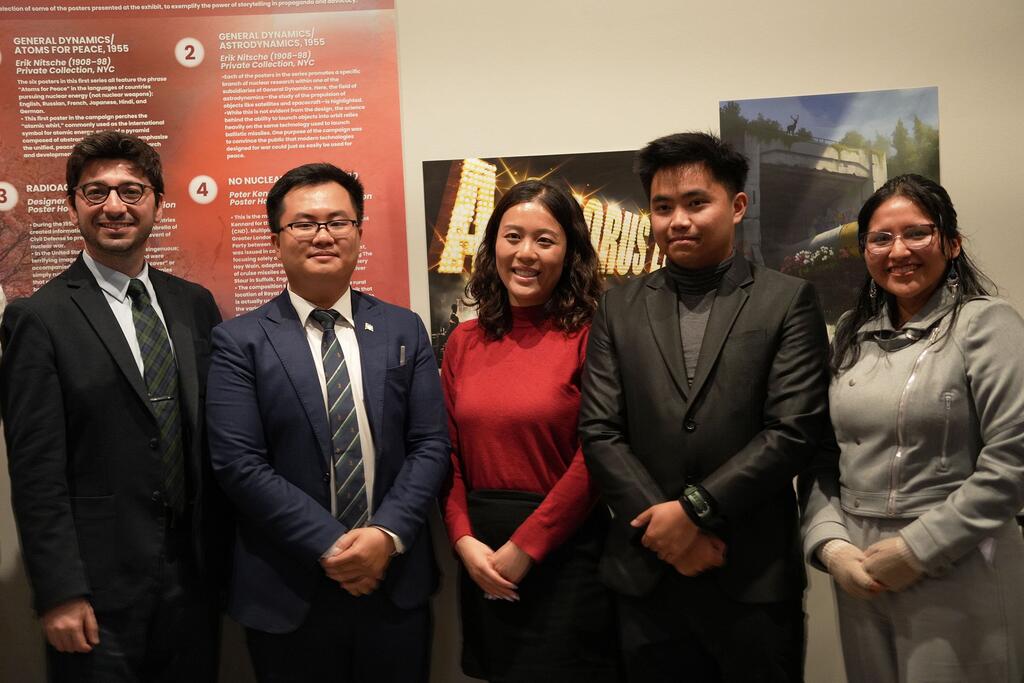
"Nuclear war wasn't high on my agenda, to be honest," says 30-year-old Natalie Chen, "and the same goes for my peer group, but disarmament is definitely a major concern, in the context of current conflicts such as the war in Ukraine, Gaza and Iran."
Since becoming a member of the Youth Leader Fund for a World without Nuclear Weapons (YLF), a programme run by the United Nations, Ms. Chen, a UK-based arts producer from Hong Kong, has been learning more about the complexities and key principles of nuclear disarmament, and why nuclear weapons continue to pose such a major risk to world peace.
Ms. Chen took part in an event on Thursday at the Poster House museum in New York, organised by the Government of Japan and supported by the UN Office for Disarmament Affairs ( UNODA ), which featured artworks developed by participants from the second cohort of the YLF.
The programme aims to provide the knowledge activists need, in order to be more effective in their disarmament and peace and security advocacy. "I've learned how the political process can be powerful if we, as young people, are part of that process," says YLF participant Abdul Mustafazade, an artist who uses digital media to make global issues more engaging.
"The language of disarmament can be very technical, and I have learned how to use art to make it understandable."
A new generation of threats
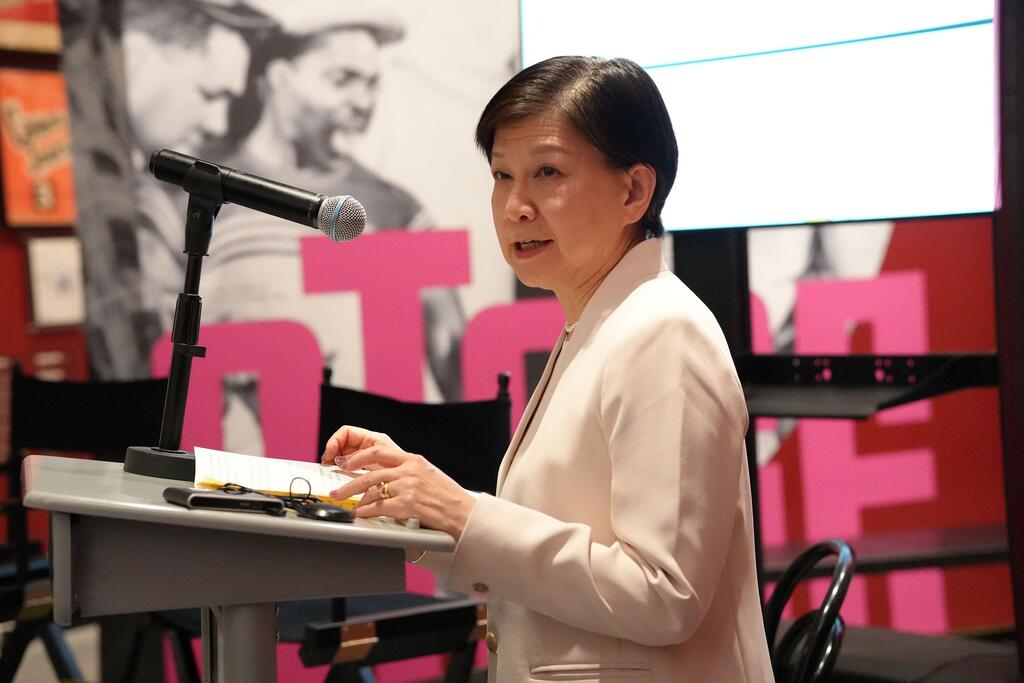
Izumi Nakamitsu, the head of UNODA, argues that there is an urgent need to explain to young people why this is a key issue, and bring in new generation of experts who have grown up with modern threats, such as AI and cyberspace hacking, which didn't exist when the NPT was created.
"For about 30 years, following the end of the Cold War, we were fortunate not to have to worry too much about nuclear weapons," says Ms. Nakamitsu, "but geopolitical tensions have returned, and one of the problems with the disarmament community is that they are always looking back to the way things were discussed in the past.
"But there are new challenges, such as the integration of AI into nuclear command and control, that are very scary to talk about."
The event took place on the sidelines of the 2026 review conference of the NPT, taking place at UN Headquarters until 22 May.
Ms. Nakamitsu accepts that the technical language can be hard to follow, but the half-century-old treaty remains as important as ever.
"A world without the NPT would be much less secure because many more countries would be looking to possess nuclear weapons, which would make their use much more likely. Before the treaty was agreed, it was predicted that there would be 30 or 40 nuclear weapon states. That didn't happen because of the NPT."
The normalisation of nuclear weapons
The Youth Leaders Fund is one of the ways in which the UN is helping young nuclear disarmament advocates to understand complex military doctrines so that they can hold nuanced debates and be taken seriously by the deterrence community.
It is also a way to push back against the normalisation of nuclear weapons use, something that deeply concerns Ms. Nakamitsu, a Japanese national.
"It's creating the very dangerous narrative, that a small, 'low yield' nuclear weapon can actually be used on the battlefield. That is wrong. The bombs used on Hiroshima and Nagasaki would today be categorised as low-yield nuclear weapons.
It is absolutely crucial to keep the memory of what happened alive, and I hope that my country will continue to do so"


