
A month after completing their historic flyby of the Moon, the astronauts from NASA's Artemis II mission landed at UN Headquarters in New York this week with a message that sounded like a reminder: humanity is capable of extraordinary things when it acts together.
Their visit on Thursday followed a long-standing tradition - cosmonauts and astronauts have been coming to the UN for decades to speak about peace, international cooperation, and our shared global future.
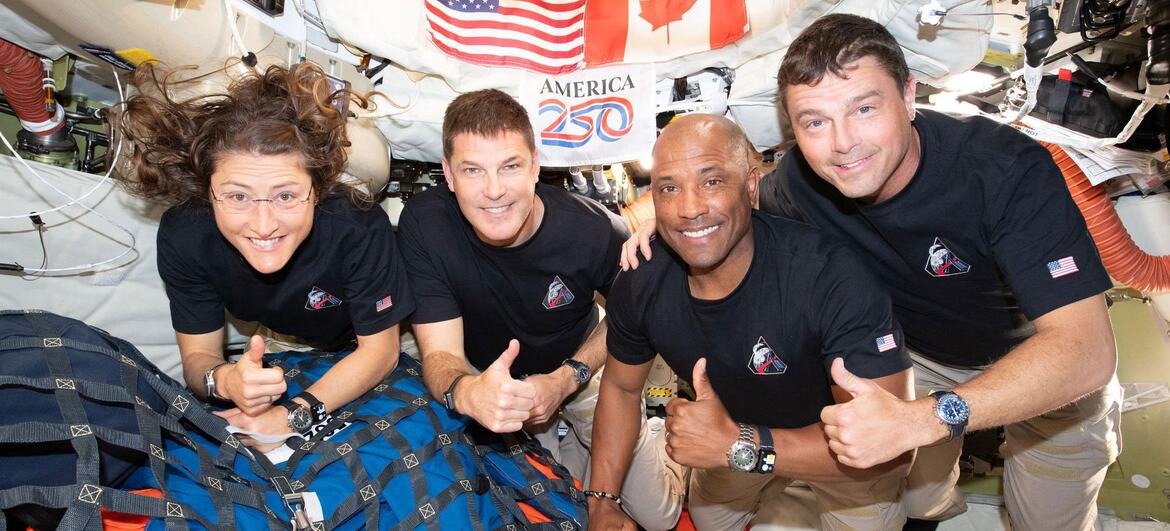
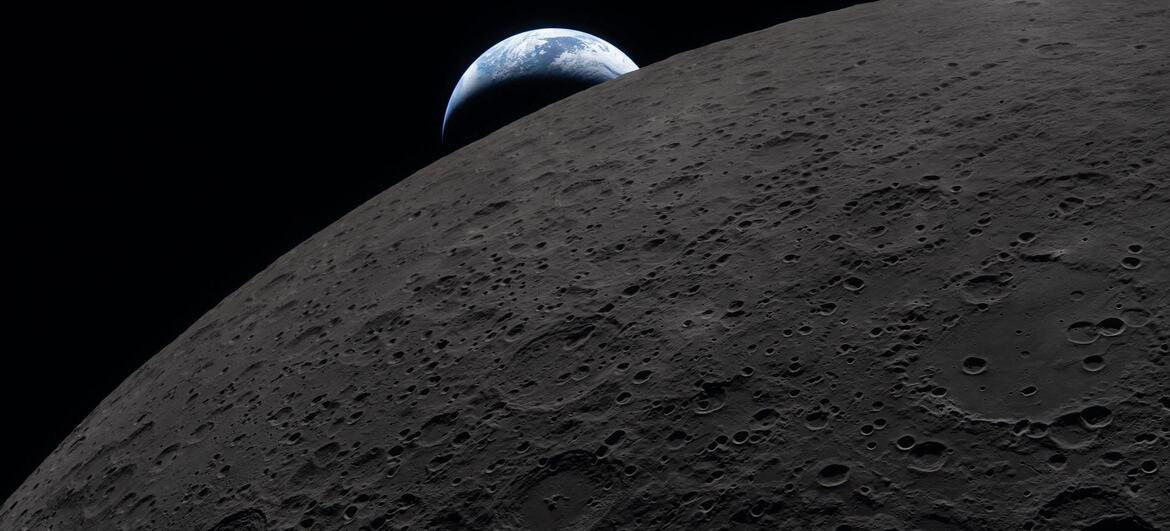
The four-person crew carried out the farthest human spaceflight in history, travelling beyond the far side of the Moon and safely returning to Earth after 10 intense, demanding, and inspiring days.
In that short time, as noted during the event, they "captured the imagination of billions" and rekindled a sense of shared human participation in the exploration of space.
Tradition and continuity
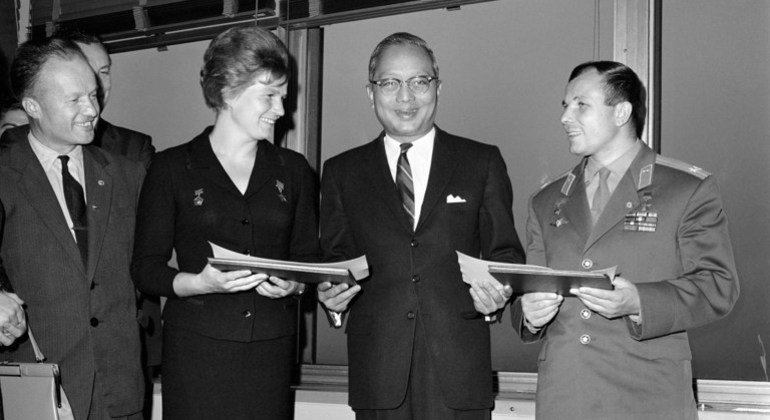
The General Assembly building has long welcomed pioneers of the space age, starting with Soviet cosmonauts Yuri Gagarin and Valentina Tereshkova - the first man and woman in space.
Their October 1963 visit symbolised not only technological progress but also the idea that cosmos is a domain where humanity can be united.
Since then, representatives of many nations have repeatedly addressed the international community, emphasising that space exploration is impossible without cooperation and shared responsibility.
Artemis II continues that legacy. The mission represents not only a technological breakthrough but also a model of international partnership, involving multiple countries and institutions, including the European Space Agency, with scientific instruments and systems developed by specialists from around the world.
"I had the opportunity to talk to everyone on the way here - I mean to these three pretty normal but pretty overachieving Americans and a Canadian," said US Ambassador Mike Waltz, who hosted the evening discussion in front of an invited audience of excited earthlings with the astronauts.
The crew stressed that their task was not only to test a spacecraft, but also to remind people on the ground that humanity can achieve great things when it works together.
Earth from deep space
For all the astronauts, the most powerful experience was seeing Earth from deep space.
From hundreds of thousands of miles away, the planet appeared small, fragile, almost weightless against the vast darkness - an image that underscored both Earth's uniqueness and the rarity of life itself.
"I always felt urged to just be grateful for what we were seeing and to be grateful for what we were eventually going back to," said pilot Victor Glover.
Astronaut Christina Koch described a sudden awareness of humanity's scale within the boundless universe.
"You realize that actually there's nothing absolute or guaranteed about this, and that actually there is such thing as a global scale…this scale is our world and what we do with it is our choice."
Life on board
Life inside the spacecraft was highly demanding. The crew had to balance experiments, navigation, system monitoring, and constant adaptation to microgravity.
"One day, I was opening up some granola with berries. Victor was floating kind of beside me, and just when I ripped the package, it just went too fast and it flung stuff flying across the spacecraft, and it's like dotting his shirt.
"And he's like, 'Oh, don't worry, I got this'. And he takes a spoon and he just starts eating it off of his shirt," recalled Canadian astronaut Jeremy Hansen.
A return to the Moon
Artemis II is only the beginning of a broader effort. The programme aims to return humans to the Moon, establish a sustained presence on its surface, and build infrastructure - including a lunar base - to support long-term exploration. These plans are grounded in the Artemis Accords, a set of international principles already endorsed by dozens of countries.
Speaking from the UN platform, the astronauts also addressed young people, encouraging them not to be afraid to ask questions and to listen carefully to the answers.
In closing, the crew emphasized that Artemis II was measured not only in distance or technological achievement.
Space offers a perspective that allows us to see Earth as it truly is: unique, shared, in need of care - and capable of bringing people together.
"Everyone asks what the Earth looks like from space, and most of the time I reply, the tiny Earth is an incredible place," Reid Wiseman concluded.
Reaching for the stars
Meanwhile, a NASA aerospace engineer who grew up in Tanzania dreaming of becoming an astronaut, used to think that this was practically impossible.
Today, Alinda Mashiku is a Program Manager with the US space agency, where she helps ensure that satellites avoid collisions in orbit, contributing to the safety and sustainability of pioneering space missions such as Artemis II.
In this interview we recorded a few days ago, Ms. Mashiku told us how she encourages girls to reach for the stars:


