
"Production of Mycelium-Based Nonwoven Fabrics via Submerged Fermentation" ACS Infectious Diseases
The search for leather alternatives has led researchers somewhere unexpected: fungi. Although traditional leather is durable, producing it requires animal agriculture, which carries negative environmental impacts. Meanwhile, vegan alternatives are typically made from petroleum-based plastics that are difficult to recycle. Researchers report in ACS Applied Bio Materials that mycelium, the underground network of fibers below mushroom caps, can be pressed into a durable yet compostable leather-like fabric. They even sewed the fabric into a purse.
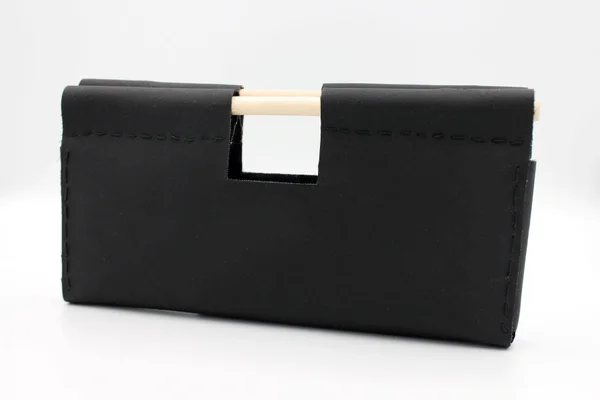
Adapted from ACS Applied Bio Materials 2026, DOI: 10.1021/acsabm.6c00471
"Many people are looking for alternatives to fossil fuel-based and animal-derived materials, yet scalable alternatives remain limited," says Manuel Arias-Barrantes, a co-author of the study. "Our work has solved one significant bottleneck, enabling large-scale production of affordable mycelium-based fabrics."
Most mycelium materials are made by letting fungi grow across trays until the thread-like fibers knit themselves into a solid sheet. While effective, the approach can't be used for mass production. Instead, Arias-Barrantes, Géza Szilvay, and their colleagues submerged the fungus Trichoderma reesei in a nutrient-rich liquid and grew it inside tanks like those used to brew beer. Rather than producing a sheet, the fungus grew into a thick, pulp-like mass. The researchers harvested the pulp, washed it, and then mixed in sorbitol (a naturally occurring sugar alcohol frequently added to foods and cosmetics) and cellulose (the primary structural component of plant cell walls) to improve flexibility and strength. Finally, they spread the mixture into thin sheets and dried it, creating a nonwoven, leather-like fabric.
Unlike the traditional tray method, the new pulp-based approach gave researchers more control over the final material, allowing them to adjust its properties, add colors and textures, or layer the mycelium material onto cotton fabrics.
Next, the researchers tested whether the production process could move beyond small laboratory samples. To do this, they used a roller system similar to those used in paper manufacturing, continuously producing mycelium sheets about 8 inches (20 centimeters) wide and 26 feet (8 meters) long. They then used the material to create a prototype handbag.
In laboratory tests, the rolled-out mycelium material reached tensile strengths comparable to traditional leather. The material broke down in water within 28 days and completely disintegrated under industrial composting conditions in about six weeks. Although the material still needs to become more resistant to tearing before mycelium-based products reach consumers, the researchers say the manufacturing process is promising because it uses equipment already common in the biotechnology and printing industries.
The authors acknowledge funding from Business Finland through the Research to Business program, the Research Council of Finland and its Centers of Excellence Program through the Centre of Excellence in Life-Inspired Hybrid Materials, and VTT Technical Research Centre of Finland.


