
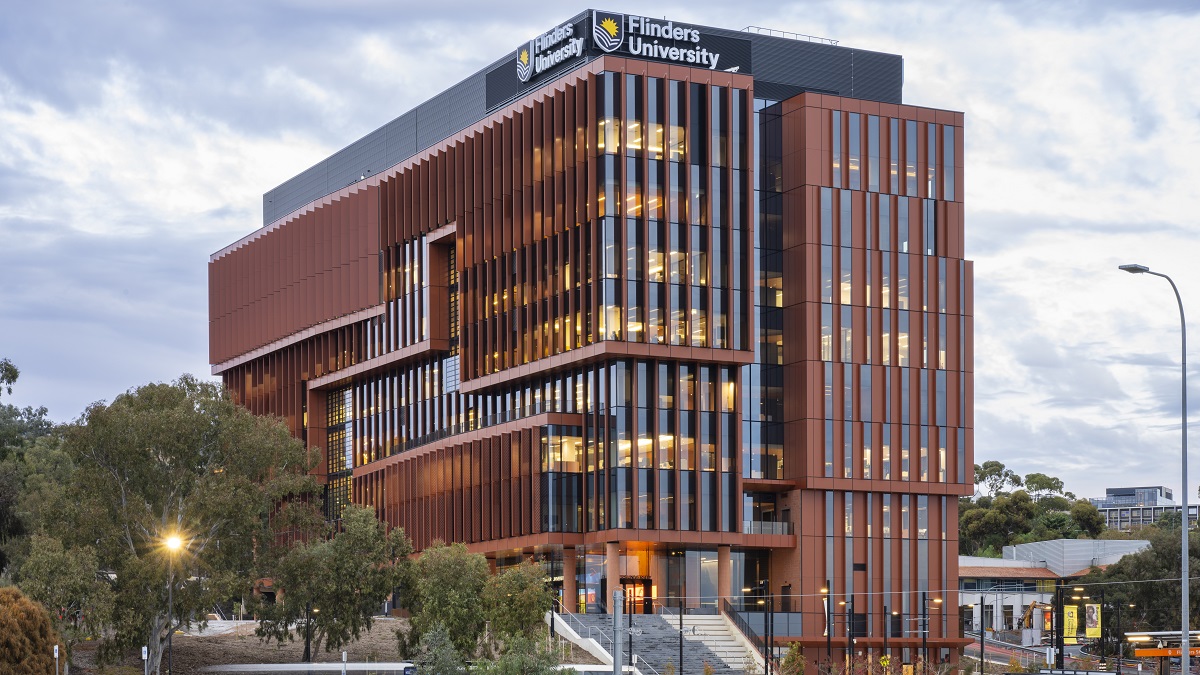
A new $10 million genomics facility at Flinders University will help Australian researchers better understand disease, develop more resilient crops and respond to environmental change by making large-scale sequencing faster and more affordable.
The highly automated genomics laboratory will enable one of the highest-throughput and lowest-cost genomics capabilities in the Southern Hemisphere, with the capacity to sequence the equivalent of up to 59,000 complete human genomes each year.
This represents a transformative investment in South Australia's scientific capability, helping researchers turn discoveries into benefits for patients, farmers, industries and communities.
The facility is being established by Flinders University in partnership with the South Australian Genomics Centre (SAGC), Bioplatforms Australia and Decode Science.
Based at Flinders University's Bedford Park campus, the laboratory will give Australian researchers access to large-scale genomic sequencing at a speed and cost not previously available in South Australia.
Genomics involves studying the complete genetic information of people, plants, animals and microorganisms. Analysing this information at scale can reveal patterns that would otherwise be difficult to detect, including genetic factors linked to disease and characteristics that make crops more productive or resilient.
The laboratory will use robotics to manage the sequencing process, from receiving samples and extracting genetic material to preparing samples for sequencing and managing the resulting data. This will allow researchers to analyse thousands of samples consistently and efficiently.

SAGC Scientific Director and Flinders University Professor David Lynn said this investment will dramatically reduce the cost of large-scale genomics and help researchers move more quickly from scientific discovery to real-world impact.
"By analysing thousands of genomes efficiently and consistently, researchers will gain new opportunities to understand disease, improve food production and respond to environmental challenges," said Professor Lynn.
In health, this could improve understanding of why people develop particular diseases or respond differently to treatment. In agriculture, it could support healthier and more resilient crops and livestock. It could also help researchers monitor biodiversity and environmental health.
The laboratory will operate as a national research resource for universities and research institutes. It will be hosted by the Flinders Health and Medical Research Institute within Flinders University's Health and Medical Research Building. It will also expand SAGC's existing facilities at SAHMRI.

Flinders University Deputy Vice-Chancellor (Research) Professor Ray Chan said the transformative investment will establish one of the highest-throughput and lowest-cost genomics capabilities in the Southern Hemisphere.
"It will bring together world-class expertise, advanced infrastructure and industry partnerships to accelerate discoveries that improve people's lives and benefit communities."
Flinders Health and Medical Research Institute Director Professor Billie Bonevski said as genomics becomes increasingly important to healthcare and research, protecting sensitive samples and data is essential."
"Researchers can have confidence that their samples and data will remain secure and be managed in Australia."

The facility has been designed to keep biological samples and genomic data secure and within Australia, supported by secure workflows, Australian-based data storage and independent cybersecurity review.
To demonstrate its capability, the facility plans to run a national competition offering eligible Australian universities and research institutes the opportunity to have a total of 5,000 human genomes sequenced at no cost. Supported by Decode Science, the competition is expected to open later this year.


