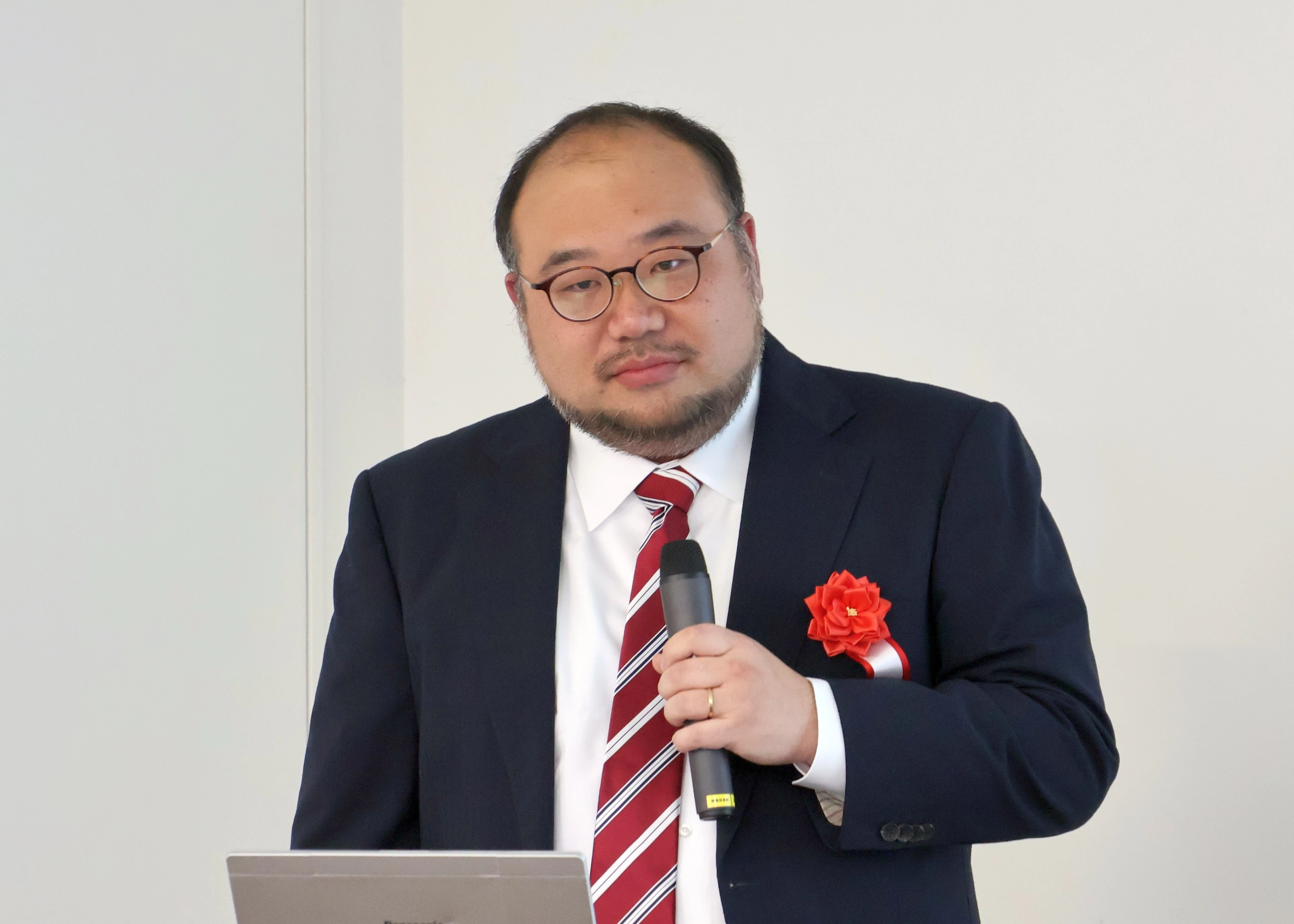
Six researchers were awarded the 2026 ASUNARO Grant, a financial support program provided by the Institute of Science Tokyo for researchers under the age of 45 engaged in basic research. A ceremony to present the award notifications was held on June 22.
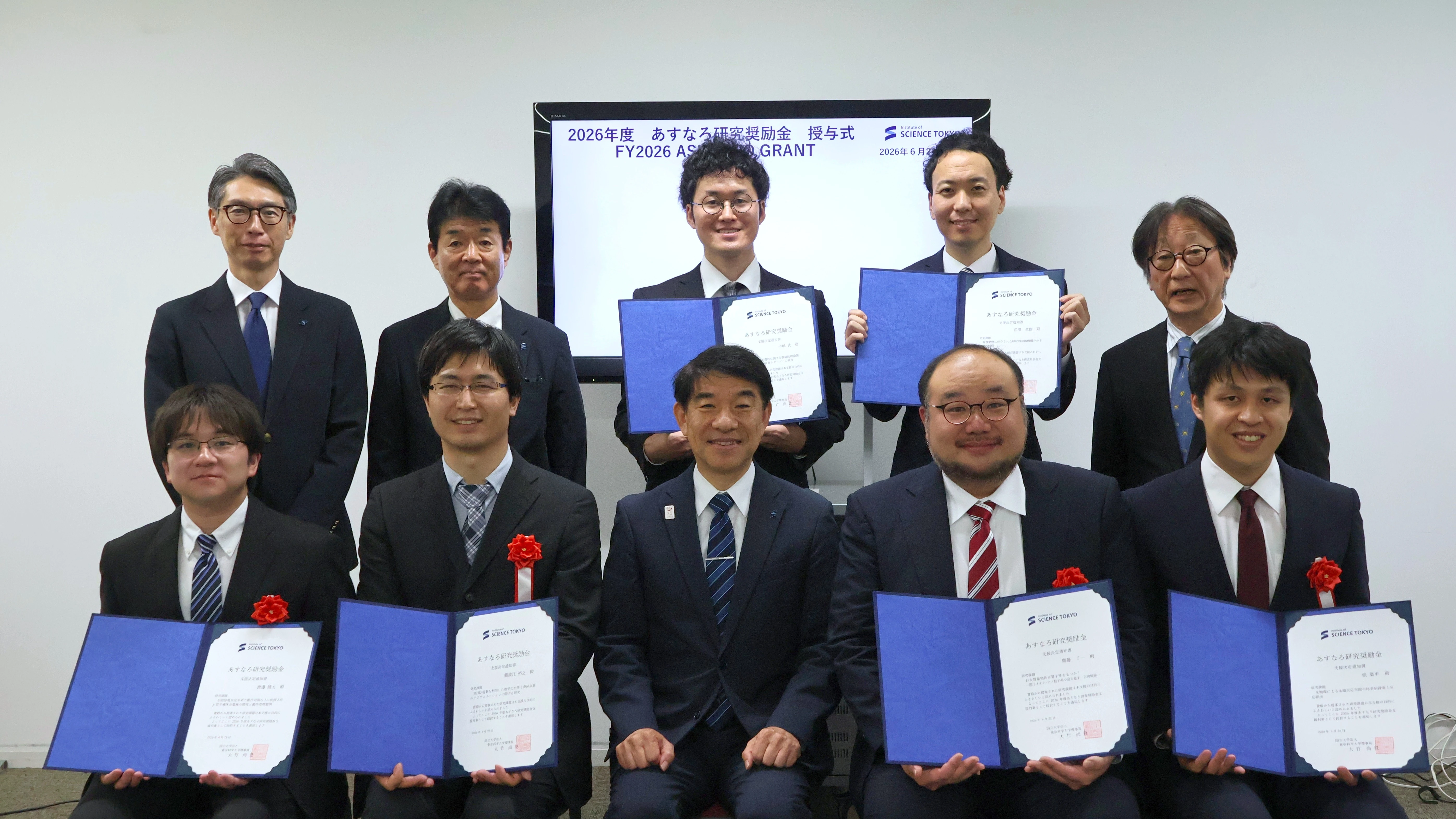
(Back row from left : Toshiyuki Nihei Director of Research Planning Division, Takeo Yamaguchi Vice President for Research Strategy and Planning, Assistant Professor Takeru Nakashima, Assistant Professor Tatsuki Nagasawa, Shigeru Hioki Vice President for Industrial Cooperation Fundraising)
The grant was established in FY 2020, in response to the late Professor Emeritus Koichi Asano's wish to donate a portion of the proceeds from his research, saying, "I am grateful to society for the many years of support that allowed my work in basic research to flourish. In return, I would like to use the funds to support basic research by future generations."
This is the six time the Institute has provided the grant for which 50 researchers applied and 6 were selected as recipients.
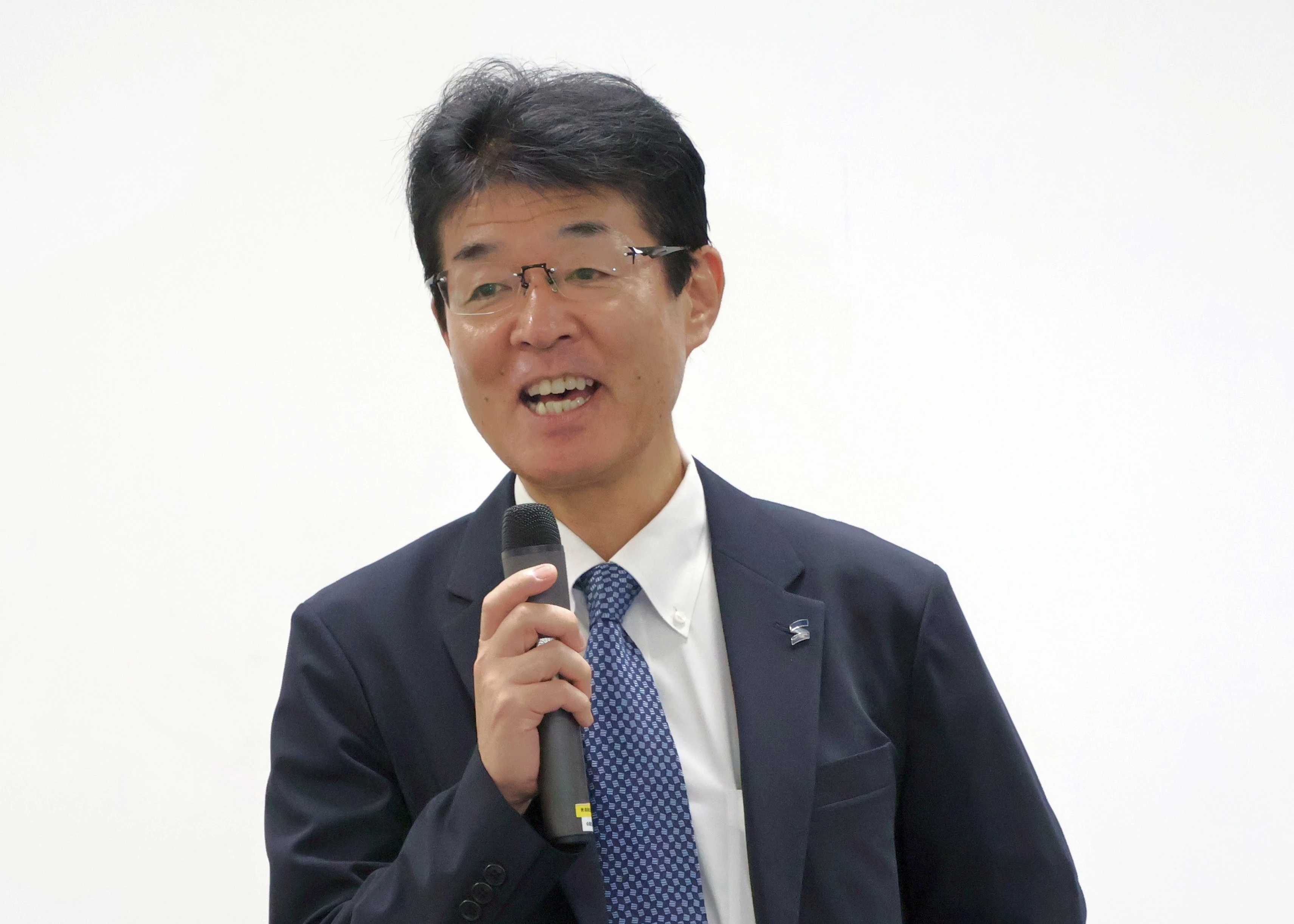
At the award ceremony, a congratulatory address from President and CEO Naoto Ohtake, who encouraged the recipients by saying,"We will do our best to support the practical application of your basic research, and we look forward to your winning further awards both in Japan and abroad, as well as your continued success in the future."

FY2026 Recipients of ASUNARO Grant
Assistant Professor Ryoichi Saito
Department of Physics, School of Science
Research Topic: Can Macroscopic Objects Behave Quantum Mechanically?
- Probing the Quantum-Classical Boundary with an Atomicion-Nanoparticle Hybrid System
Objects around us usually appear to move according to the laws of classical mechanics. In contrast, in the microscopic world of atoms and electrons, uniquely quantum phenomena such as superposition and interference emerge. This raises a fundamental question: can objects much heavier than atoms also exhibit quantum behavior? In this study, I will trap charged nanoparticles, a few hundred nanometers in size, together with atomic ions that can be precisely controlled using lasers. By coupling these two systems through electric forces and using the atomic ion as a "gateway to the quantum world," I aim to control the motion of nanoparticles at the quantum level, which is difficult to achieve with nanoparticles alone. Through this approach, I seek to experimentally clarify how far large objects can behave quantum mechanically, and how interactions with the environment cause quantum properties to disappear and give rise to the classical behavior familiar in our everyday world.