
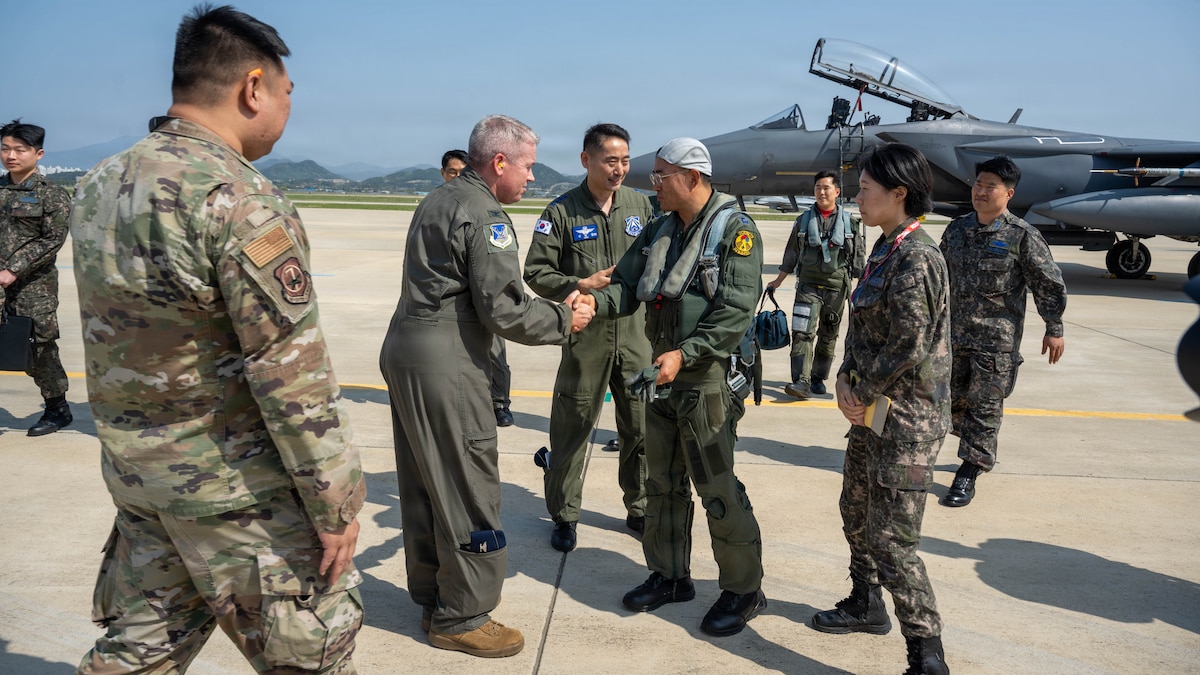
Lt. Gen. Jun Sun Cha, commander of South Korea air force Operations Command, met U.S. Air Force Col. Brad Dvorak, commander of the 31st Air Expeditionary Wing, during the first week of exercise Freedom Flag 26-1 at Gwangju Air Base, South Korea, April 15.
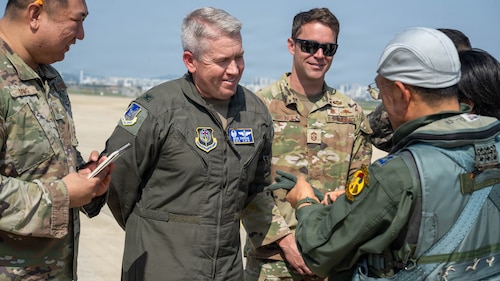
The meeting between the two military leaders occurred after Cha flew an F-15K Slam Eagle during combined training operations between U.S. Air Force, U.S. Marines Corps, and South Korea air force fighter aircrew. The mission was part of FF 26-1, a regularly scheduled training event designed to prepare joint and combined forces for combat to defend South Korea.
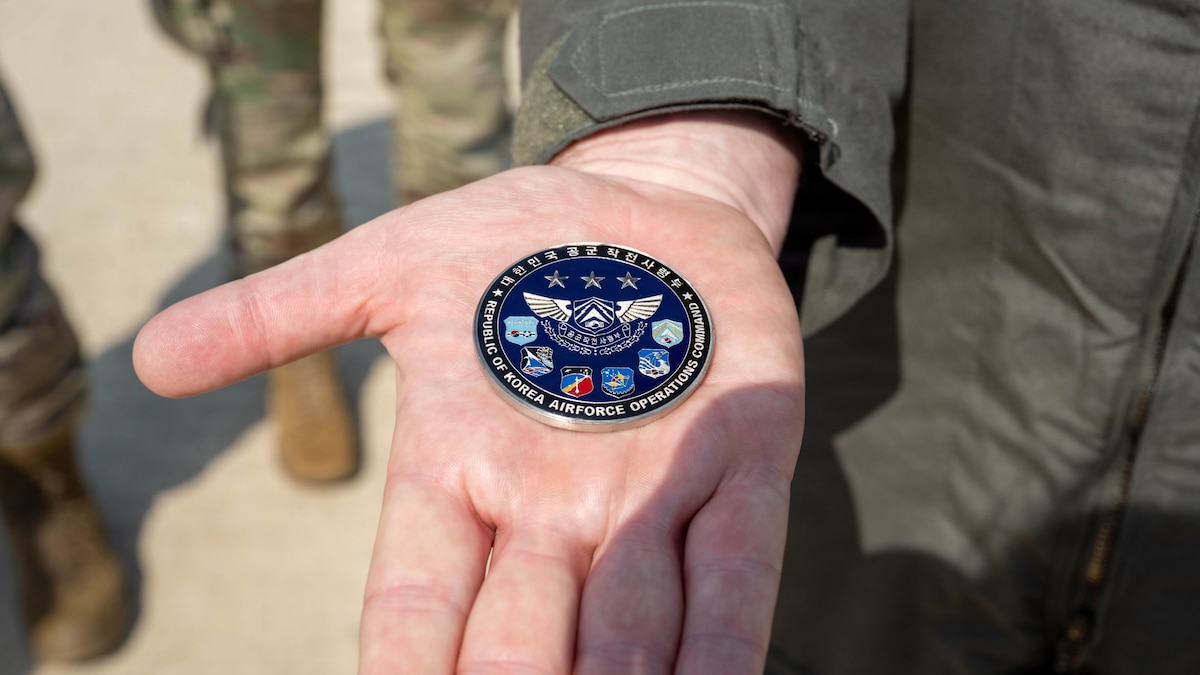
The commanders met on the flight line, shook hands, exchanged coins, and reaffirmed the critical partnership between the South Korea and U.S. armed forces.
"Freedom Flag is about forging the trust and tactical sharpness that makes us a lethal, agile, and combined fighting force with our South Korea allies," said Dvorak during a joint assembly of U.S. and South Korea military personnel at the start of the exercise. "The work we do here has a lasting impact. It will bolster our alliance and contribute directly to the peace and stability of this region."
Freedom Flag integrates U.S. and South Korea airpower in dynamic training missions including air-to-air and surface-to-air scenarios, ensuring mutual understanding and trust between the two nations. This large-scale employment training enhances U.S. and South Korea interoperability and fortifies the alliance in terms of capability and commitment.
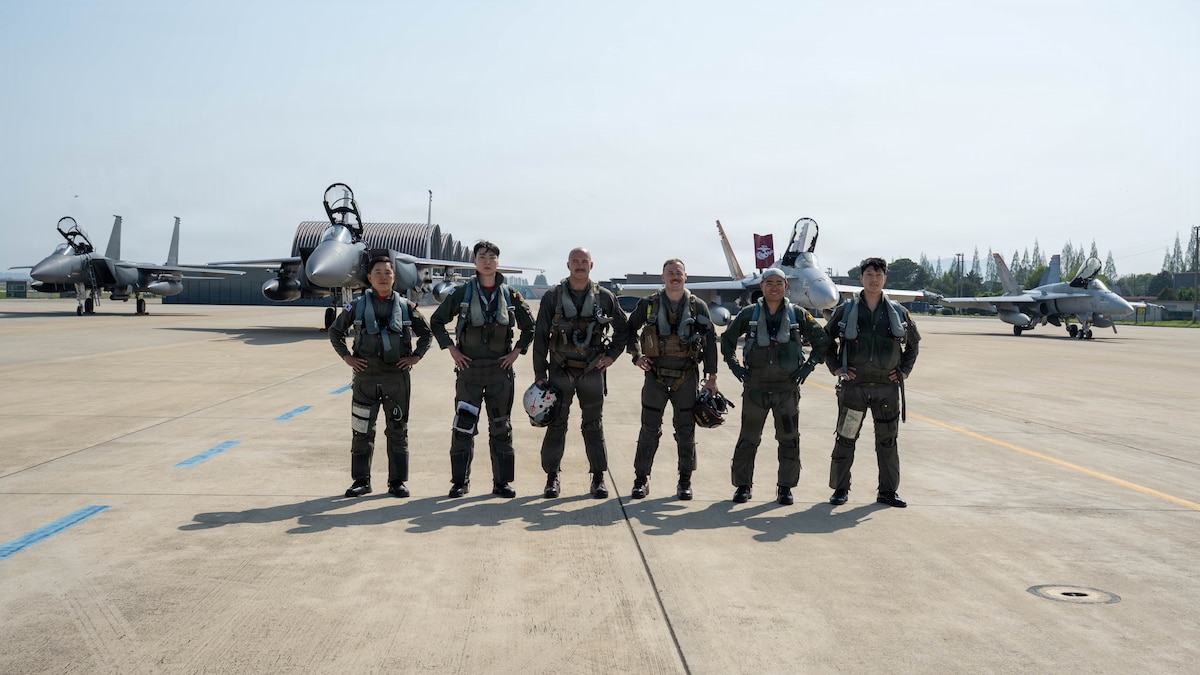
Cha and Dvorak, who also serves as Deployed Forces Commander at Gwangju for the duration of the exercise, were joined on the flight line by pilots and personnel from the South Korea air force 1st Fighter Wing and U.S. Seventh Air Force, 31st Air Expeditionary Wing, 8th Material Maintenance Squadron, and Marine Fighter Attack Squadron 232 alongside two South Korean F-15K Slam Eagles and two U.S. Marine F/A-18 Hornets.
The current iteration of Freedom Flag continues as U.S. and ROK forces execute complex missions, including offensive and defensive counter-air, close air support, and air interdiction.


