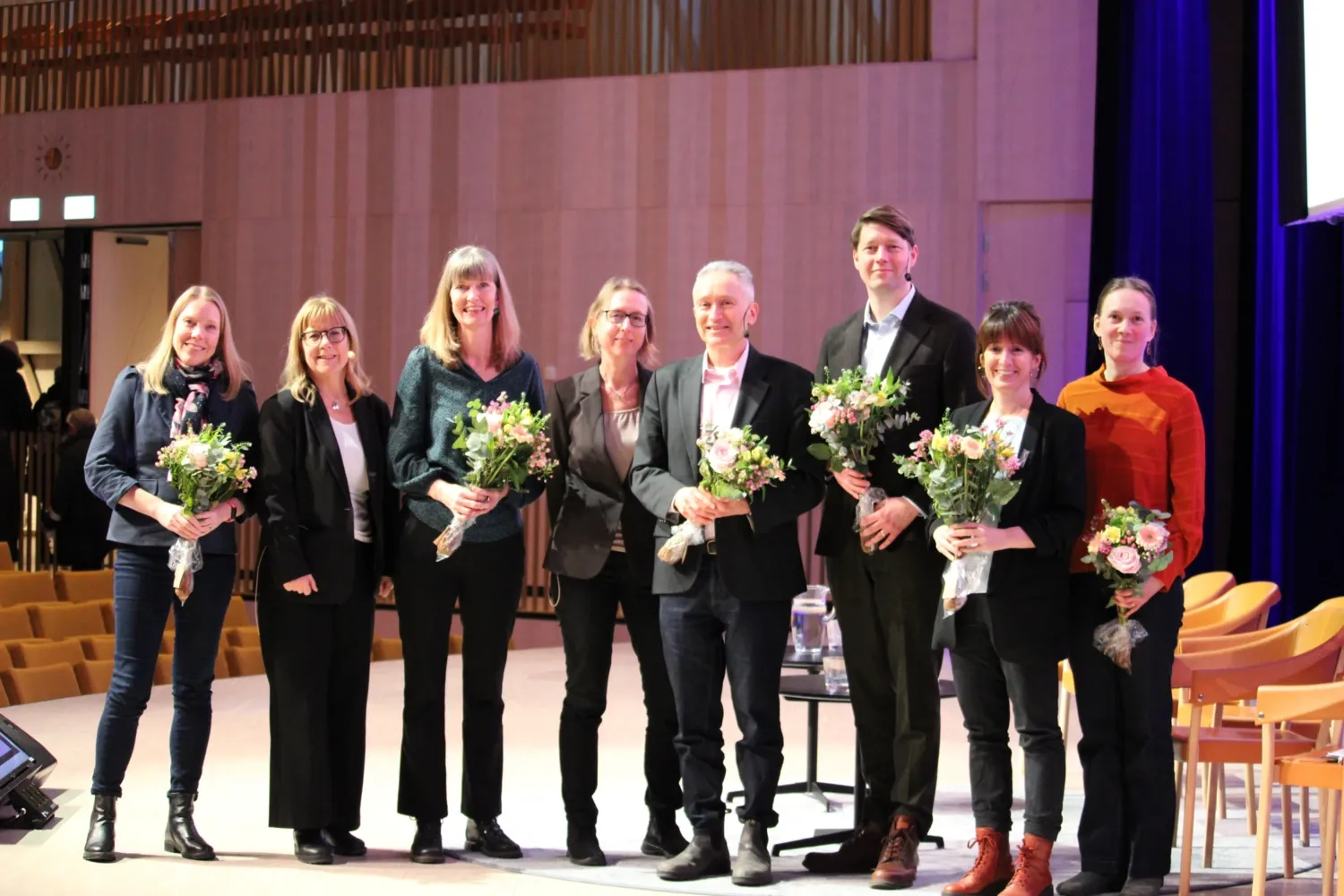
When ARC turned 25 last year, they received a grant from Forte to host a day dedicated to research on aging. On February 5, they therefore organized "Forum for Aging Research - What have we achieved and where are we heading?", bringing together researchers from across Sweden working in the field of aging to share their findings.
It became a well‑attended and inspiring day where researchers, practitioners, and other interested participants gathered in Aula Medica to learn about current discoveries and future perspectives.
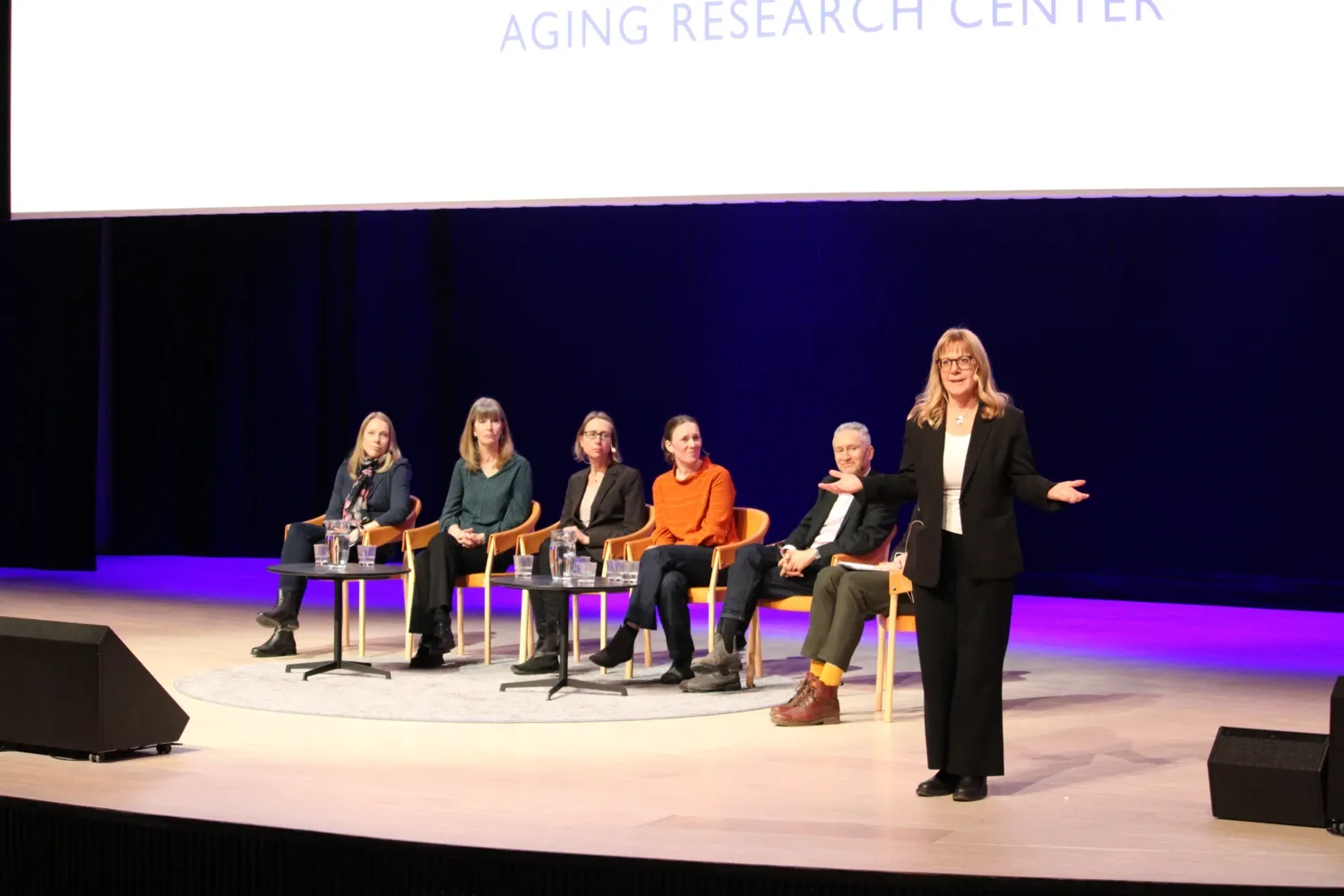
The day was divided into three themes. "Older adults' health today - successes and challenges" took place in the morning. After lunch, the lectures continued with the theme "Healthy aging - an individual and care perspective," followed by the afternoon's final theme, "The interaction between people and their environment." The moderator for the day was Jens Berggren, head of the cognitive unit at Ersta Hospital, who guided the program.
The first speaker was Carin Lennartsson , senior lecturer at NVS and Director of ARC, who lectured on demographic changes, equality, and the challenges facing the welfare system. Today, six percent of Sweden's population is over the age of 80, and by 2060, one in ten Swedes is expected to be 80 or older. At the same time, formal care has been reduced by half, while informal support from families has increased.
Ingmar Skoog, senior professor at the University of Gothenburg, gave a lecture via video link from Gothenburg on the topic "Is 70 the new 50?". He described how perceptions of aging have changed and how today's 70‑year‑olds often enjoy better health, higher levels of activity, and greater participation in society compared with previous generations. He also discussed the four stages of life we now commonly refer to: childhood, adulthood, the retirement years, and the "fourth age," when an older person is no longer able to live independently.
Sara Hägg , senior lecturer at MEB, spoke about biological aging and the risk of age‑related diseases. She emphasized that advanced age is the greatest risk factor for many diseases. Often, the issue is not a single condition but multimorbidity; on average, a 95‑year‑old has five diseases. Biological age reflects how the body is doing, which can be assessed on cellular, molecular, clinical (organ), and functional levels. She also stressed that there is no absolute truth or single method for measuring biological age.
Joakim Öhlén, professor of nursing at the University of Gothenburg, presented on person‑centred care, an approach introduced at the Sahlgrenska Academy as early as 2010. Person‑centred care aims to strengthen the patient's position, counteract the fragmented healthcare system, and ensure that care is tailored to individual needs. The approach focuses on the patient's own narrative, forming the basis for a partnership between the patient and the healthcare provider.
After lunch, Erika Jonsson Laukka , docent at NVS and Head of the ARC division, continued with a lecture titled "Cognitive aging - what do we know?". She explained that Sweden was early in establishing longitudinal studies, which laid the foundation for many databases that today serve as a goldmine for researchers - and they continue to grow. She also outlined various risk factors and protective factors associated with achieving healthy cognitive aging.
Maria Larsson, professor of perception and psychophysics at Stockholm University, lectured on the aging sense of smell. She described why the sense of smell is important - as a warning system, for the experience of taste, appetite, well‑being, and memory. She also highlighted research showing that the risk of depression is higher when the sense of smell is impaired.
"Multimorbidity and frailty among older adults require a paradigm shift in healthcare," said Amaia Calderon‑Larrañaga , senior researcher at ARC/NVS. She emphasised that multimorbidity is more the rule than the exception among older people. Despite this, current healthcare often treats one disease at a time instead of addressing the whole patient and all their conditions. Polypharmacy (use of many different medications) poses significant risks. It threatens patient safety, increases costs, and undermines sustainability - and is not only a health issue but also an economic and organisational one.
Lena Dahlberg, professor of social work at Dalarna University, presented on 25 years of research on loneliness. She highlighted studies conducted on the topic since 2000. Her definition of loneliness refers to a feeling that arises from a perceived gap between the ideal or desired level of social connection and what is actually experienced. One study showed, among other things, that older adults do not perceive themselves as lonely to the same extent as people around them tend to assume.
Finally, Jan C. Semenza, researcher at Umeå University, spoke on "The impact of climate change on the older population." He discussed the intersection of risk, exposure, and vulnerability. It is not solely about extreme heat; for instance, heat can be more dangerous if a person is socially isolated than if they are part of a community. Many factors interact: temperature, precipitation, heat; age, gender, social inequalities, social capital, and medical conditions; geography, hygiene, and wildlife. He also stressed the importance of early warning systems.
Each thematic session concluded with a panel discussion and an opportunity for the audience to ask questions - something many curious participants took advantage of. The discussions were rewarding, and many different facets of aging were illuminated.