Archaeologists working near Skipsea Castle in East Yorkshire say a series of rare discoveries is transforming understanding of life in the centuries before the Norman Conquest.
 The discoveries are considered as key indicators of elite or high-status sites in the period
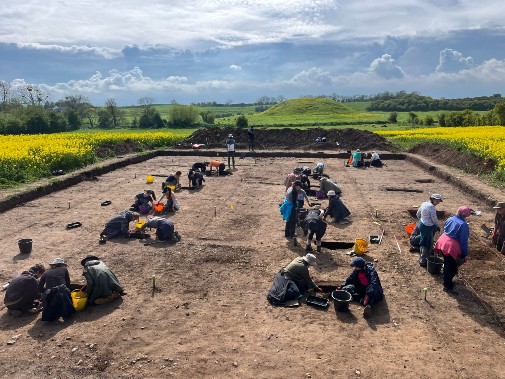
Excavations led by the University of York have uncovered evidence of high-status Anglo-Saxon buildings and industry, including a possible malthouse, a timber tower and a large hall used for feasting and assemblies.
The work is taking place in a field known as Sparrow Croft, about 225 metres from the Norman castle, and forms part of a six-year research project that began in 2023.
Among the most significant new finds are the remains of what archaeologists believe to be a rare medieval malthouse, dating from between AD 750 and 850. The structure includes a drying oven and an adjoining clay floor, once enclosed within a timber-framed, wattle-and-daub building.
Timber hall
Nearby, researchers uncovered a square sunken feature lined with timber and mortar. This is thought to be the cellar of a wooden tower, possibly used as a watchtower, bell tower or even a tower-nave church.
Both structures are considered rare in England and are seen as key indicators of elite or high-status sites in the period before the Norman Conquest.
Above the remains of the malthouse, archaeologists have also identified a large timber hall, built later and probably used for feasting, drinking and political gatherings. The building, which predates the castle, was surrounded by an extensive ditched enclosure. Together, the evidence suggests the site may have functioned as a "lordly centre" in the Anglo-Saxon landscape.
Anglo-Saxon King
The latest discoveries build on earlier work at Skipsea, which has already reshaped views of the area's past. Almost a decade ago, University of York archaeologists Dr Jim Leary and Dr Elaine Jamieson revealed that the huge mound on which Skipsea Castle sits – 85 metres wide and 13 metres high – was not Norman in origin, as once thought, but Iron Age.
Radiocarbon dating showed the mound was built around 1,500 years before the Norman Conquest, making it unique in Britain at the time.
Dr Jim Leary, from the University of York's Department of Archaeology, said: "We actually know relatively little about this period in England's history, and making new discoveries like this is exceptionally rare.
"The discovery at Skipsea is particularly interesting because we know the area later belonged to the last Anglo-Saxon king of England, Harold Godwinson, before becoming the estate centre of the Lords of Holderness after the Norman Conquest.
"Although we have not yet found any evidence that Harold Godwinson ever visited Skipsea, our discoveries fit with a landscape shaped by power and wealth in the late Anglo-Saxon period."
Freshwater lakes
The area's importance stretches back much further still. Skipsea was once surrounded by three freshwater lakes – Skipsea Bail Mere, Skipsea Low Mere and Skipsea Withow Mere – linked to the River Hull. Formed around 10,000 years ago, they attracted people from the Mesolithic period through to medieval times.
Stone tools, animal remains and bone harpoons have been found in the former lakes, while Neolithic and Bronze Age buildings and trackways are known from their edges.
Skipsea Castle is a Scheduled Monument under the guardianship of English Heritage. Each May, the site hosts the University of York's archaeology field school, with around 120 undergraduate and postgraduate students taking part in the excavations.
Dr Elaine Jamieson, from the University of York's Department of Archaeology, said: "We are about half-way through our work on the site, so there is still so much more we could potentially find that would help us reveal more about how power, industry and daily life were organised in eastern England in the centuries leading up to the Norman Conquest."
The work by archaeologists at the Skipsea site will be featured on the BBC's documentary series, Digging for Britain, on Wednesday, 28 January on BBC 2 and is available now on BBC iPlayer.