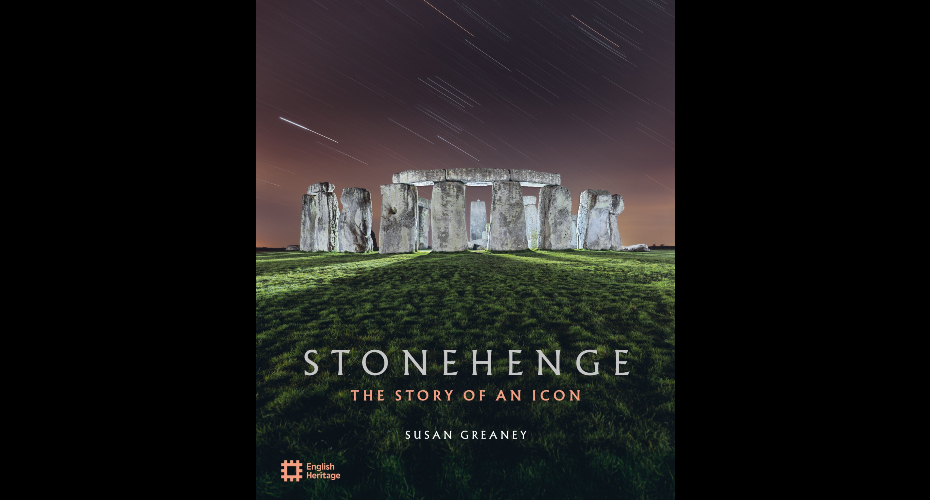
A University archaeologist has played a leading role in the creation of a lavish new book telling the story of the world-famous Stonehenge.
Drawing upon the latest research and filled with stunning photographs and illustrations, Stonehenge: Story of an Icon, has been written by Dr Sue Greaney of the University of Exeter.
Billed as a 'coffee-table' guidebook and published by English Heritage, the charity that cares for Stonehenge, the 160-page paperback, released today , represents the culmination of 15 years of research and writing about the monument for the public by Dr Greaney.
"Stonehenge is arguably the most famous prehistoric monument in the world," says Dr Greaney, of Exeter's Department of Archaeology and History. "Built more than 4,500 years ago, it's an architectural and technological masterpiece, and provides a gateway through which people can understand prehistoric Britain.
"More than a million people visit it every year, drawn to its mystery and majesty - from magic and ancient legends to Druids and modern solstice celebrations . This book sets that in context with some of the latest thinking about the nature and purpose of the monument."
Commissioned by English Heritage as an accessible but visually arresting guide to Stonehenge, the book has been in development since 2019. Offering a chronology of the landscape from the Mesolithic to the present day, the book is written in an easily readable style, with bite-sized chunks of text to accompany the photographs and illustrations.
It boasts several themed sections, including those on solstice alignments and the free festival, and features a fold-out reconstruction depicting the construction of Stonehenge around 2,500BC.
Dr Greaney said the book draws on the latest research - such as the origins of the sarsens in West Woods, and the burial in a long barrow at Winterbourne Stoke - as well as monument complexes across Britain.
This is a specialist area for Dr Greaney, whose research has generated significant insight into the archaeology and history of monuments, including Flagstones enclosure in Dorset, described as a prototype Stonehenge.
"I hope the book will provide an accessible introduction to the site, helping people understand all the latest research in a coherent way," adds Dr Greaney. "I'd like to think it will appeal to the international visitor to Stonehenge, but also to those who already know the site well. It's a beautiful-looking book that hopefully will grace many a bookshelf. "