
When Joro spiders first arrived stateside over a decade ago, scientists worried the massive black and yellow spiders would gorge themselves on the same bugs as native spiders (or even the native spiders themselves).
If the invasive arachnids did make massive meals out of Georgia's insects, the local orb weaver population - already facing dangers from insecticide and pesticide use - could suffer.
But a new study from the University of Georgia may ease some of those concerns.
"In terms of direct competition for food, our study suggests Joro spiders eat different insects and a wider variety as compared to native orb weavers," said Jason Schmidt, co-author of the study and a professor of entomology in UGA's College of Agricultural and Environmental Sciences.
Joros prey largely on flies, other bugs native spiders don't eat
The researchers analyzed the stomach contents of more than 200 Joro spiders from 33 sites across Georgia and South Carolina. They compared DNA fragments found in the digestive tracts of these spiders to more than 140 native orb weavers from across the two states.
While Joros do eat some of the same insects as orb weavers, the species' diets differed significantly, the study found. In fact, the Joros preyed on 26 unique species that the native spiders didn't touch, including a variety of bugs such as leafhoppers and aphids.
Native spider species had the same diet regardless of whether Joros were present in the area, the study found. This finding suggests that Joros aren't necessarily making it more difficult for orb weavers to find their favorite snacks.
In terms of direct competition for food, our study suggests Joro spiders eat different insects and a wider variety as compared to native orb weavers.
Jason Schmidt, College of Agricultural & Environmental Sciences
With their large, sticky webs and giant size, some people worry that the new spider species would prey on the monarch butterfly, adding yet another danger to the many already facing the imperiled species.
But the current study found Joros aren't eating a lot of butterflies, monarch or otherwise.
"They're feeding on things that we would consider pests," Schmidt said. "A lot of little flies. For the size of the spider, it looks kind of like popcorn."
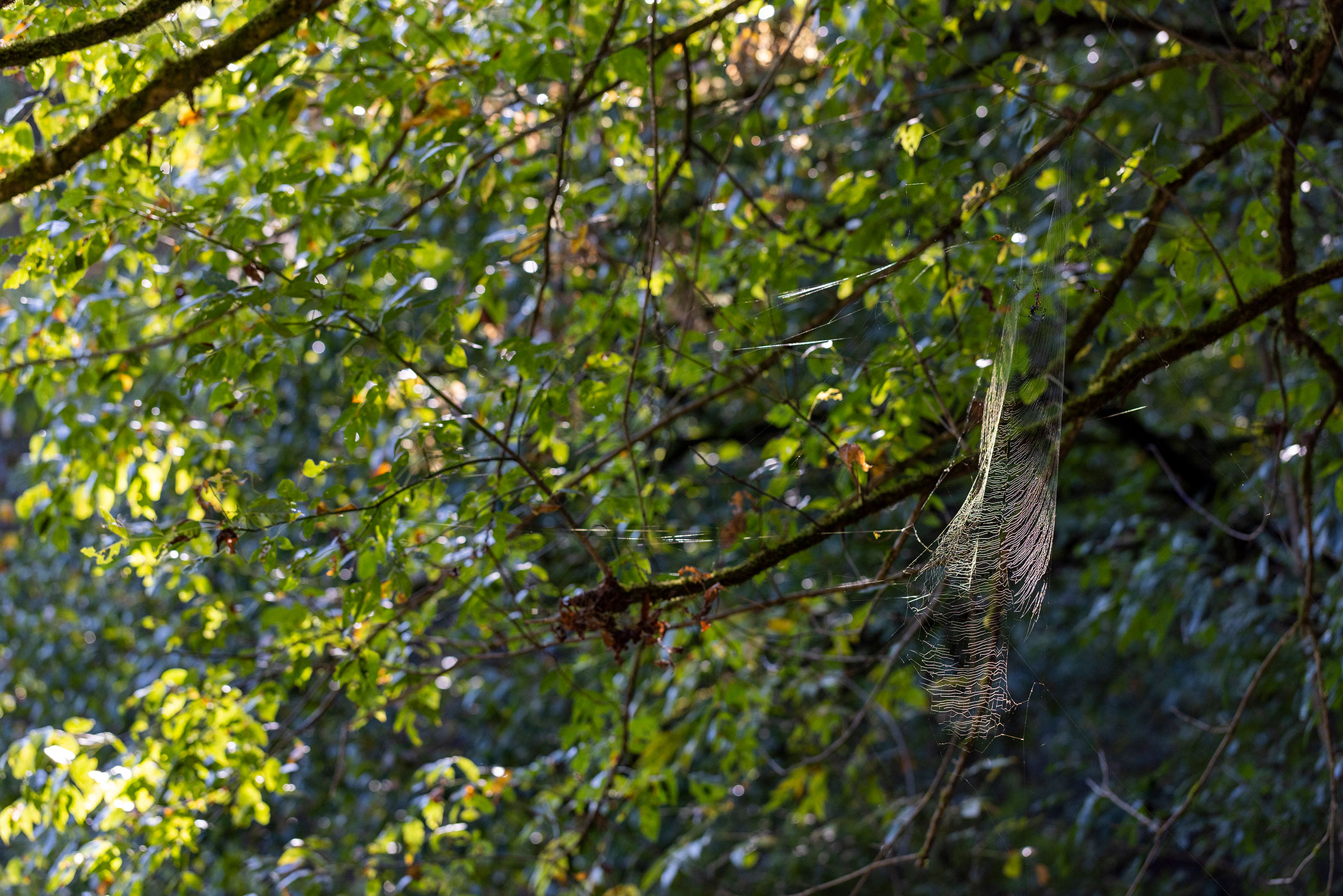
Joros take up more space than other spider species
They are, however, taking up a bunch of physical space.
"Joro spiders make these crazy-looking yellow webs that are often tangled with other webs," Schmidt said. "That style of building is quite different from other spiders."
But you can often find other native spiders in webs right next to them, Schmidt said. And without detailed records of how many spider species inhabited an area prior to the Joros' arrival, it's hard to determine their impact.
"I don't think they're necessarily competing for space," Schmidt said, "though others may have different opinions on that."
What to do about Joros when they're here for the long haul
One thing researchers do agree on? Joros are likely here to stay.
So it may be better to make peace with the Joros' presence than try to eradicate every web you come across.
The South - and the entire Eastern seaboard for that matter - has a similar climate to the Joro's native Japan. And it's approximately the same latitude, making it an ideal home for the invasive creepy-crawlies.
Joros are also cold-hardy, surviving early freezes that kill off other arachnids.
And they're surprisingly adaptable, often building webs alongside busy roads, in between powerlines and even on top of gas pumps.
In trying to kill the spiders … you'll increase the likelihood of having a bunch of really difficult pests show up.
Jason Schmidt
Baby Joros can use their silk to carry themselves long distances on the wind, a behavior called ballooning. That's part of the reason why Joros are spreading so rapidly across the state of Georgia and beyond. When hatchlings emerge each spring, they ride the winds sometimes to new places. Their offspring continue the cycle the following year.
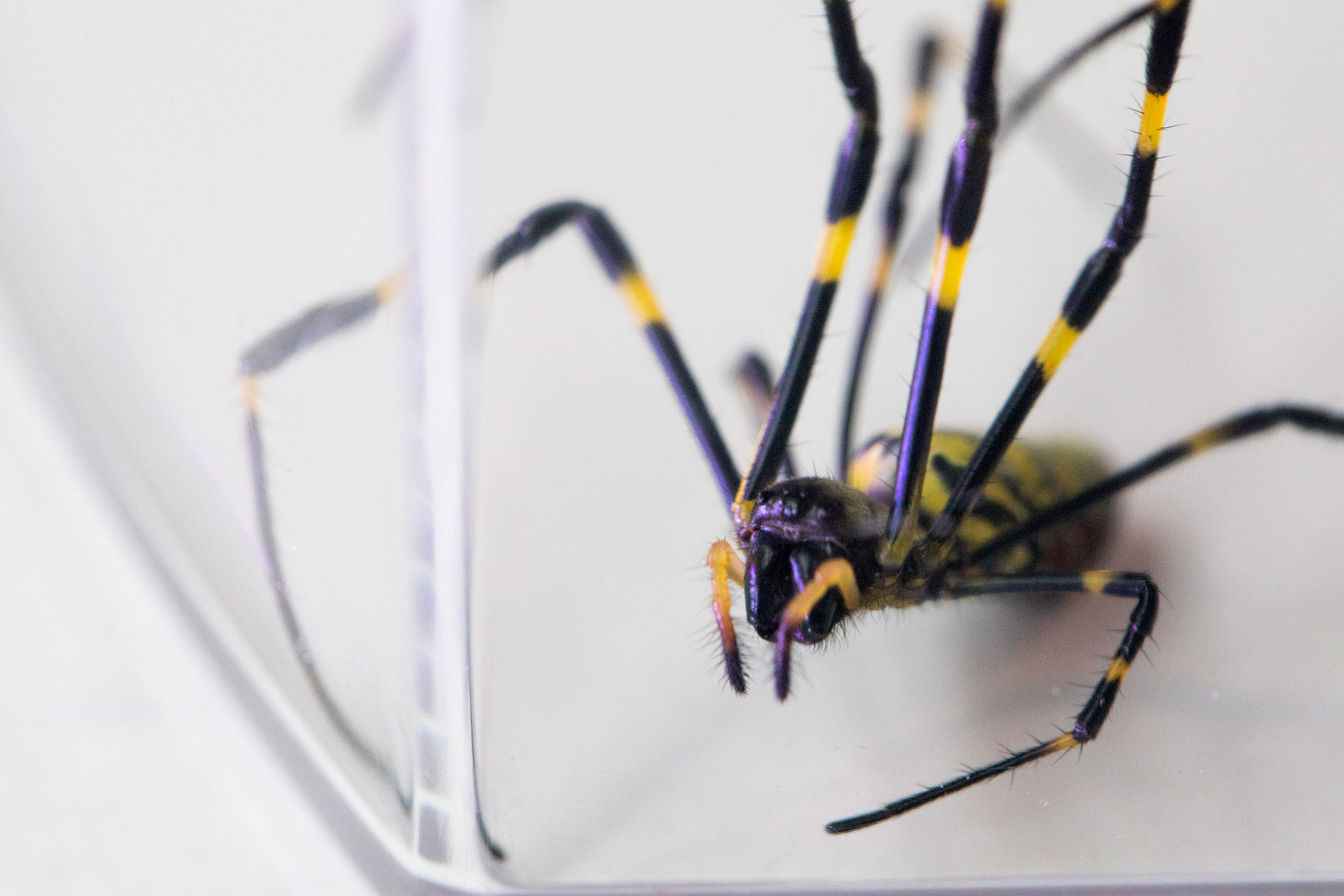
The good news is they largely don't pose a threat to people or their pets. And as far as giant and somewhat scary-looking spiders go, Joros have rather timid personalities. In fact, they're more likely to flee than fight, or in their case bite.
"They're pretty docile," Schmidt said. "I've had them right on my face and in my hair, climbing around on me. I haven't been bitten."
As for whether the Joro spider will ultimately pose an ecological threat to native species, the jury is still out. But Schmidt encourages people to avoid using broad insecticides to rid their yard of Joros.
"There aren't any insecticides specifically labeled for spider, so people will go out and just spray all over and kill a bunch of other insects that you actually want in your yard," Schmidt said.
Further, blanketing your yard in insecticide can backfire.
"In trying to kill the spiders, other beneficial insects feeding on pests in our yards will be impacted, and you'll increase the likelihood of having a bunch of really difficult pests show up because you killed off some of the good guys out there."
That said, if you simply cannot stand having Joros near your house, it may be better to take them out one by one, removing individual webs and spiders.
Published by PLOS One, the study was co-authored by Valdosta State University's Erin Grabarczyk.


