
Developing the lithium-ion battery took decades of research. A new multi-institutional project led by the Department of Energy's Lawrence Berkeley National Laboratory (Berkeley Lab) aims to cut that timeline dramatically, using AI and supercomputers to speed the discovery of materials for batteries, semiconductors, and other energy technologies.
The project - called FORUM-AI (Foundation Models Orchestrating Reasoning Agents to Uncover Materials Advances and Insights) - supports the Genesis Mission, a new national initiative led by the Department of Energy to advance AI and accelerate discovery, providing solutions for challenges in science, energy, and national security.
"FORUM-AI aims to be the first full-stack, agentic AI system for materials science research and discovery," said principal investigator Anubhav Jain, a staff scientist in Berkeley Lab's Energy Technologies Area who is leading the project. "It will help scientists at every step of energy materials research, from hypothesis generation and computer simulations to laboratory experiments and analysis." Jain is also the Associate Director of the Materials Project, an open-access materials database managed by Berkeley Lab, and the materials capability lead for the Department of Energy Durable Module Materials (DuraMat) consortium.
The effort is a collaboration between Berkeley Lab, Oak Ridge National Laboratory, Argonne National Laboratory, the Massachusetts Institute of Technology, and The Ohio State University with a goal to develop an open-source, general-purpose AI platform for research in materials and the physical sciences. The multi-institutional team was selected by the Department of Energy under its Scientific Discovery through Advanced Computing (SciDAC) program to co-lead the four-year, $10 million collaborative project using some of the nation's most advanced high-performance computers to develop FORUM-AI.
In this Q&A, Jain shares his perspective on the exciting evolution of computational materials science, and AI's essential role in accelerating materials discoveries.
Q: What inspired FORUM-AI? How will it help materials researchers?
Jain: The advancements in machine learning that have occurred the last few years inspired us to develop the FORUM-AI platform. Almost everyone has used ChatGPT to brainstorm ideas, and scientists have been doing this as well, but FORUM-AI is aiming to push the boundaries of what's possible by using the Department of Energy's leadership computing facilities to evaluate hundreds of hypotheses and hundreds of research plans of action in parallel.
Traditionally, if you have a research problem, you would test one hypothesis at a time. Under this new framework, instead you could use FORUM-AI to run large-scale simulations on the supercomputers at Berkeley Lab's National Energy Research Scientific Computing Center (NERSC), Oak Ridge National Laboratory's Oak Ridge Leadership Computing Facility (OLCF), or Argonne National Laboratory's Argonne Leadership Computing Facility (ALCF) and perhaps execute some robotic experiments on your behalf to see which of these hypotheses seem to be the most promising.
"FORUM-AI aims to be the first full-stack, agentic AI system for materials science research and discovery. It will help scientists at every step of energy materials research, from hypothesis generation and computer simulations to laboratory experiments and analysis." - Anubhav Jain, Energy Technologies Area staff scientist and Associate Director of the Materials Project
This assistant will use three classes of AI to do this work: generative AI to make images or write text; reasoning models, which enable an internal thought process to provide recommendations for how to solve your materials science problems and help you interpret data; and agentic models, which perform actions on your behalf like running a simulation and controlling experimental facilities.
This is important because we face complex energy challenges that require more resources to solve. High-performance computers and AI will help us greatly accelerate the pace of discovery at every step of the process, from planning out research studies and running computer simulations to performing experiments in the lab.
Q: How do you know if the FORUM-AI assistant's information is based on fact?
Jain: That's a great question, because one of the shortcomings of AI in the sciences is the tendency of these AI models to hallucinate information, meaning they give you back information that's incorrect or untrue.
There are a few aspects of this project designed to prevent those kinds of issues.
First is a high-quality database of specific materials data, so that when an AI agent is asked, for example, what are the band gaps of cadmium telluride and silicon, the agent doesn't have to rely on its own model weights, its own memory, to give you a response. Rather, it can look up the data in a verified database and return accurate results on that question.
Second is transparency so that the researcher can see how the AI plans to tackle a particular problem. Research plans and reasoning traces will be inspectable and visualizable so the researcher can edit or disregard those research plans if they feel that they're incorrect.
And finally, these AI agents will use standard, physics-based simulation tools to predict the property of a material. Because these tools and methods are well-benchmarked, the agents will use community-standard approaches to ensure reliability.
Q: We hear a lot about the energy demands of AI. How could FORUM-AI enable an AI platform that is more energy efficient than current AI technologies?
Jain: We are going to work on what's called distillation, which is where you take a more expensive, compute-intensive model, and then you find a way to train a smaller model that essentially reproduces the behavior of the larger model. Using this distilled model is less energy intensive.
A distilled model can often fit on a laptop, and can be run on your own computer, which is very useful for researchers. You could, for example, attach it to a device, like an X-ray diffraction machine, whereas a large model that's only usable on a supercomputer is much more difficult to operate for the general user.
Q: Why are the national labs essential to AI research?
Jain: The national labs are an ideal place to develop AI-assisted materials research because for the last few decades they've been laying the foundation for it.
For example, at Berkeley Lab, we have been creating the Materials Project, which is a large database of materials properties that the Agentic AI can use in order to better inform its decisions. We've also been developing software tools that allow you to automate simulations of materials properties, which has been traditionally very difficult to do. In fact, when we started the Materials Project, many people thought that it would be impossible to automate material simulations because they just required too much physical insight to determine the parameters.
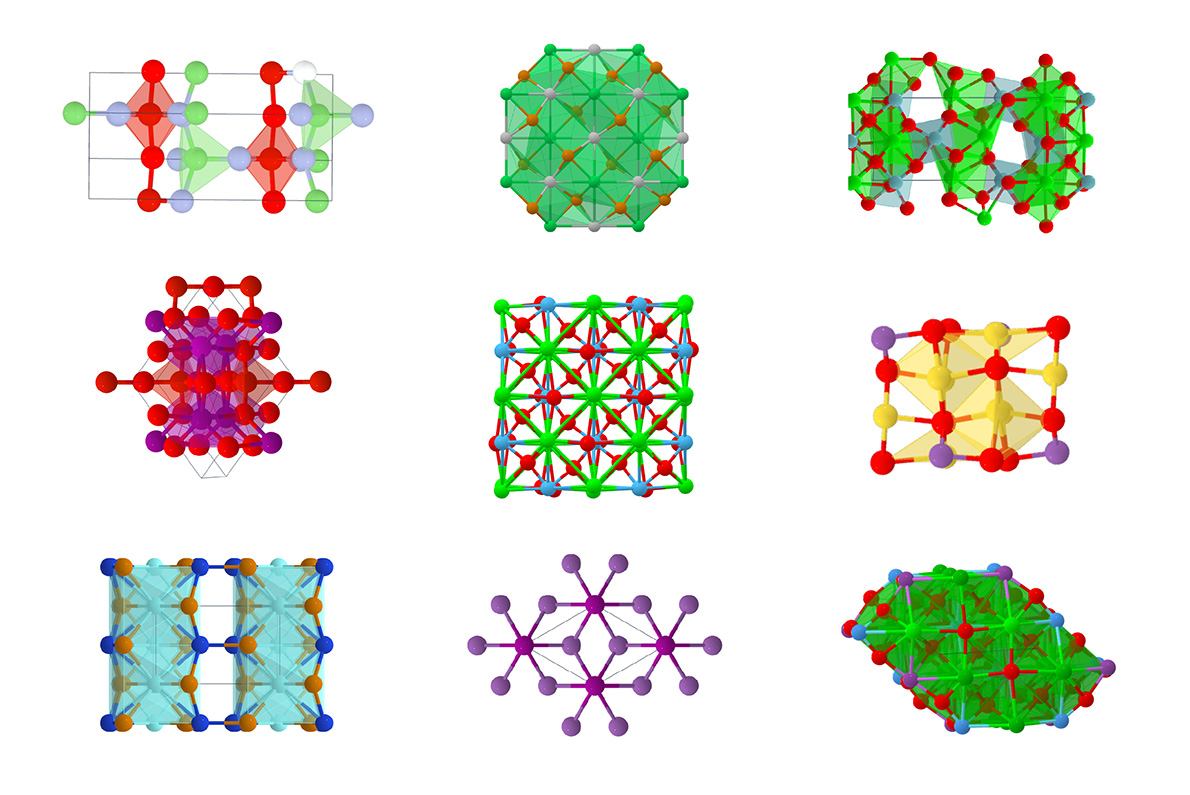
Now that we've solved a lot of the problems necessary for automating physical simulations, we can now couple these AI tools that we've developed over the last decade or so to the Agentic AI system.
At Berkeley Lab, we've also developed robotic synthesis facilities such as the A-Lab, which is one of only a few places where one can perform computer-controlled inorganic powder synthesis reactions.
The DOE national labs are also home to the fastest supercomputers in the world. This vast network of leadership computing facilities allows us to push the boundaries of AI reasoning.
Q: What do you hope to achieve by the end of the project?
Jain: An end-to-end autonomous platform for discovering new materials and scientific insights for applications.
To do this, FORUM-AI will first come up with hypotheses of compositionally complex materials that might meet the required property targets. Traditionally, these types of materials have been very difficult to study because it's hard to predict the behavior of a material when it's made of a mixture of many elements.
When it's time to synthesize the material, the AI tool will then give the A-Lab a property target - for example, battery materials that meet a certain level of cyclability, or a certain rate capability that determines how fast you can charge and discharge the battery.
After doing the first round of experiments, FORUM-AI will analyze the data to determine what's working and what's not working and then come up with the next round of experiments, which will automatically deploy at the A-Lab to iterate and improve upon the results.
Q: What's the future for FORUM-AI?
Jain: One of the things we'd like to do in the future is to connect FORUM-AI to an experimental user facility such as a light source, so that when a user submits a proposal, the agentic AI can perform some experiments or prep work in advance of the user arriving, or maybe assist them with the experiments once they actually arrive at the light source to facilitate doing the experiments as quickly, efficiently, and accurately as possible.
It would also be great to work with the broader research community across application areas to figure out other ways that this tool can be applied to different types of materials and scientific problems. For example, how could FORUM-AI be used to study catalysis? Or structural materials, semiconductors, and interfaces? There's certainly much more to be explored.
Ultimately, FORUM-AI could become an indispensable partner in the nation's scientific enterprise and accelerate discoveries that power America's future.
The National Energy Research Scientific Computing Center (NERSC), Oak Ridge Leadership Computing Facility (OLCF), and Argonne Leadership Computing Facility (ALCF) are DOE Office of Science user facilities.


