
In 2025, Lawrence Berkeley National Laboratory (Berkeley Lab) led groundbreaking research in artificial intelligence, microelectronics, quantum science, and biomanufacturing. Berkeley Lab scientists also learned more about dark energy, discovered a fascinating new molecule, and helped advance geothermal energy systems, to name just a few milestones. And, to round out another great year, former Lab scientist John Clarke was awarded a Nobel Prize in Physics, bringing the number of Nobel Prizes associated with Berkeley Lab scientists to 17.
To celebrate the end of the year, here's a roundup of some of our biggest stories, which highlight how Berkeley Lab is delivering solutions for science and humankind.
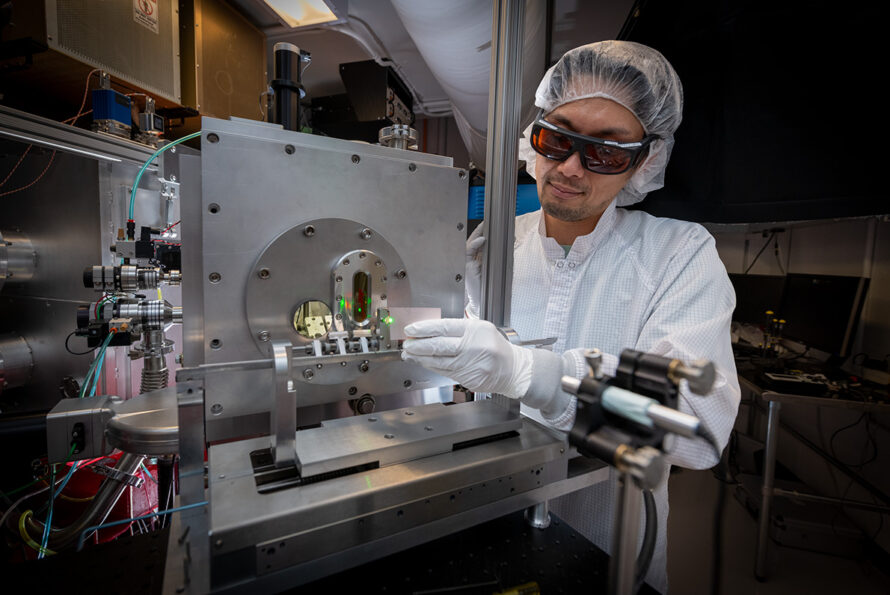
Berkeley Lab is at the forefront of a global shift in how science gets done - one driven by artificial intelligence, automation, and powerful data systems. By integrating these tools, researchers are transforming the speed and scale of discovery across disciplines, from energy to materials science to particle physics. In another example, Berkeley Lab scientists built and successfully demonstrated an automated experimentation platform to optimize the fabrication of advanced materials. The platform, called AutoBot, uses machine learning algorithms to direct robotic devices to rapidly synthesize and characterize materials that show promise for applications such as light-emitting diodes, lasers, and photodetectors.
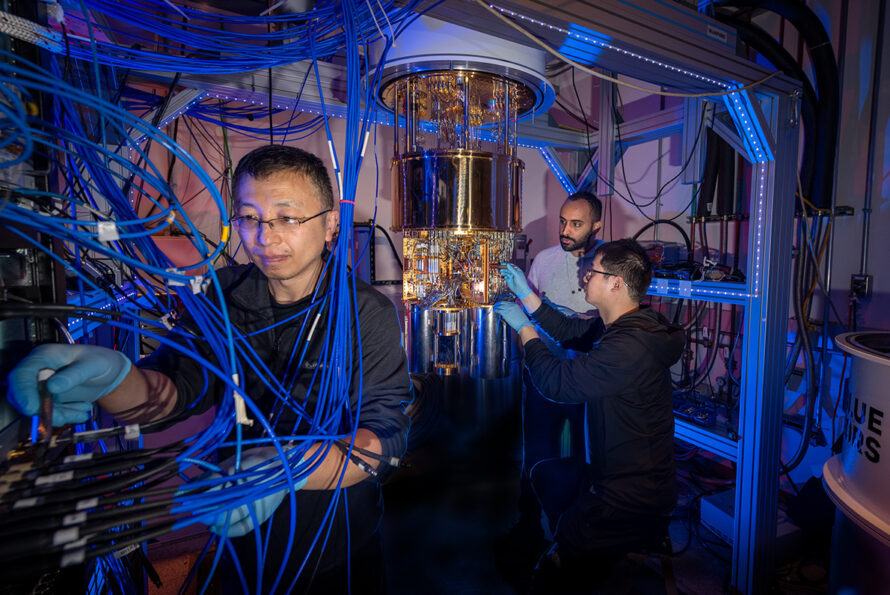
In November, DOE renewed funding for the Quantum Systems Accelerator (QSA), a DOE National Quantum Information Science Research Center led by Berkeley Lab in partnership with Sandia National Laboratories. QSA builds and demonstrates quantum technologies and computing prototypes to transform quantum information science into breakthroughs for society. These advances will enable scientists to use quantum computers to design new materials, discover new chemicals and reactions, and accelerate breakthroughs in energy, physics, biology, and chemistry. Over the next five years, QSA's research will focus on two big goals: building working prototype quantum devices that can solve scientific challenges beyond the reach of conventional computers, and - in close partnership with industry - developing technologies that make quantum systems reliable and scalable for everyday use.
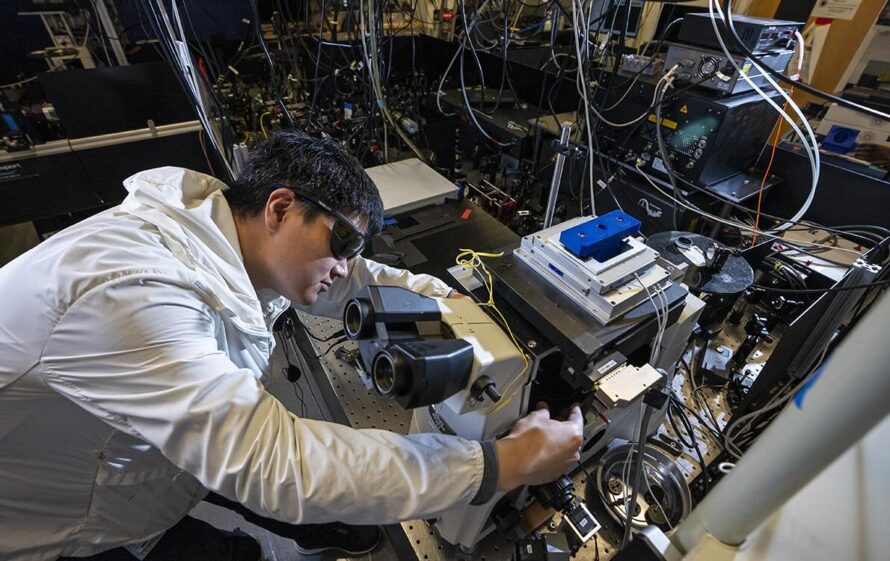
For decades, researchers have looked for ways to make a computer that uses light instead of electricity. Finding materials with the right combination of properties has been challenging, but breakthrough research co-led by Berkeley Lab, Columbia University, and Universidad Autónoma de Madrid brings us closer to reaching this goal. They demonstrated a new optical computing material made of photon-avalanching nanoparticles with a special property that uses light to switch between two different states. The achievement paves the way for fabricating optical memory and transistors on a nanometer size scale comparable to the most advanced microelectronics, and offers a path toward realizing smaller, faster components for next-generation computers.
This research was featured in IEEE Spectrum and R&D World.
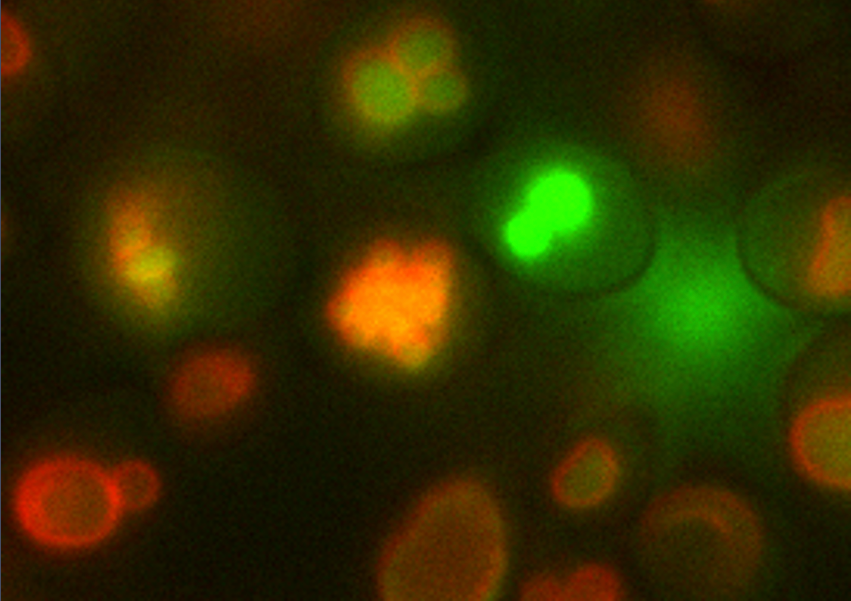
Berkeley Lab researchers, in collaboration with UC Irvine and the University of Illinois Urbana-Champaign, have engineered a yeast strain that can use human urine to build hydroxyapatite - a mineral that is the main component of bone and teeth. The genetically modified "osteoyeast" mimics natural bone-forming animal cells by building crystals with calcium and phosphorus ions taken from the urine, with the added benefit of capturing ammonia that can be used as fertilizer. This "pee-cycling" process could dramatically reduce wastewater treatment costs and save energy currently used to manufacture nitrogen fertilizers. Economic analysis shows the approach could generate $1.4 million in annual profit if paired with a wastewater system the size of San Francisco's by selling the valuable synthetic hydroxyapatite, which is used in medical and dental applications. The patented technology could also be modified to extract other useful materials from waste streams, such as isolating critical minerals from brine.
This research was featured in R&D World, Live Science, and Interesting Engineering, Business Standard, ScienceBlog, and others.

Dark energy, the unknown ingredient behind the accelerating expansion of our universe, remains one of the biggest mysteries in physics. New results from the Dark Energy Spectroscopic Instrument strengthened signs that the impact of dark energy may be weakening over time. Using three years of observations spanning nearly 15 million galaxies and quasars, DESI produced its most detailed 3D map of the universe to date and traced dark energy's influence over the past 11 billion years. The collaboration also publicly released the first 13 months of data from DESI's main survey, opening access to the largest map of the universe yet and providing a treasure trove of data for astrophysicists to explore.
This research was featured in The New York Times, The Washington Post, Scientific American, Science, Nature, NPR, and Science Friday.
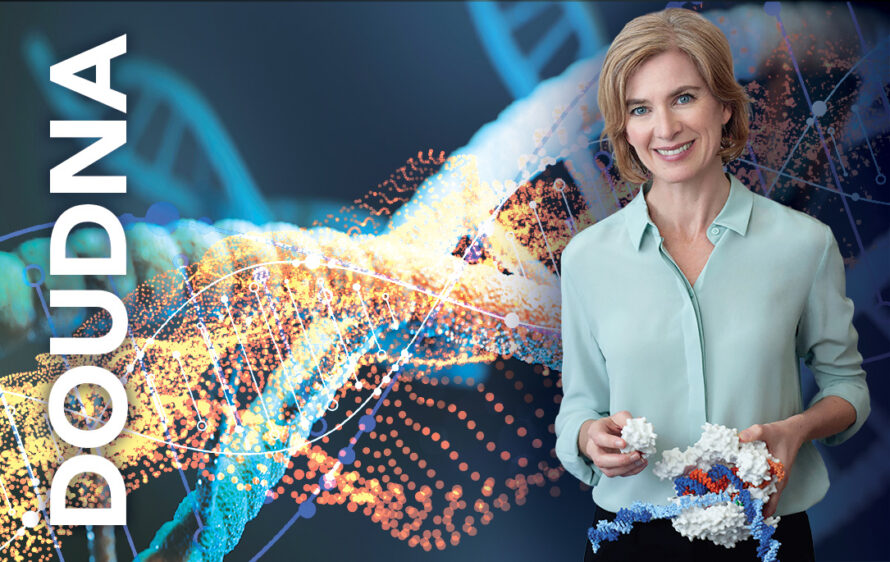
In May, DOE announced a new contract with Dell Technologies to develop NERSC-10, the next flagship supercomputer at the National Energy Research Scientific Computing Center (NERSC), a DOE user facility at Berkeley Lab. The new system, due in 2026, will be named after Jennifer Doudna, the Berkeley Lab biochemist who was awarded the 2020 Nobel Prize for Chemistry. The supercomputer, a Dell Technologies system powered by NVIDIA's next-generation Vera Rubin platform, will be engineered to support large-scale high-performance computing workloads like those in molecular dynamics, high-energy physics, and AI training and inference - and provide a robust environment for the workflows that make cutting-edge science possible.
The announcement was featured in the Associated Press, Reuters, and The New York Times among other outlets.
In May, a collaboration co-led by Berkeley Lab and Meta released Open Molecules 2025 (OMol25), a dataset containing over 100 million molecular snapshots calculated using density functional theory (DFT). This open-access resource will be used to train machine learning tools that can accurately model chemical reactions of real-world complexity for the first time. While DFT provides precise atomic interaction details, it requires massive computing power that scales dramatically with molecule size. Machine Learned Interatomic Potentials (MLIPs) trained on OMol25 can deliver DFT-quality predictions 10,000 times faster, on standard computing systems. OMol25 represents the most chemically diverse dataset ever built for training MLIPs, potentially transforming materials science, biology, and energy research.

Geothermal energy is a promising domestic energy source for the United States that has the capacity to provide 24/7 power. For decades, Berkeley Lab researchers have been developing and improving enhanced geothermal systems, providing critical expertise and simulation platforms. Eva Schill, Berkeley Lab Staff Scientist and Geothermal Systems Program Lead, discussed the potential for expanding enhanced geothermal systems across the nation through partnerships with industry and continued team science. Watch this explainer video to learn the difference between conventional and enhanced geothermal systems.
Our geothermal research was featured in Oregon Public Broadcasting, Deseret News, and Data Center Dynamics.

Making the heaviest elements is hard, and studying their chemistry is even harder. Using a new method developed at the 88-Inch Cyclotron, scientists directly measured molecules containing nobelium (element 102) for the first time, offering an unprecedented look at chemistry at the bottom of the periodic table. This measurement now makes nobelium the heaviest element with identified compounds on the periodic table. The technique opens the door for the next generation of atom-at-a-time studies on heavy and superheavy elements, helping researchers explore whether or not the periodic table should be reorganized, predict how these elements behave, and design ways to produce and use specific molecules.
This research was featured in Chemistry World, New Scientist, and Physics World.
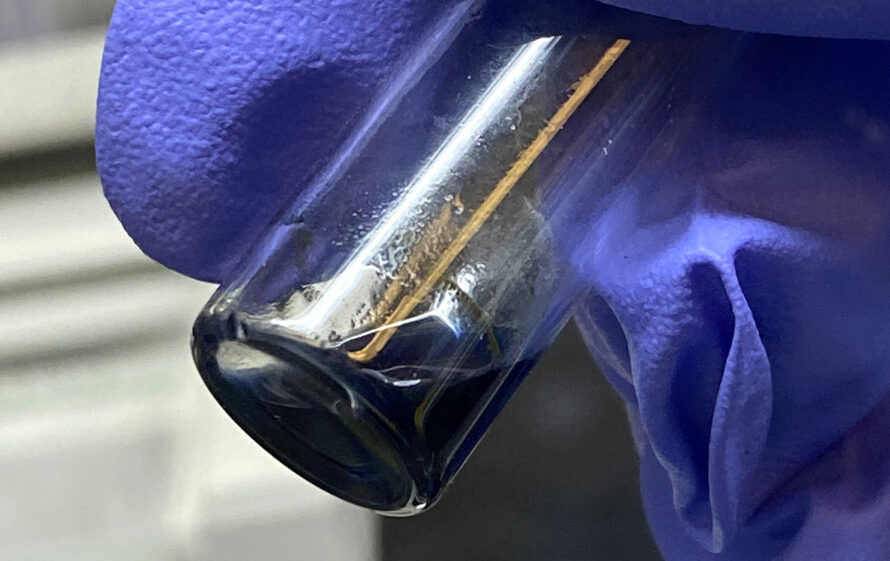
Discovered by the pioneering nuclear chemist Glenn Seaborg in 1949, the heavy element berkelium is one of 15 actinides in the periodic table's f-block. More than 75 years later, a team led by Berkeley Lab discovered "berkelocene," the first organometallic molecule to be characterized containing berkelium. The extremely oxygen- and water-sensitive complex was formed from just 0.3 milligram of berkelium-249 using specialized facilities at Berkeley Lab's Heavy Element Research Laboratory. The breakthrough disrupts long-held theories about the chemistry of the elements that follow uranium in the periodic table, and could have implications for solving problems related to long-term nuclear waste storage and remediation.
This research was featured in Chemistry World, Chemical & Engineering News, Popular Mechanics, The Mercury News, SFGate, Interesting Engineering, and Science Alert.
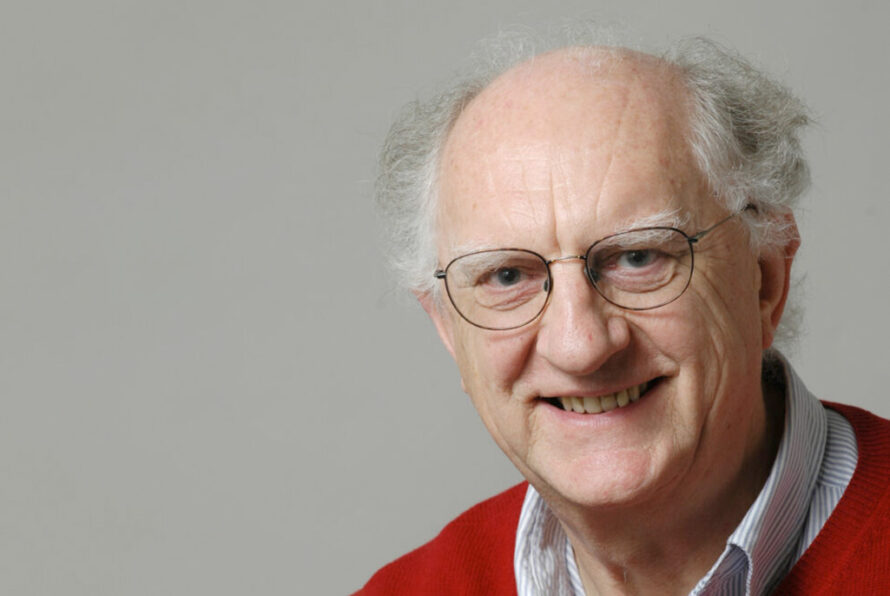
Former Berkeley Lab scientist John Clarke shared the 2025 Nobel Prize in Physics for demonstrating that quantum mechanics can govern macroscopic electrical circuits. His early-1980s experiments at Berkeley Lab revealed macroscopic quantum tunneling in superconducting circuits, a breakthrough that underpins today's superconducting qubits and quantum sensors. The work, supported by DOE's Basic Energy Sciences program, helped launch modern quantum technologies and added a 17th Nobel Prize to Berkeley Lab's legacy of discovery.
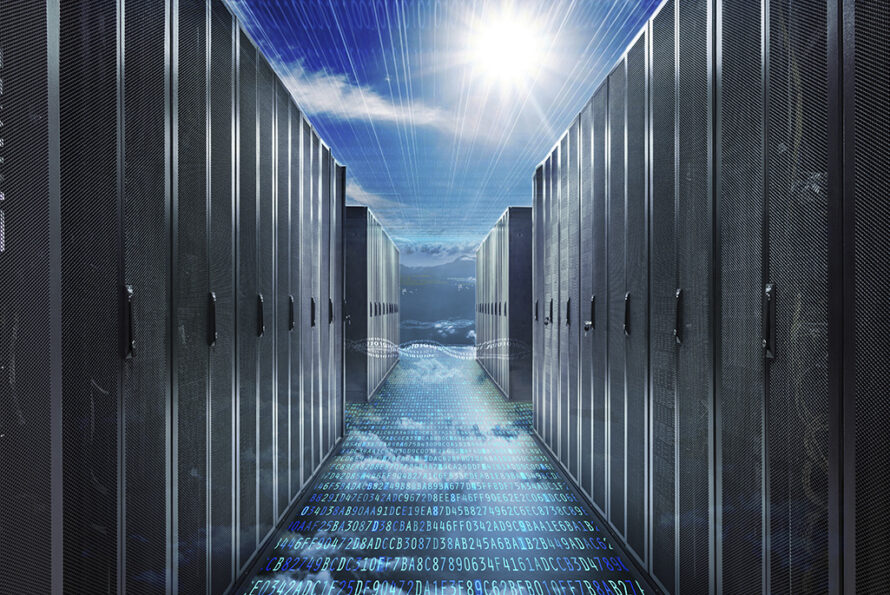
A Berkeley Lab report, which outlines the energy use of data centers from 2014 to 2028, estimates that data center load growth has tripled over the past decade and is projected to double or triple by 2028. The 2024 Report on U.S. Data Center Energy Use also found that U.S. electricity demand is projected to account for data center expansion and the rise of artificial intelligence applications, domestic manufacturing growth, and electrification of different industries. "By showing what the energy use is and, more importantly, what's causing the growth in energy use, it helps us think about what opportunities there are for efficiency, as well as ensuring reliable electricity," said Arman Shehabi, the report's lead researcher.
The report was featured in stories from The New York Times, The Economist, Reuters, and many others.


