
A surge in girls' soccer participation, driven by the Matildas' success and growing national momentum, is delivering benefits well beyond the pitch, with new research highlighting its role in supporting adolescent mental health.
According to Football Australia, participation in women's and girls' football has grown rapidly following the Matildas' breakout performance at the 2023 FIFA Women's World Cup. National participation increased by 16 per cent between 2023 and 2024, with Victoria recording a further 14 per cent rise in 2025.
New research from RMIT University, conducted with North Geelong Warriors Football Club, suggests that growth is translating into meaningful social and mental health benefits for teenage girls.
Over the 2025 season, RMIT researchers partnered with the club to explore what playing soccer means for girls aged 11-17. Funded by VicHealth through its Growing Healthy Communities program, the project captured the voices of players, parents and club officials to better understand the role of grassroots sport in adolescent wellbeing.
Associate Professor Bronwyn Coate, who led the research, said the findings pointed to a clear link between a sense of team belonging to positive mental health outcomes.
"In adolescence, having multiple social circles is really protective for mental health. The girls talked about their teammates as a 'second family'. That sense of belonging is incredibly powerful."
Players who reported a stronger sense of belonging were more likely to experience lower anxiety, stronger peer relationships, and higher levels of life satisfaction, meaning and purpose.
For Geelong local Sophie Hooper, that sense of connection is central to why she plays.
"Playing soccer means everything to me. When I was younger it was just fun, but now it's about developing as a player on the pitch and a person off it. My soccer family is always growing."
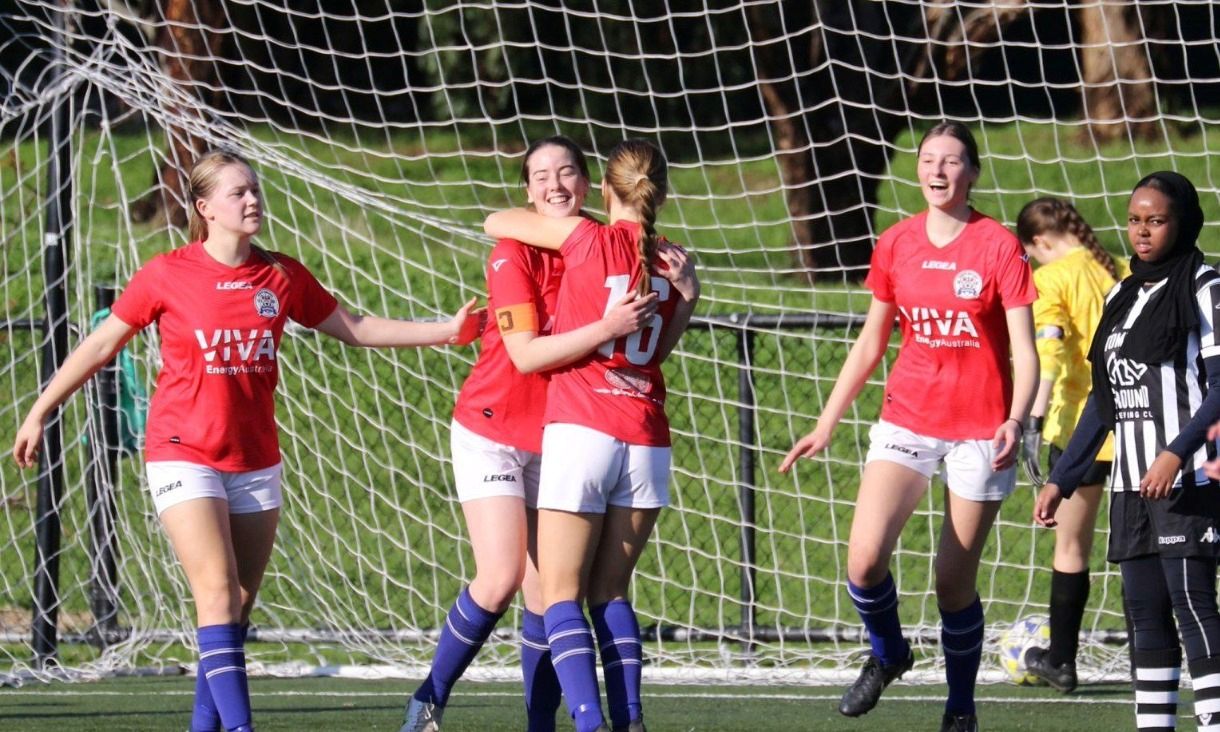 North Geelong Warriors FC players celebrate goal
 The research found that wellbeing outcomes were consistent across different levels of competition, from community teams through to Community Premier League. Instead, the quality of the environment, particularly relationships with coaches and teammates, had the greatest impact.
Players described coaches as trusted role models who shape team culture and create environments where girls feel supported and valued. The presence of female coaches and club leaders was also identified as important.
Stipe Kump, who supports the Girls and Women's Program at North Geelong Warriors, said clubs play a critical role beyond sport.
"Being part of a team outside school offers adolescent girls extra friendships, support and encouragement, which can reduce anxiety, build confidence and provide a positive outlet from academic and social pressures."
The study also found that parents and guardians play a key role in shaping the experience. When families are actively involved in club life, it strengthens the sense of community and belonging. However, negative sideline behaviour or pressure at home can increase anxiety and detract from the benefits of participation.
North Geelong Warriors has taken steps to embed wellbeing into its club culture, including signing up to Read the Play, a program that equips clubs, coaches and volunteers to recognise and respond to mental health challenges.
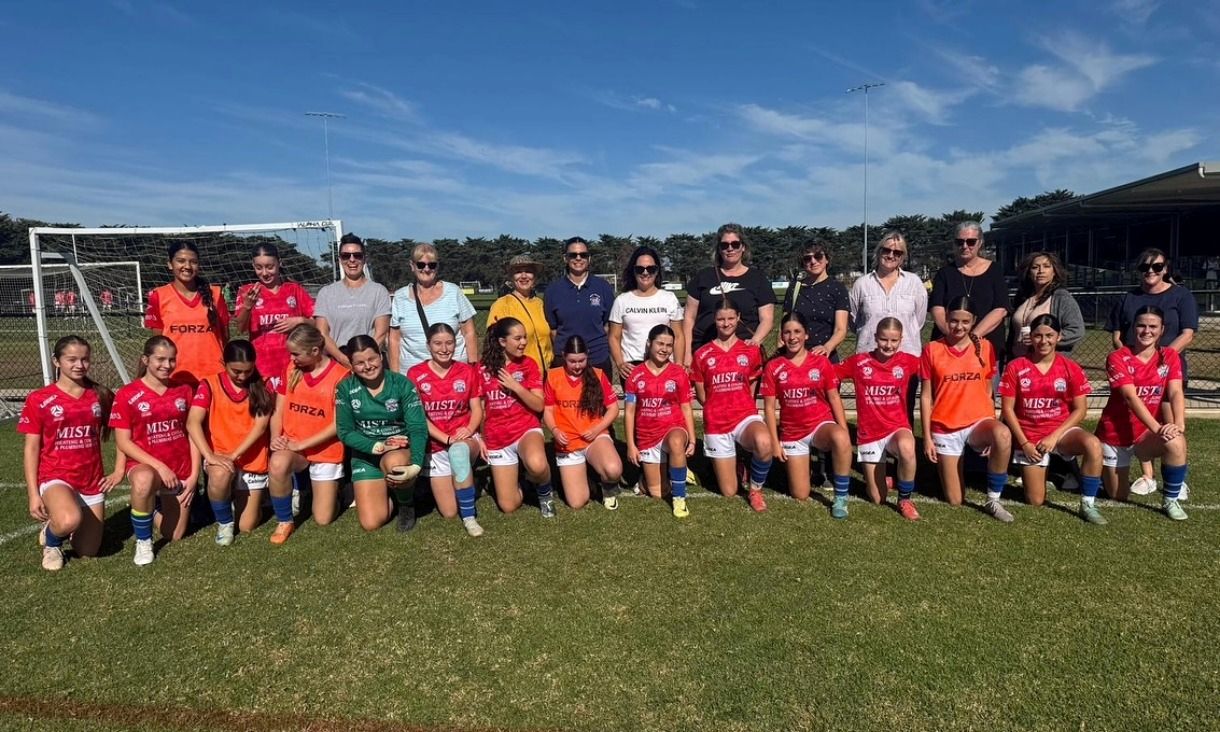 North Geelong Warriors FC junior team with parents
 VicHealth CEO Professor Anna Peeters AM said the project highlights the value of community-led approaches to health.
"Growing Healthy Communities is about empowering local initiatives to create a healthier future. We know many young Victorians face barriers to good health, which is why we're investing in programs that strengthen connection and support where it's needed most."
With participation continuing to grow and elite success inspiring the next generation, the research suggests community sport is playing an increasingly important role in helping young people navigate the challenges of adolescence.
"The continued visibility of the Matildas during the recent AFC Women's Asian Cup will no doubt sustain the momentum that has seen huge growth in the sport, particularly at grassroots level," said Coate.
"When we get the environment right in community sport, we're not just developing players, we're supporting young people to navigate adolescence with confidence, connection and a stronger sense of who they are. The implications extend well beyond the pitch."


