A low-cost 3D bioprinter developed by URochester researchers could make the process more accessible for labs.
Living materials created with a 3D printer are like living tissues with one notable exception: You get to choose exactly which cells are in them, as well as their final 3D shape. Depending on the type of bacteria included in the print, the material can clean up contaminated water or break down waste materials such as plastic.
The 3D bioprinters that create these structures, however, can cost upwards of $100,000, and the soft shapes they produce can collapse before they set.
To solve this, a team of researchers led by the University of Rochester's Anne S. Meyer has developed a low-cost solution using a standard plastic 3D printer.
"We aim to create DIY bioprinters using inexpensive, easily obtainable parts, so that they are affordable and easy for other scientists to make in their own labs as well," says Meyer, a professor in the Department of Biology.
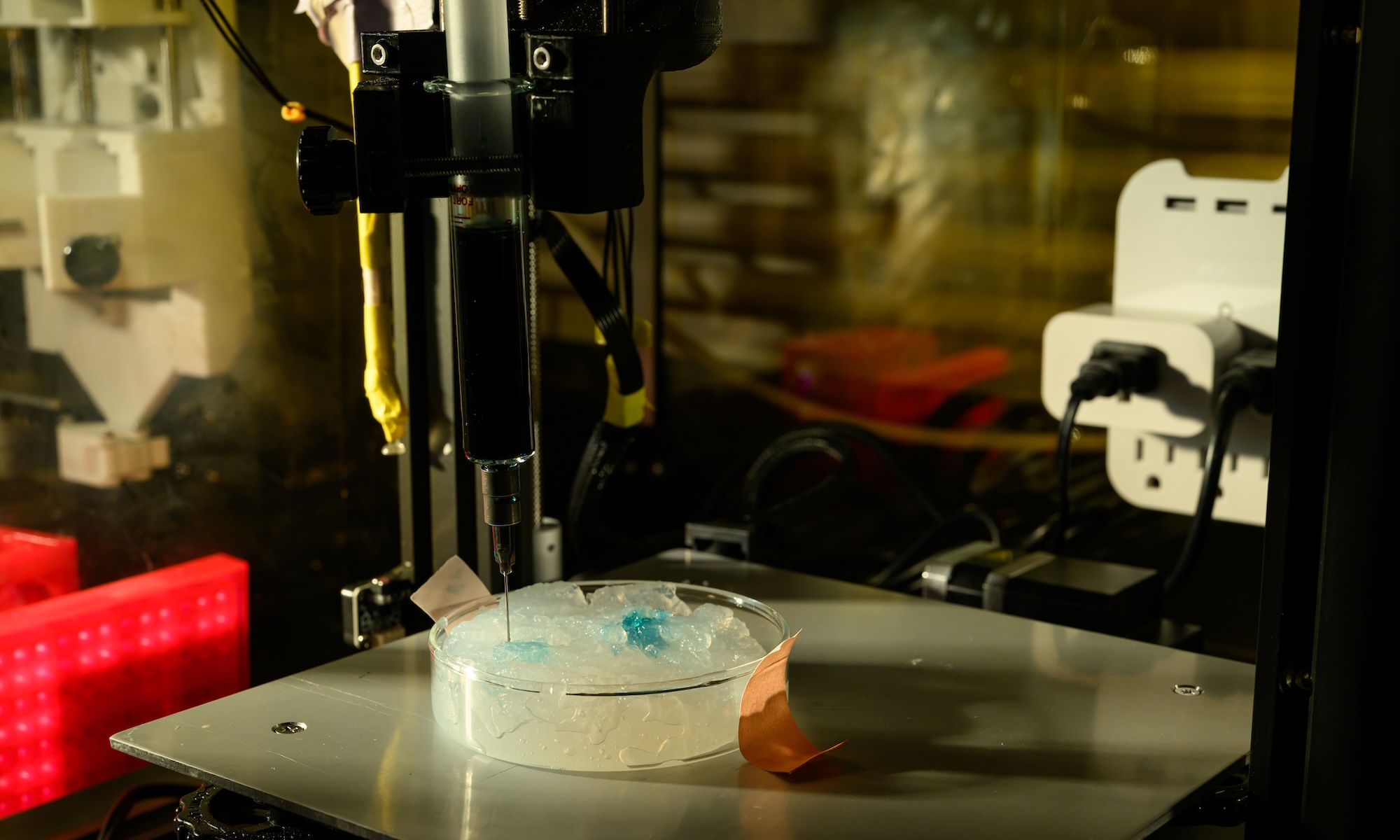
BYO-bioprinter
In a recent study published in ACS Applied Polymer Materials, Meyer and colleagues from URochester and Cornell University modified a regular plastic 3D printer by removing the plastic filament extruder and replacing it with a syringe pump that squeezes out bio-ink-a specialized formula that mixes living cells with a polymer solution. Once printed, the bio-ink hardens into a gel.
"Our syringe can also perform both extrusion and retraction, preventing oozing at the edges of printed structures," says Meyer. "This new setup allows for printing of crisp shapes with well-defined edges."
In the true spirit of DIY, Meyer's lab constructed the customized bioprinter at a cost of $450. All the parts are easily available, adds Meyer, allowing other labs to build their own version of the printer and syringe pump. Instructions are available on the GitHub platform.
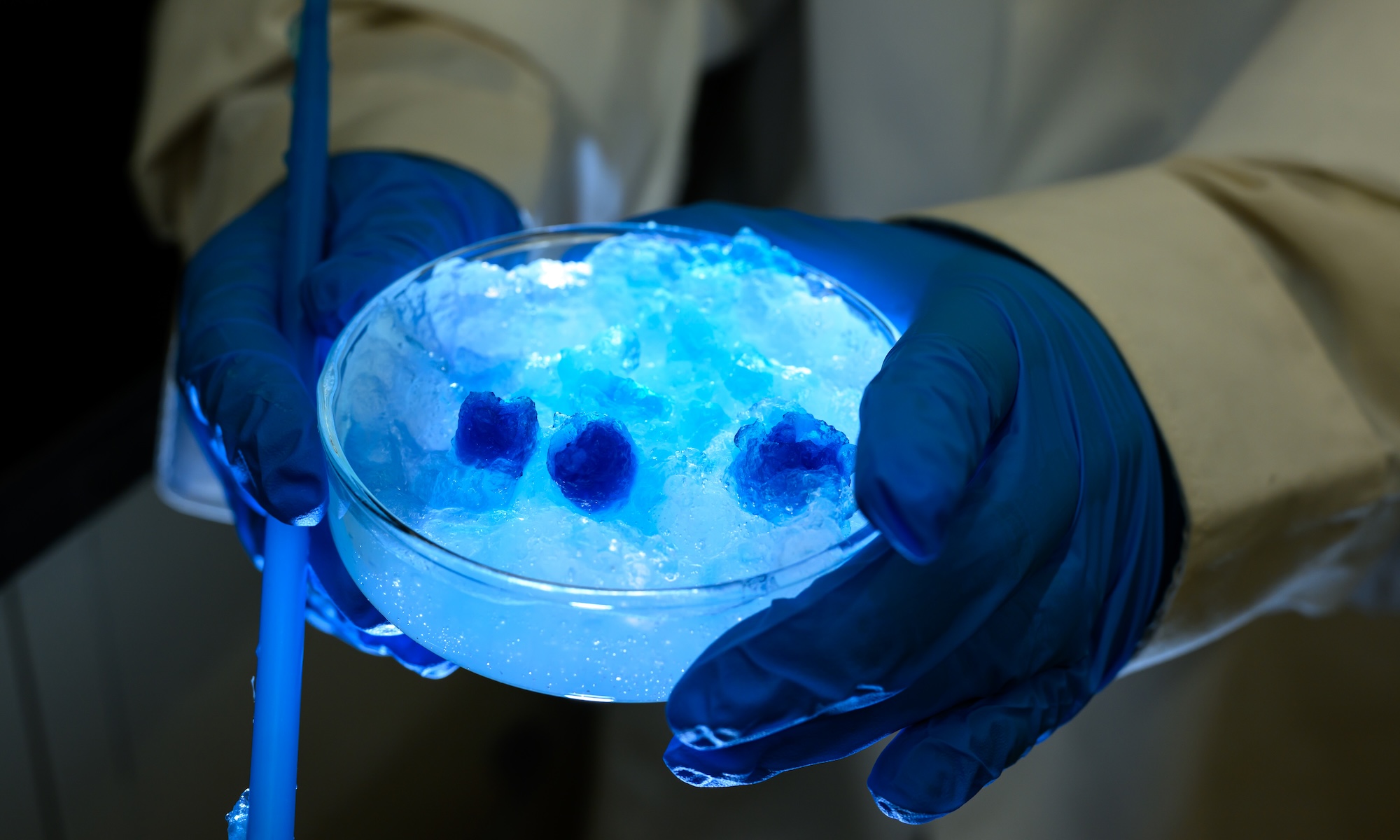
Reaching new heights
While previous DIY 3D bioprinters were limited to printing structures of less than 20 layers, "Our upgraded printer can create living structures that are significantly taller and more complex than was previously possible, and it can even create hollow cavities within the prints," says Meyer, noting that the upgraded DIY printer can print living materials with more than 100 layers.
"This opens up possibilities to make structures that have a high surface-to-volume ratio, so that the embedded bacteria can more efficiently receive signals or nutrients from the environment and can excrete any useful products much more rapidly into their surroundings," she adds.
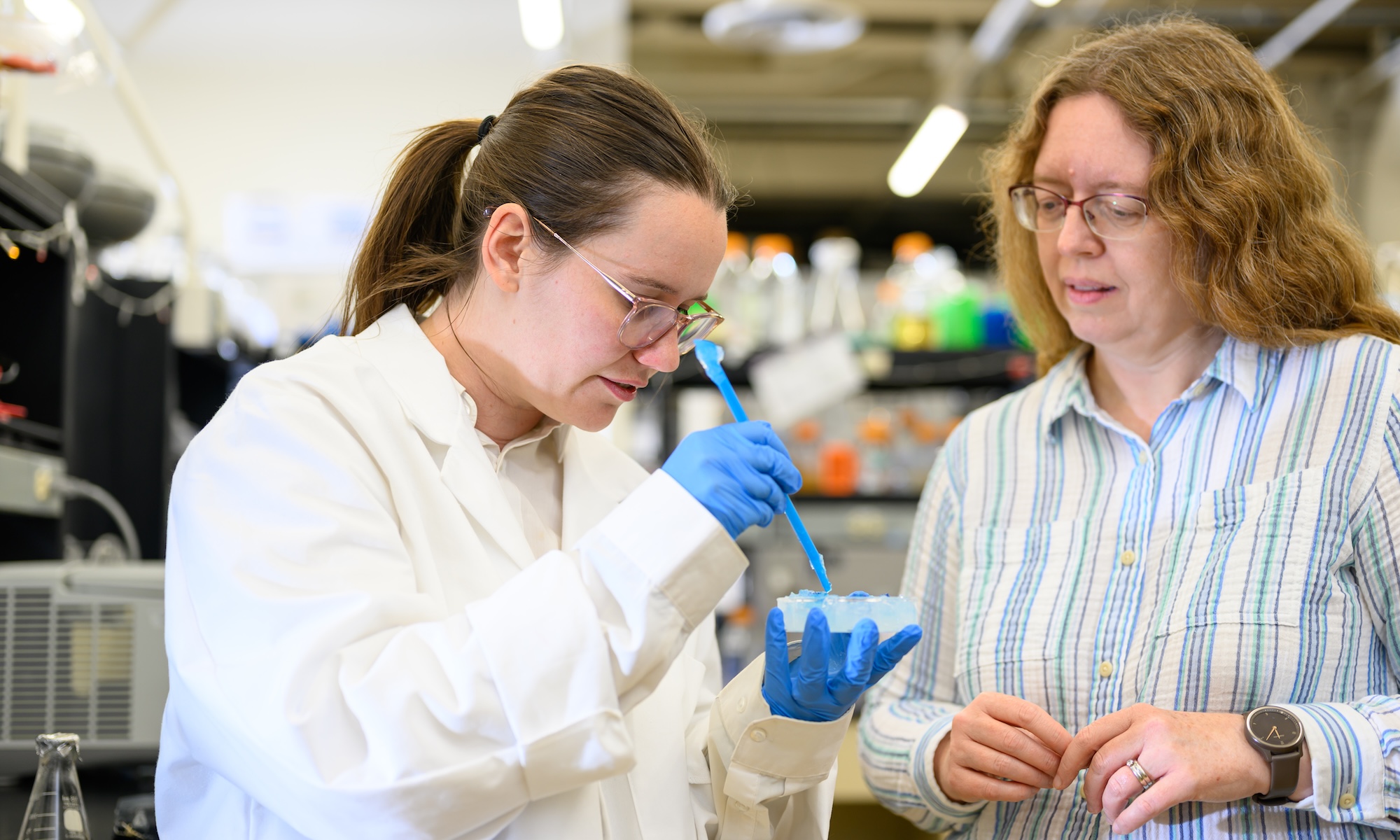
Researchers also developed a support gel called a slurry that the bioprinter prints into, which holds up bio-ink and helps it solidify quickly and at any height.
Two types of slurry were created: one for easy removal of the print, and one for incubation that allows microbes in the bioprints to stay alive in the slurry for four or more weeks. In previous methods, the printed bacteria started to die after about nine days.
The new slurry could have a significant impact on the research of biofilms-three-dimensional communities of microorganisms, such as bacteria, that adhere to surfaces-that can be both harmful and beneficial to humans.
For Meyer, the benefit of using different methods of incubation is the possibility "to create engineered biofilm materials that either have more biofilm characteristics, allowing study of and testing on medically relevant biofilm, or that have stronger mechanical properties, allowing them to be used for applications."