UConn research gives insights into regional weather differences that complicate grid resilience
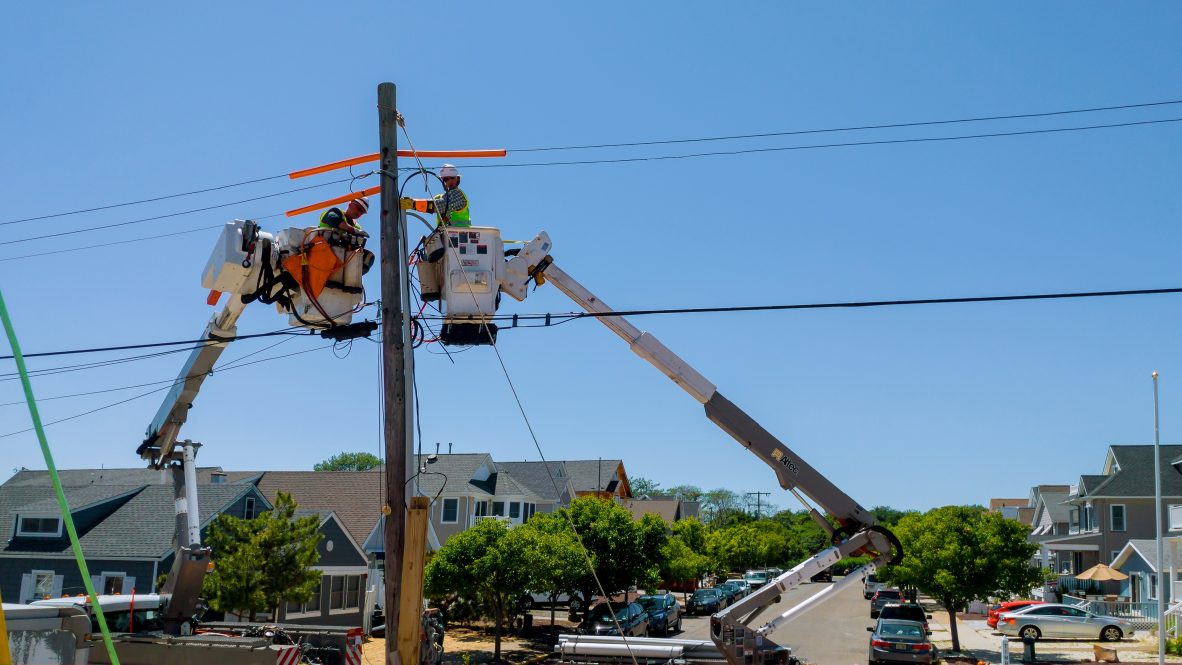
(Adobe photo)
More frequent and intense weather phenomena like heatwaves, windstorms, or atmospheric rivers often come in pairs and these challenging combinations stress the power grid and lead to outages. A multi-year analysis by researchers from UConn's Outage Prediction Modeling (OPM) team, including Environmental Engineering Program Ph.D. student Shah Saki, Board of Trustees Distinguished Professor and director of the Institute of Environment and Energy, Emmanouil Anagnostou, assistant research professor Giulia Sofia, and Bandana Kar, researcher at the National Laboratory of the Rockies, is the first of its kind to analyze combined weather events and county-level outage data across the United States. The results are published in Nature Scientific Reports.
When it comes to strain on the grid, heat is a big factor, explains Saki.
"While heat has long been recognized as a stressor on power systems, the new analysis shows its effects intensifying and interacting with other weather hazards," says Saki.
The study examines how heat waves impact power outages in different regions across the contiguous United States. The regional nuances are important; for instance, if the outage is compounded by other weather phenomena like thunderstorms, high wind, or intense precipitation which may be more frequent in some areas compared to others. These extreme weather events also tend to follow high heat days, Saki explains, and researchers realized they could not look at heatwaves alone, but that the research would be more impactful if they analyzed the data from a multi-hazard standpoint.
"A tricky aspect of research like this is that utilities usually do not share outage information upfront with the customers or researchers," says Saki, "and access requires extra permissions."
Anagnostou explains, "However, thanks to a Department of Energy (DOE) and Oak Ridge National Lab program called DOE Eagle-I system, we now have access to outage records from 2015 to 2022, which made this analysis possible."
The approach was also novel in that it did not focus on a single region; rather, the scope included the eight Independent Service Operator (ISO) authority regions across the country. For the sake of the analysis, Saki explains that some of the ISOs were combined.
The researchers combined this outage data with county-level weather data, where they made assumptions about the start and endpoints for each outage, and also the primary cause.
To address this, the researchers matched outage timing with National Weather Service (NWS) alerts, allowing them to identify the most likely contributing weather conditions. All of these data were used to make a self-organizing map via deep machine learning.
"We try to see if there is a compounded effect by heat waves, and at the same time the outage is happening, how do we determine the main driving factors causing these outages?" says Sofia. "Is it wind, or rain, or just the heat alone? The two major things we looked at were what factors are causing the most frequent or most damaging outages?"
Saki explains that the machine learning algorithm looks for similarity within the data to create clusters; in this case, clusters of regions impacted by the same weather variables. Fortunately, the process is automated and unsupervised, and the clusters reveal trends and patterns about the outages that may otherwise be overlooked.
"That's one of the biggest advantages of using clusters to identify which of the weather phenomena and the outages are alike, and based on that, we can consider which was the most damaging and impactful weather phenomenon associated with that cluster," says Saki.
The results show the importance of considering the nuances between heatwave-related power outages in different regions, says Anagnostou. For example, in California heat is oftentimes compounded by high wind events. In Texas, heatwaves are frequently followed by periods of intense rain. These compounding events stretch the grid beyond normal operating limits, and result in outages.
Most outages were short, says Saki, but that was not always the case.
"The 50 percentile is about five hours, so the recovery time is quick, but the maximum is around 358 hours, or 14 days," he says. "It was surprising to me that these compounding events can cause that long of an outage."
One notable example of compounding effects was Hurricane Laura, which was preceded by a multi-day heatwave in August of 2020.
"When we have compounding effects, as in the case of Hurricane Laura, those outages were long," says Saki. "This also happened with some heat waves which caused wildfires in some part of the California. Those are the major findings which we found in the paper."
Saki says he expected to see more outages in regions like Florida, but that was not the case. This may be due to programs that have been implemented to increase grid resilience, which is a testament to the importance of research and proactive efforts to build energy resilience.
"Long-term investments in grid hardening can meaningfully reduce outage risk, even as extreme heat increases," says Saki.
The findings underscore that regionally tuned resilience planning outperforms national one-size-fits-all approaches, as power grids fail for different reasons depending on local climate and weather patterns.
"Power outages are closely tied to regional climatic behavior," says Anagnostou. "This kind of analysis helps policymakers and regulatory bodies better understand whether their region is more vulnerable to extreme heat alone or to compounding weather events."
The findings have already garnered attention from policy makers and media outlets who see the impact the findings can have in preparing for the future. Saki's ongoing Ph.D. research is examining the causes of damage to the grid because that information can help inform future projects to harden the energy system.
"If we move to take this data to the next step into the future climate, how that's going to impact the future scenarios, because the policymakers are interested to know the impacts now, and how that's going to impact in the future," he says.