
During an archaeological survey conducted in February, researchers from the Maritime Encounters programme at the University of Gothenburg, Sweden, identified six previously unregistered Bronze Age mines in Extremadura, southwestern Spain. The discoveries may represent a crucial piece of the puzzle in understanding the origin of the metal used in Scandinavian Bronze Age artefacts.
The survey took place between 9 and 16 February in the area around Cabeza del Buey in the province of Badajoz. The work was carried out in collaboration with the Universidad de Sevilla and archaeologists from the Museo Arqueológico Provincial de Badajoz.
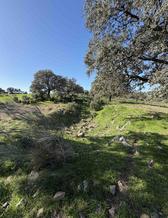
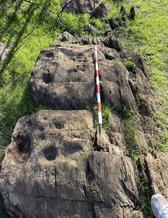
In total, six Bronze Age mining sites were documented, ranging from smaller extraction areas to more substantial mining environments. Particularly remarkable was one mine where approximately 80 grooved stone axes were discovered-tools used to crush and process ore.
The mines contain copper, lead, and silver-metals that were central to Bronze Age economies and long-distance trade networks.
The background to the survey lies in previous research within Maritime Encounters and several research/archaeology projects led by Professor Johan Ling at the university of Gothenburg. Through lead isotope and chemical analyses of Scandinavian Bronze Age artefacts, researchers have previously demonstrated that much of the metal likely originated in southwestern Spain.
"The newly discovered Bronze Age mines identified over the past ten years - both by other research teams and through the approximately 20 new mines documented by our research group between 2024 and 2026 - are transforming our understanding of how interconnected Europe was already 3,000 years ago.
These discoveries demonstrate that metal extraction in southwestern Europe was far more extensive and organized than previously recognized, and they provide a concrete archaeological context for the chemical and isotopic analyses that point to long-distance connections during the Bronze Age.
"The discovery of the new Bronze Age mines in Extremadura represents only the tip of the iceberg. In this region - as well as in Andalusia - we estimate that as many as 150 prehistoric minesmay still remain undocumented and uninvestigated.
This has the potential to fundamentally reshape our understanding of the Bronze Age world system, in which copper mining operated as one of the key engines of the era." says Johan Ling, Professor of Archaeology.


