Once the flames are extinguished after a wildfire, the results can have major impacts on water quality.
Adnan Rajib, an assistant professor of civil engineering at The University of Texas at Arlington, has received a $199,993 RAPID grant from the National Science Foundation to study post-wildfire water quality in Los Angeles and help local authorities understand and predict the lingering effects of wildfires on the city's water supply.
The 2025 wildfires in the Los Angeles area were some of the worst disasters in California's history. However, beyond the direct effects of the fire on property, the burned wildlands resulted in a great deal of ash and reduced ground cover that would have prevented erosion. As a result, when major rain events occurred post-fire, a significant amount of ash and soil washed into the water supply.
This dramatic discharge of sediment may remain in the water supply for many years because the natural system is not designed to filter that much sediment.
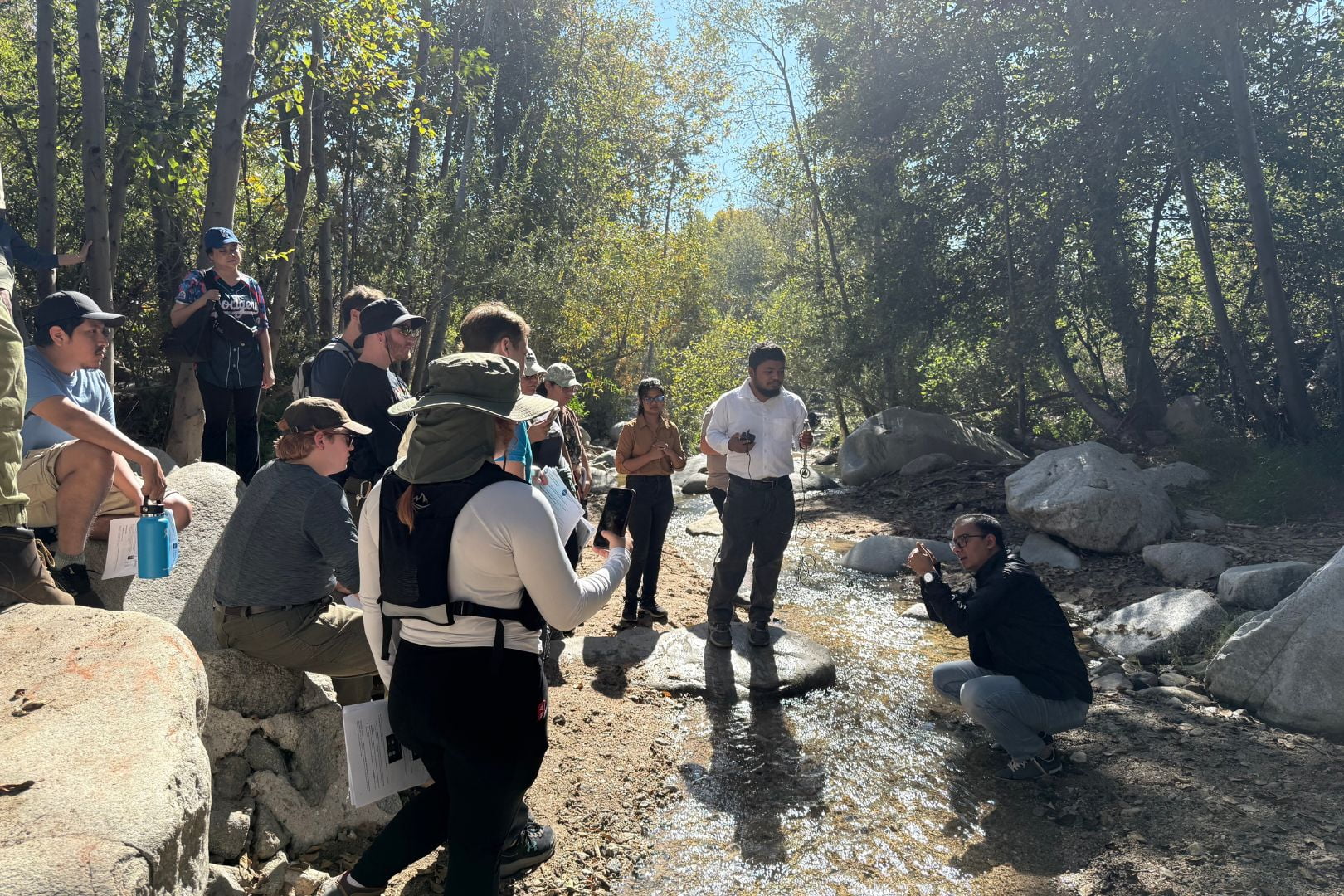
Rajib's research has three components. First, using NASA satellite images taken during the fire, his team will map ash cover to get an indication of where sediment will come from and how it might enter the streams. The second component is placing sensors in the stream system in burned areas. There is not adequate monitoring in Los Angeles-area streams to provide continuous information on water quality changes, so there is a very limited amount of data to prove post-fire impacts on water quality.
The sensors installed by Rajib's team will measure sediment levels which indicate ash and soil and help inform where sensors should be placed to get the best data for future fire events. Finally, the team will track rainfall, especially during the region's rainy season from November to March, to determine how burned areas affect flooding and the amount of sediment in runoff.
Related: New flood maps, data aim to protect Texas communities
"This work is more than satellites and field sensors. It is bringing critical innovations the Los Angeles community needs to manage their water resources in the face of changing weather patterns," said Dr. Alvina Mehinto, the toxicology department head at the Southern California Coastal Water Research Project, who is advising Rajib's team on aggregating existing water quality data in the Los Angeles area.
"Our methods could be replicated in any fire-affected region of the U.S. No community in the western U.S. is immune to fires, so we need a system that is ready-to-use," Rajib said.
Rajib's team includes researchers from NASA's Jet Propulsion Laboratory (JPL), California State University-Northridge, University of Californi-Merced, and multiple local organizations in Los Angeles.
Dr. Christine Lee, a water and ecosystems scientist at NASA JPL, is providing collaborative support to pinpoint priority sites for data collection.
"Our collaboration is a powerful example of how remotely sensed Earth observation and locally collected data can be translated into actionable insights for communities facing many hidden impacts of wildfires," she said.
Related: Satellites and AI put UTA on front lines of flood fight
Dr. Erin Hestir, director for the Center for Information Technology Research in the Interest of Society (CITRIS) and the Banatao Institute at UC Merced, is guiding Rajib's team on remote sensing data workflows. She noted that, "Through innovative data and modeling tools, we're contributing to a broader effort to understand how wildfires impact water resources and the communities that rely on them."
"This work fills critical data gaps in our region and marks a significant step toward long-term resilience planning," said Dr. Steven Steinberg, an adjunct professor of geography at the California State University Northridge, who is supporting the team with data management.
Rajib's team for this NSF RAPID research is engaging 15 graduate and undergraduate student researchers. PhD students Karen Bhattacharjee and Shihab Uddin, along with undergraduate research associates Analisa Gonzalez and Saurya Pandey, in Rajib's H2I Lab at UTA are actively collaborating with a large student cohort from California universities.
Hilary Johnson, a geography lecturer at the California State University Northridge and the project's on-site coordinator, said, "By involving students in every stage of field data collection, we're nurturing a STEM workforce ready to tackle increasing threats of wildfires."
RAPID proposals enable NSF to quickly process and support research that addresses an urgent need concerning the availability of, or access to, data, facilities or specialized equipment. This includes quick-response research on natural disasters or similar unanticipated events.
About The University of Texas at Arlington (UTA)
The University of Texas at Arlington
is a growing public research university in the heart of Dallas-Fort Worth. With a student body of over 42,700, UTA is the second-largest institution in the University of Texas System, offering more than 180 undergraduate and graduate degree programs. Recognized as a Carnegie R-1 university, UTA stands among the nation's top 5% of institutions for research activity. UTA and its 280,000 alumni generate an annual economic impact of $28.8 billion for the state. The University has received the Innovation and Economic Prosperity designation from the Association of Public and Land Grant Universities and has earned recognition for its focus on student access and success, considered key drivers to economic