The Hammerschmiede clay pit near Pforzen in the eastern Allgäu is famous for its wealth of finds: beside fossils of two early anthropoid apes, the remains of numerous species of vertebrates have been uncovered there from 11.6 million years of river sediment - but until now very few birds. Now, the team headed by Dr Gerald Mayr from the Senckenberg Research Institute and Natural History Museum Frankfurt, excavation leader for the Hammerschmiede Dr Thomas Lechner as well as Professor Madelaine Böhme from the Senckenberg Centre for Human Evolution and Palaeoenvironment at the University of Tübingen and the Tübingen Cluster of Excellence TERRA have discovered and described a further six species of birds: cormorants, a loon and an eagle, including two genera and species new to science. The study has been published in the Swiss Journal of Palaeontology.
"Birds are among the rarest fossil finds in the Hammerschmiede. Only one in forty bone finds are in this class of vertebrate; today they make up the greatest number of species on earth," reports excavation leader Lechner. So far, the researchers have documented the presence of darters, a giant crane and several waterfowl, including the unusual Allgoviachen tortonica and a dwarf duck.
Fish-eating diving birds predominate
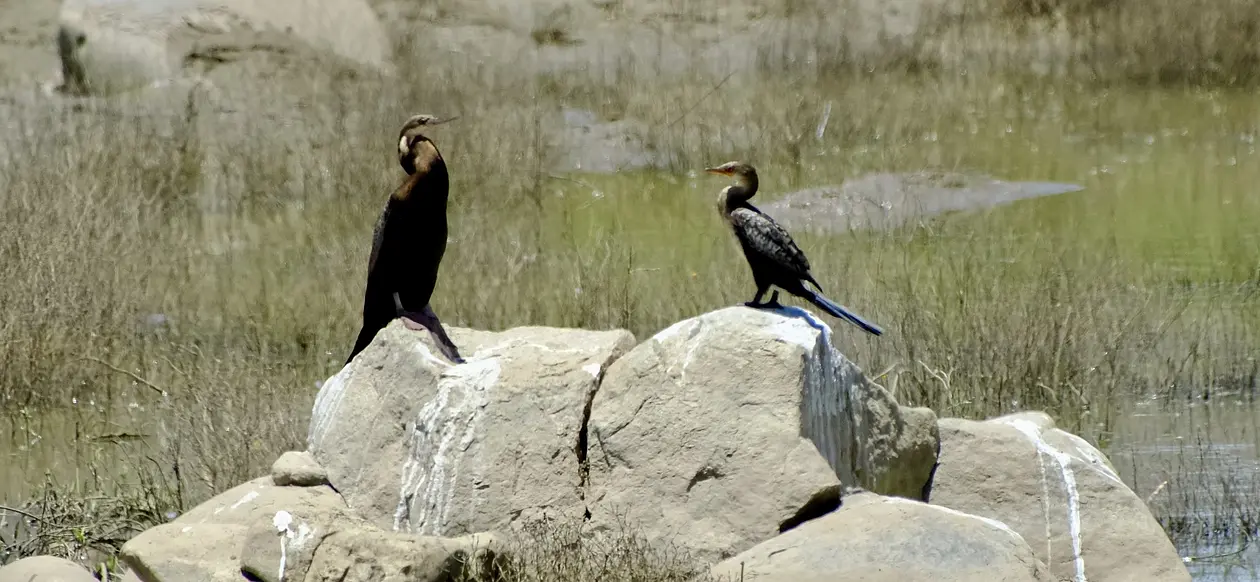
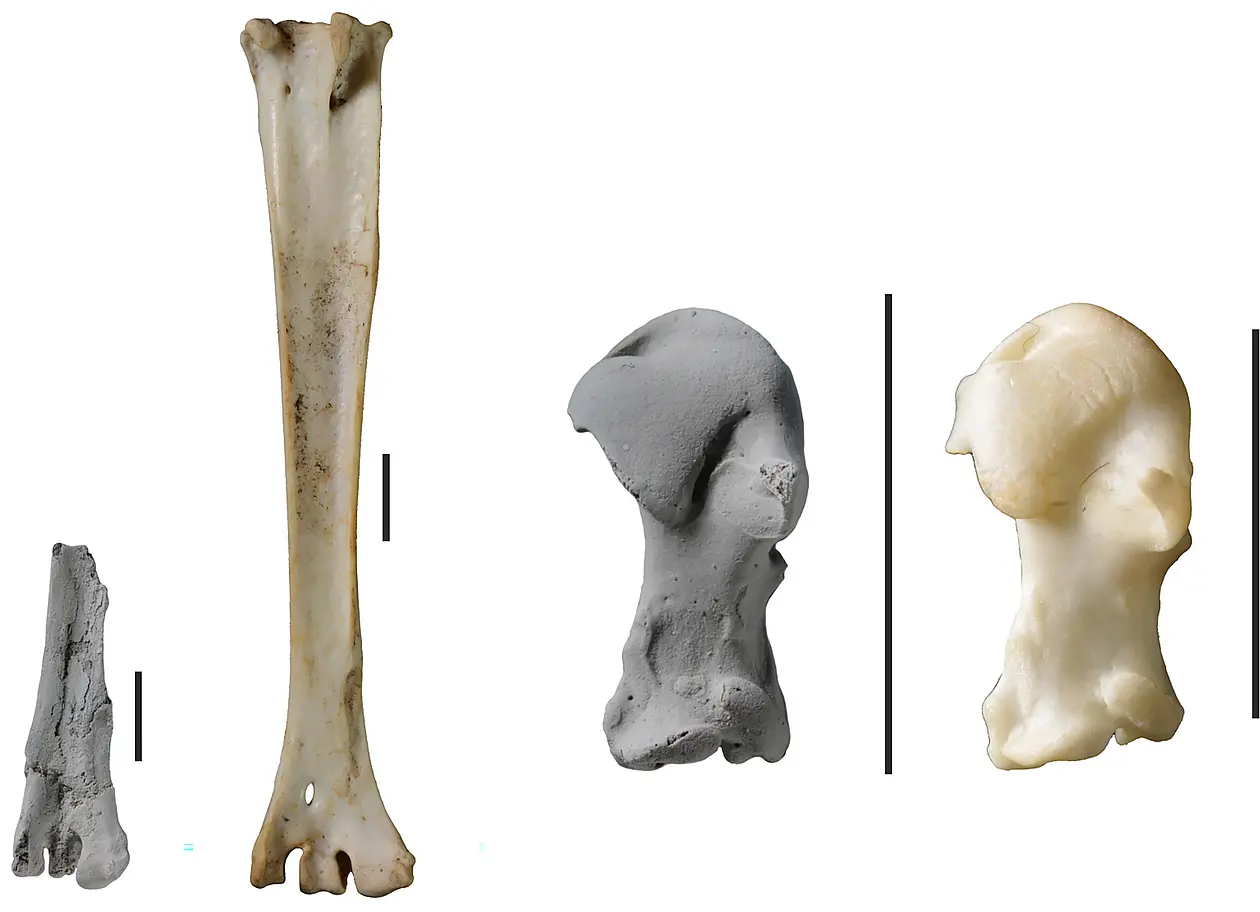
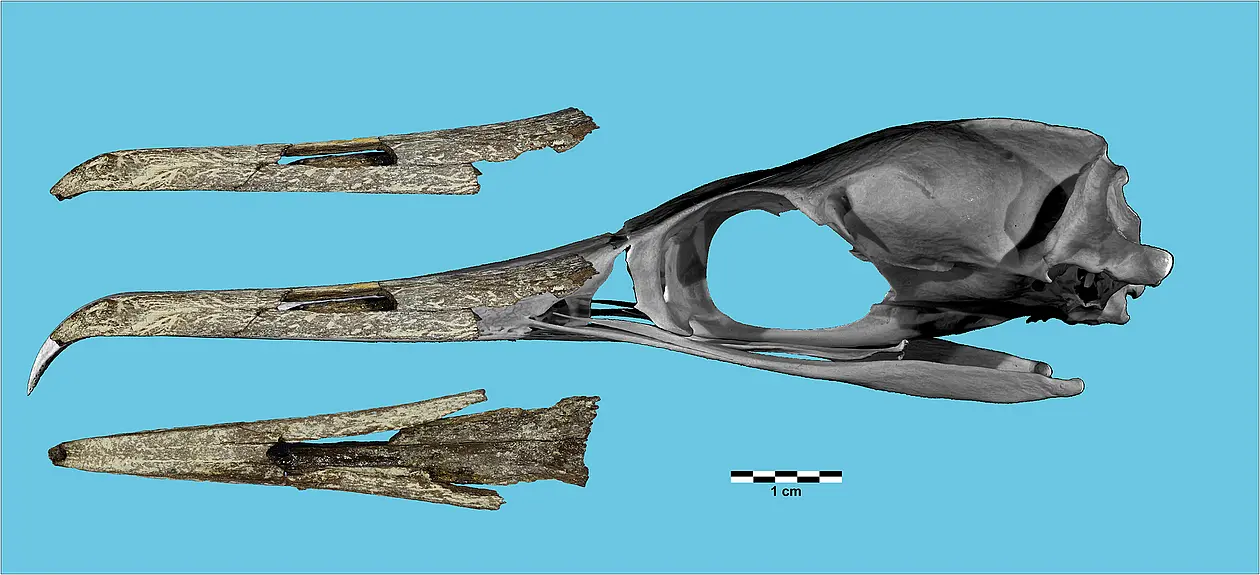
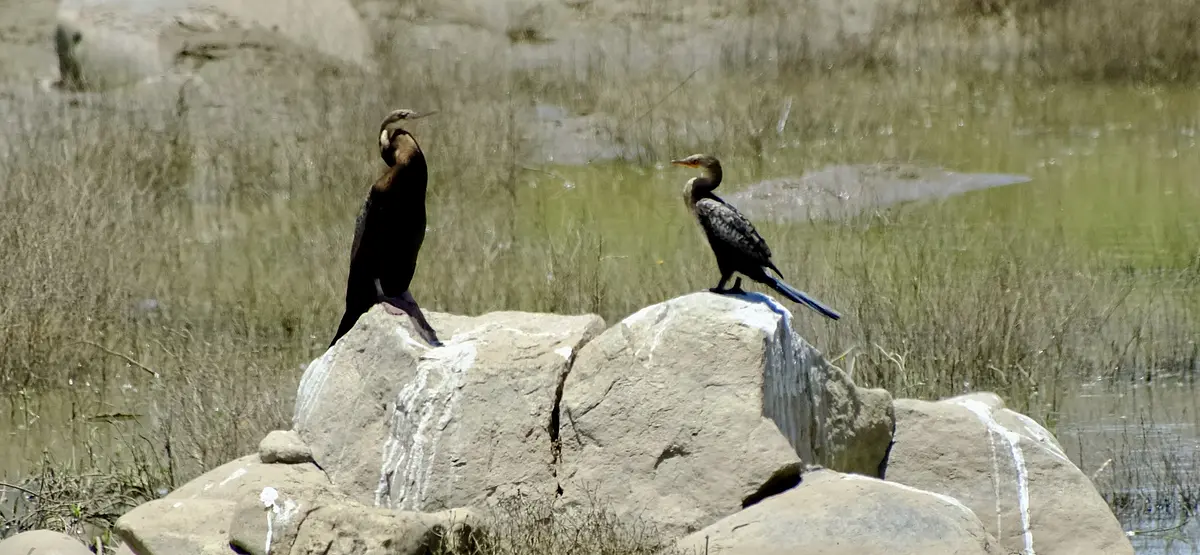
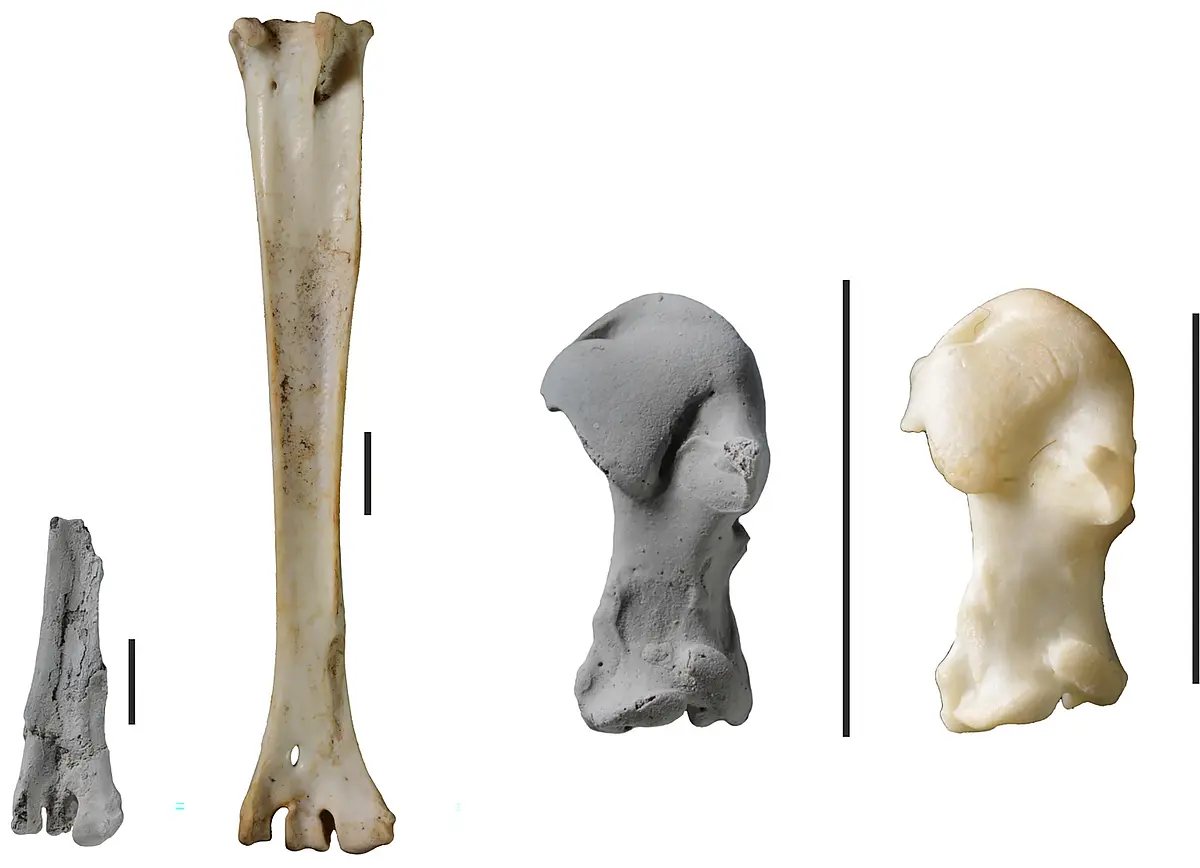
Today, cormorants still dive for their fishy prey along the coasts of the oceans and on some inland waters. The newly-identified genus and species of cormorant, Bavaricarbo brevirostris (Bavarian short-billed cormorant) from the Hammerschmiede is the most recent known representative of the extinct original stem group of cormorants, says Mayr: "In Bavaricarbo, the bones of the humerus that make up part of the wing and the tarsometatarsus are formed differently to modern cormorants. Therefore Bavaricarbo could presumably fly better than the modern version, but probably only dive in flat waters such as the river by the Hammerschmiede." A second, still unnamed, species of cormorant from the Hammerschmiede is the size of today's pygmy cormorant (Microcarbo pygmaeus). There have been numerous cormorant finds, but so far only one humerus bone of a loon. "However, if we combine [these] with the similarly frequent finds of the large-sized darter Anhinga pannonica it is clear that the rivers of the Hammerschmiede area were dominated by fish-eating diving birds," says Böhme.
An eagle from Pforzen
Bird finds from the Hammerschmiede also often include the talons of Accipitridae, a family of hawk. "We discovered a lower leg bone of a hawk which differs in essential details from present-day species and is vaguely reminiscent of an osprey," reports Mayr. The research team has named the newly-discovered genus Mioaetus - 'eagle from the Miocene' - and in honor of the community and the inhabitants of Pforzen, given it the species name Mioaetus pforzenensis - the Pforzen Miocene eagle. The form of the tarsometatarsus indicates that the bird probably had a wingspan of more than one meter and also presumably caught fish in its talons, says Böhme.
There are also other forms of food with the bird finds: a small swift has been identified, Apus cf. gaillardi, an insect-eating bird that lives on the wing. Its humerus was just 9.9 millimeters long, making it significantly smaller than present-day species of swift. "Because they live constantly in flight, it is very rare to find fossils of swifts," reports Böhme. This swift is the 161st species of vertebrate discovered in the Hammerschmiede clay pit.
Exceptional diversity
The new results point to particularly complex food webs in the waters of the Hammerschmiede, says Böhme. "The number of fish-eating predators in the Miocene ecosystem is far higher than in European inland waters today." Besides the two species of cormorant, the darter, the loon and the Pforzen Miocene eagle, previous studies have identified five fish-eating mammals in the Hammerschmiede: three species of otter and two of seal. On top of this, were fish-eating turtles such as the softshell and common snapping turtles, as well as salamanders such as the up to 1.5 meter long giant salamander. "If we then also include predatory fish such as pike, catfish and Danube salmon, the ten other species of fish from the Hammerschmiede, including gobies, loach, whiting and little perch, fed at least 13 previously identified fish predators," Böhme sums up.
The fish-based food chains could be a key to understanding the exceptionally high number of species of vertebrates - 161 - in the Hammerschmiede, Böhme believes. "The fish-eating birds and otters defecated on land and thus transferred essential plant nutrients such as nitrogen and phosphorus from river to land," she explains. "How this fertilization effect influenced the ecosystems on land and whether it might have caused the high biodiversity we've observed is currently the subject of research at the TERRA Cluster of Excellence at the University of Tübingen."
The Hammerschmiede
The University of Tübingen and the Senckenberg Centre for Human Evolution and Palaeoenvironment have been undertaking scientific excavations of the pit at Pforzen in the Allgäu region, led by Professor Madelaine Böhme, since 2011. Since 2017 they have involved members of the public as part of a citizen science project and since 2020 have received financial support from the Free State of Bavaria. Roughly 50,000 fossils of 161 species of vertebrates have so far been found, including the two anthropoid apes Danuvius guggenmosi and Buronius manfredschmidi.
Publication:
Gerald Mayr, Thomas Lechner, Madelaine Böhme: A new short-beaked stem group cormorant (Phalacrocoracidae), an unusual new hawk (Accipitridae), a small swift (Apodidae), and other avian remains from the early late Miocene hominid Fossil-Lagerstätte Hammerschmiede, southern Germany. Swiss Journal of Palaeontology, https://doi.org/10.3897/sjp.145.200204