
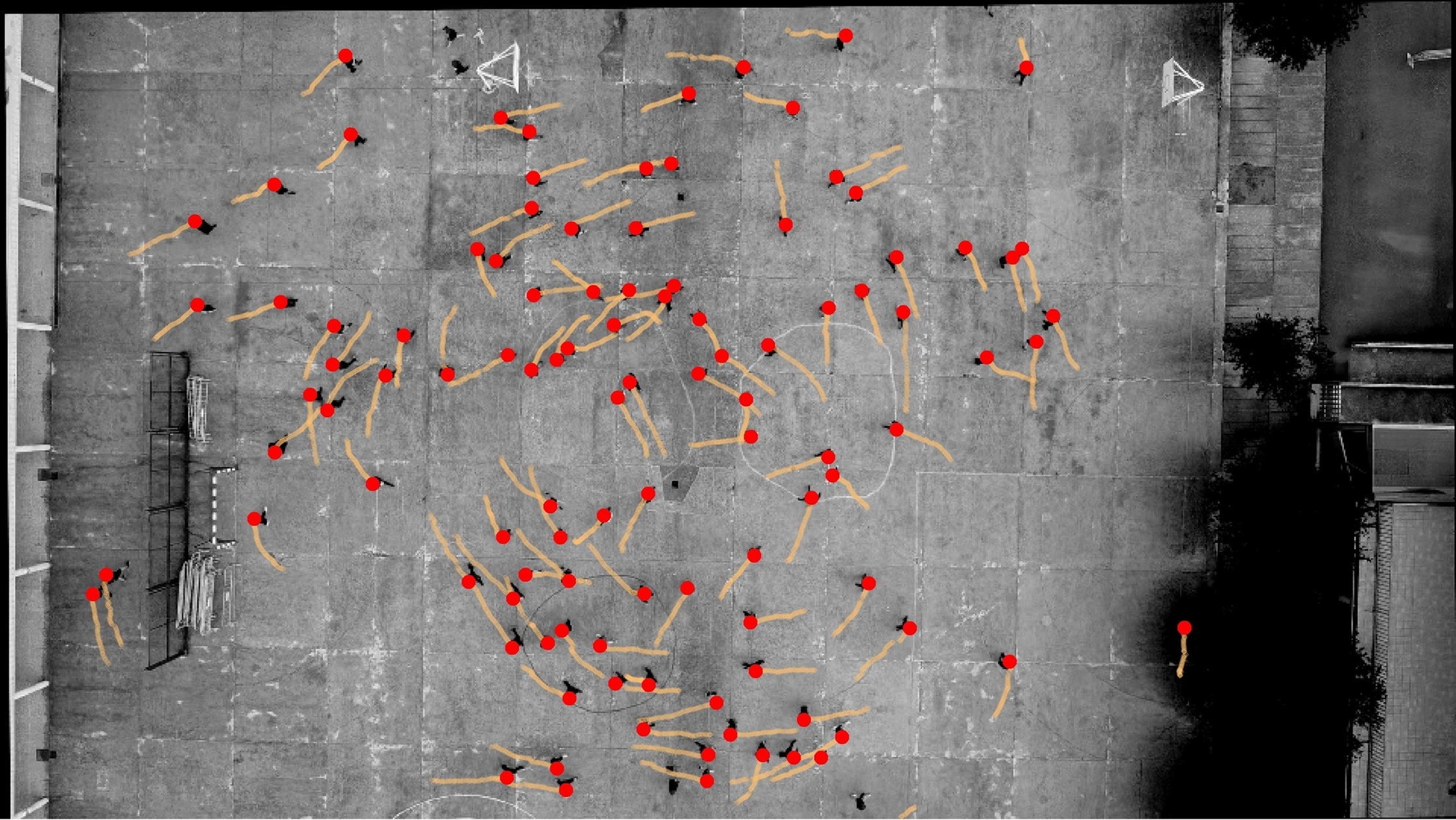
Researchers in Spain and Japan tested a broad range of pedestrians in varying group sizes to see whether there were any patterns to their turning behaviors, and what factors influence them if there are. It turns out that the vast majority of people have a preference for counterclockwise turning. Most factors such as culture or gender made little difference. Only age showed a noticeable but small change in that younger people followed this pattern more strongly. This area of research could impact our understanding of the brain, and fields like design, engineering and architecture. The original research, including the initial experiments and analysis, was conducted by the Department of Physics and Mathematics at the University of Navarra in Spain, with additional comparative experiments later carried out in Japan in collaboration with the University of Tokyo team.
During the COVID-19 pandemic, public health officials in Spain and elsewhere created rules and guidelines around social distancing, as a means to impede the spread of the virus. A person-to-person gap of around 2 meters was broadly found to be effective, and the challenge became how to encourage that gap be maintained in public spaces. Following one particular experiment on a group of test pedestrians, the researchers couldn't help but notice something in the video data they'd recorded, which, while not what they were looking for, surprised them and piqued their curiosity to know what it was they were seeing.
"When analyzing the experiments, my colleagues realized by chance, that in 32 out of 33 experimental trials, as people moved and turned, they noticeably preferred to turn counterclockwise," said Project Associate Professor Claudio Feliciani who was at the University of Tokyo's Department of Aeronautics and Astronautics at the time. "This was completely unexpected as, at least instinctively, when people walk around randomly, you imagine people turn as their needs suit them with little sign of an overall preference. But there was a definite, measurable tendency for people to turn counterclockwise over clockwise, all things being equal. The team had to understand the reason for this, and all good research practice dictates you test observations against multiple possible causes to narrow down what's really going on. And it's this that led them to contact me in Japan, as initially, it was thought that cultural factors might impact turning preference. So, amongst other things, we tested against that."
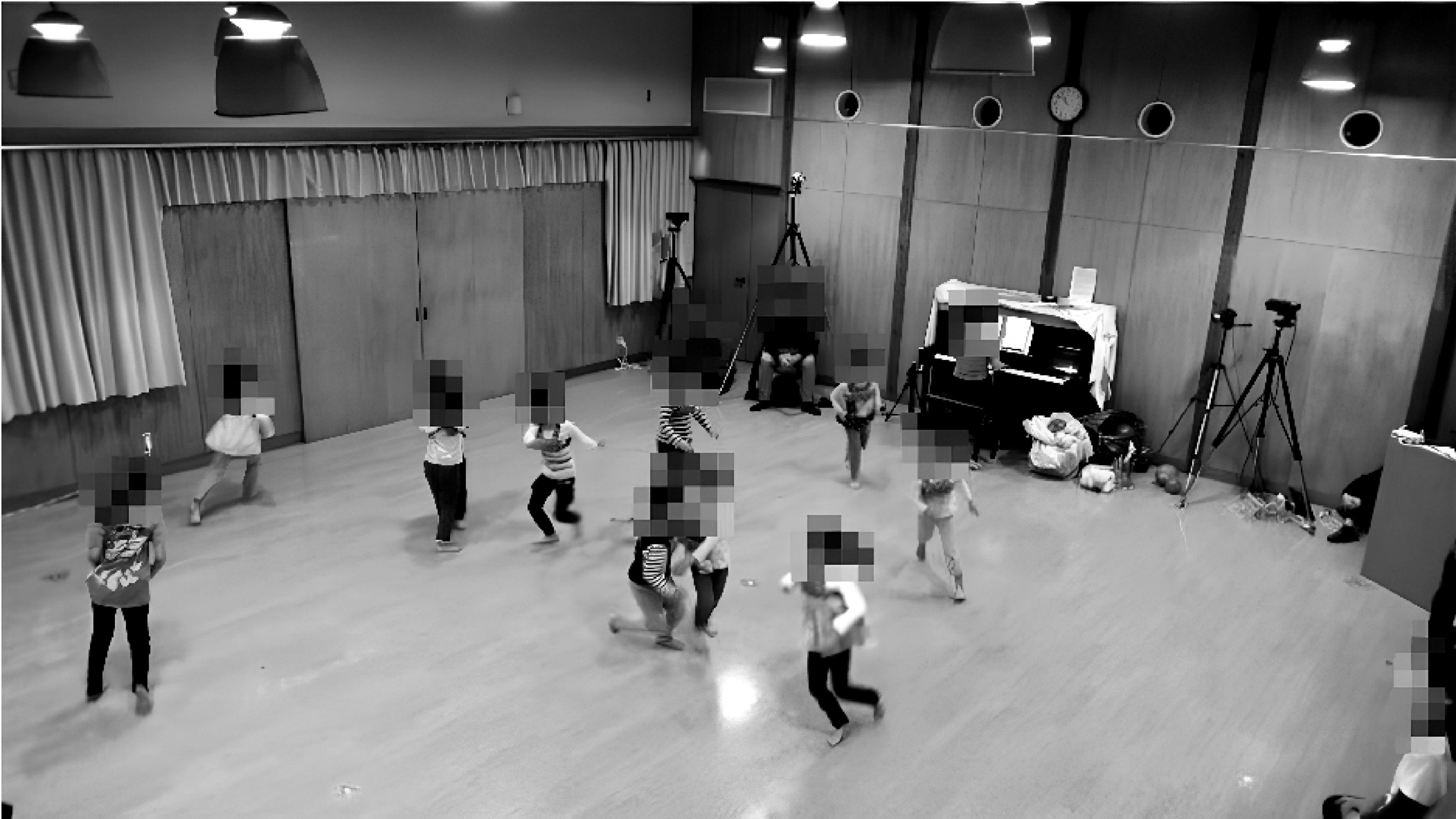
Feliciani and his team set up experiments to observe pedestrian test subjects in different open and constrained environments. Not only did they test against cultural background by having parallel tests in Spain and Japan, they also investigated group size, gender, handedness and age.
"Of all these things, the only thing that stood out was that kids tend to have a stronger bias for the counterclockwise direction, so probably age plays a role in making the effect weaker or stronger," said Feliciani. "Our results may appear as a minor insignificant discovery, but in nature, most phenomena related to locomotion show that animals mostly walk without directional preference. The strong bias found in people hints to some asymmetry at the biomechanical level."
It's unknown at present why there is such a stark counterclockwise bias in people. So, the team is already hot on the case to find what makes this so. They plan to conduct more detailed experiments with individuals rather than large groups, as this could help pinpoint something at the biomechanical level. But this also introduces new challenges that are not present when exploring group locomotion.
"It likely does not come from the eyes, because we tried to patch people's left or the right eyes and the bias was still there. And some people asked us if it might be large-scale phenomena like the Coriolis force or Earth's magnetic field, but this seems unlikely given what we have managed to point to so far," said Feliciani. "There are some interesting parallels to certain sports. Some running and driving competitions are always, but inexplicably, taken on courses that run counterclockwise. But that's an investigation for another time."


