NASA/JPL-Caltech/MSSS
Description
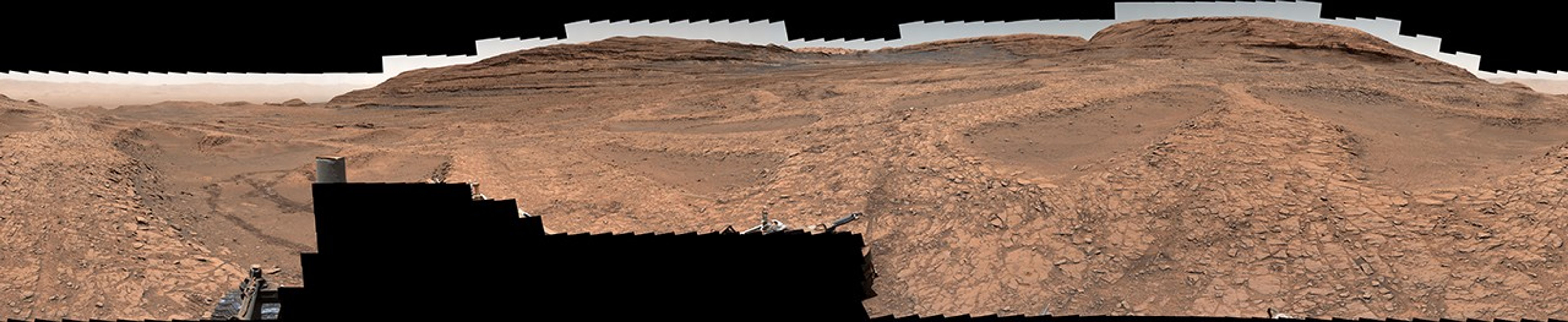
NASA's Curiosity Mars rover captured this 360-degree view of a region filled with low ridges called boxwork formations between Nov. 9 and Dec. 7, 2025 (the 4,714th to 4,741st Martian days, or sols, of the mission). At 1.5 billion pixels, this is one of the largest panoramas Curiosity has ever taken (the rover's largest panorama of all time is 1.8 billion pixels). This newer panorama is made up of 1,031 individual images captured by Curiosity's Mastcam using its right camera, which has a 100-millimeter focal length lens. The images were later sent to Earth and stitched together into the full panorama.
The images were taken at a ridgetop site nicknamed "Nevado Sajama," where Curiosity collected a rock sample using a drill on the end of its robotic arm. Since May 2025, Curiosity has been exploring a region full of geologic formations called boxwork, which crisscross the surface for miles and look like giant spiderwebs when viewed from space. The new panorama shows them as they really are: low ridges standing roughly 3 to 6 feet (1 to 2 meters) tall and about 30 feet (9 meters) across with sandy hollows in between.
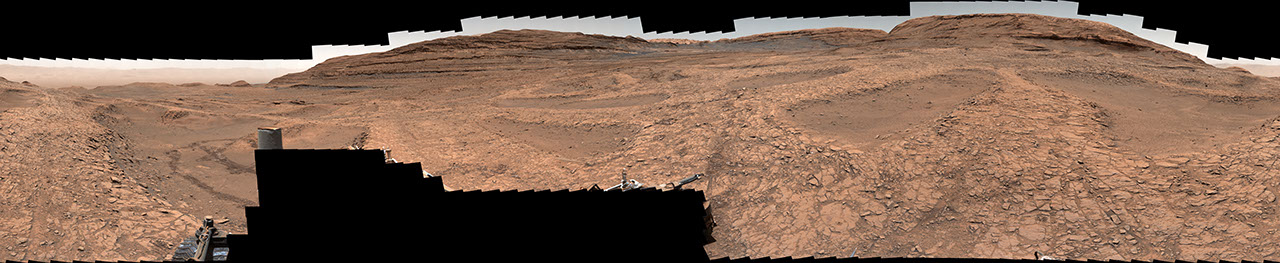
Figure A is a high-resolution version of this panorama (1.8 gigabytes).
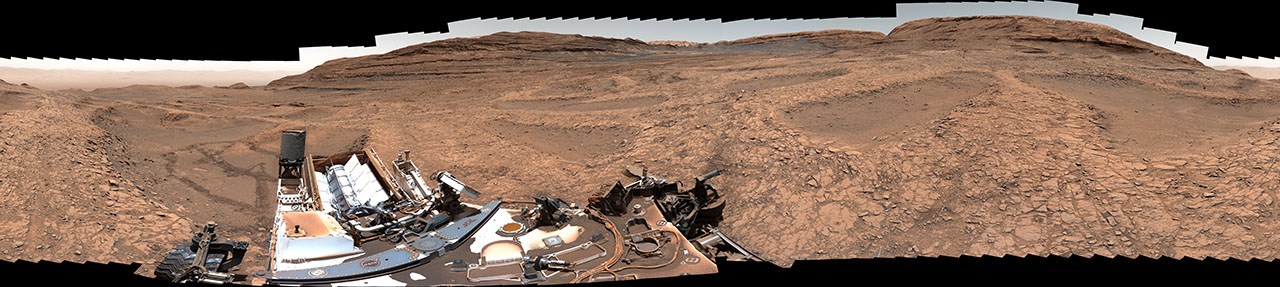
Figure B is a lower-resolution version of the panorama (276 megabytes) captured by Mastcam's left camera, which has a 34-millimeter focal length lens. This version includes the rover's deck, which is often left out of such imagery in order to reduce the amount of data relayed back to Earth.
Curiosity was built by NASA's Jet Propulsion Laboratory, which is managed by Caltech in Pasadena, California. JPL leads the mission on behalf of NASA's Science Mission Directorate in Washington as part of NASA's Mars Exploration Program portfolio. Malin Space Science Systems in San Diego built and operates Mastcam.