
Hydrothermal vents on the bottom of the ocean host a broad range of rare and unusual ecosystems. They can be spread very far apart, and yet there will often be overlap in the creatures which inhabit them. Researchers, including those from the University of Tokyo, answer a long-standing question in this field about how creatures migrate between hydrothermal vents. Their process involves inspecting the chemical nature of limpet shells to reconstruct their likely journeys, yielding some surprising results.
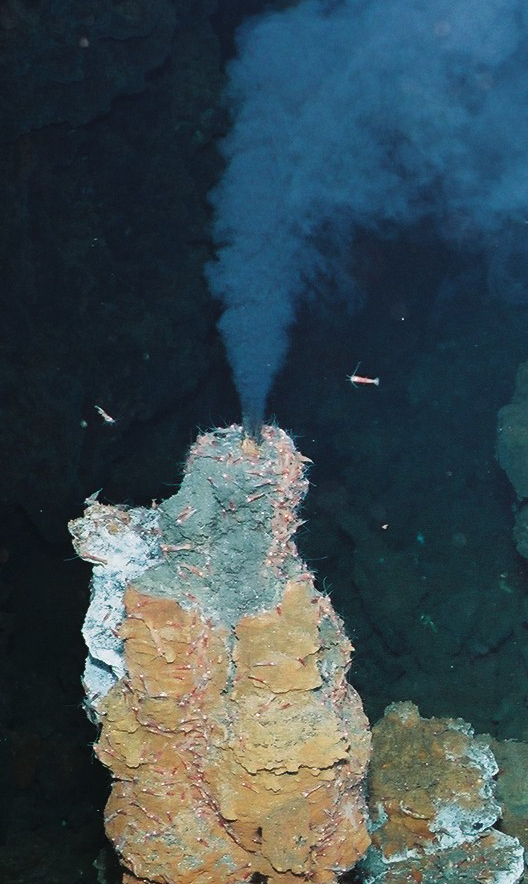
People in Japan and around the world often enjoy a nice soak in natural hot springs, pools of water heated by underground geothermal processes. But did you know similar activity drives another kind of hot spring under the sea, hydrothermal vents? Although you probably wouldn't appreciate a dip in one of these; if the freezing cold water surrounding them doesn't kill you, the boiling hot water coming out of them certainly would, and there's also the bone-crushing pressure thousands of meters down to contend with. Some lucky people do visit these, but they stay in the comfort of a pressurized deep-sea submersible. Incredibly though, these hostile environments can be teeming with life — fish, crustaceans, gastropods and more.
These ecosystems, in contrast to every one that exists up here on the surface, do not depend on the sun for their primary source of energy; it's all chemical. And, even though vents, or collections of vents, can be hundreds of kilometers apart, there may be present a lot of identical or closely related creatures around them. This raises a question, though: How do creatures, some of which are not free swimmers and can be incredibly tiny, migrate between these sites? Such a question is not trivial, as knowing can improve our understanding of evolution, biodiversity, and how human activity can have knock-on effects on ecosystems. Assistant Professor Takuya Yahagi and Associate Professor Yasunori Kano from the University of Tokyo's Atmosphere and Ocean Research Institute, and their team, set out to answer questions about migrating vent-dwelling creatures.
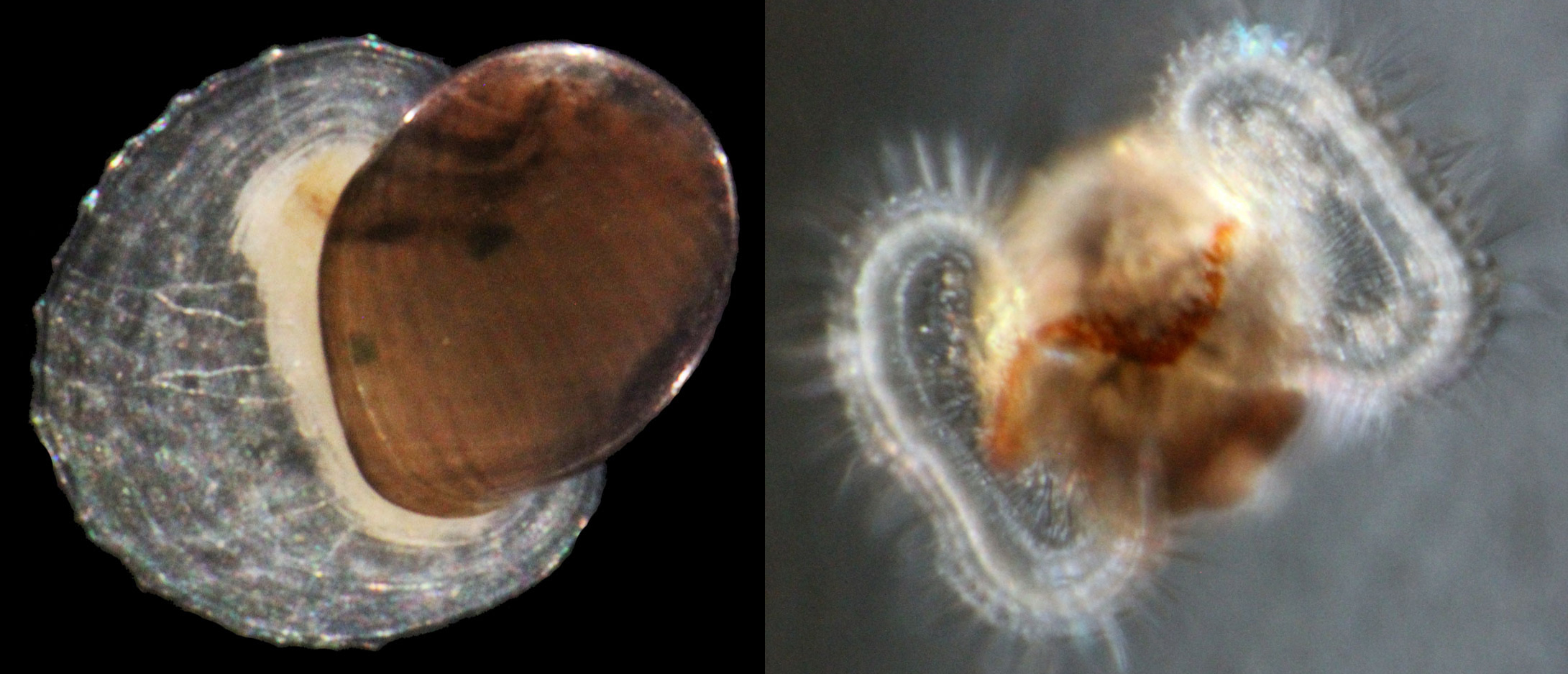
"Our previous studies, including larval culture experiments and population genetic analyses, suggested that plankton-feeding larvae of hydrothermal vent animals disperse in surface waters, where they can feed on phytoplankton and be transported by strong currents over long distances. However, directly observing or tracking these microscopic larvae in the open ocean is extremely difficult," said Yahagi. "We collected animals from vents in the west Pacific using research vessels. The limpets we analyzed still retained their tiny larval shells. Like growth rings in a tree, these shells preserve chemical clues about the environment in which they grew. By measuring chemical signatures recorded in the larval shells, we estimated the temperatures of environments they probably lived in and reconstructed their early life histories."
The researchers found that limpets collected from hydrothermal vents had explored the sunlit upper ocean during their larval stage, based on chemical signatures preserved in their shells. This discovery helps explain how animals living at isolated vent sites can spread over hundreds or thousands of kilometers. It also shows that conditions in surface waters, such as currents, temperature and food availability, may play an important role in shaping deep-sea vent ecosystems. The team previously proposed that newly hatched larvae swim upward and disperse near the ocean's surface. In this study, they showed that every limpet from deep-sea hydrothermal vents that they analyzed had undertaken this journey before either settling back to its birthplace or establishing itself at a new vent site.
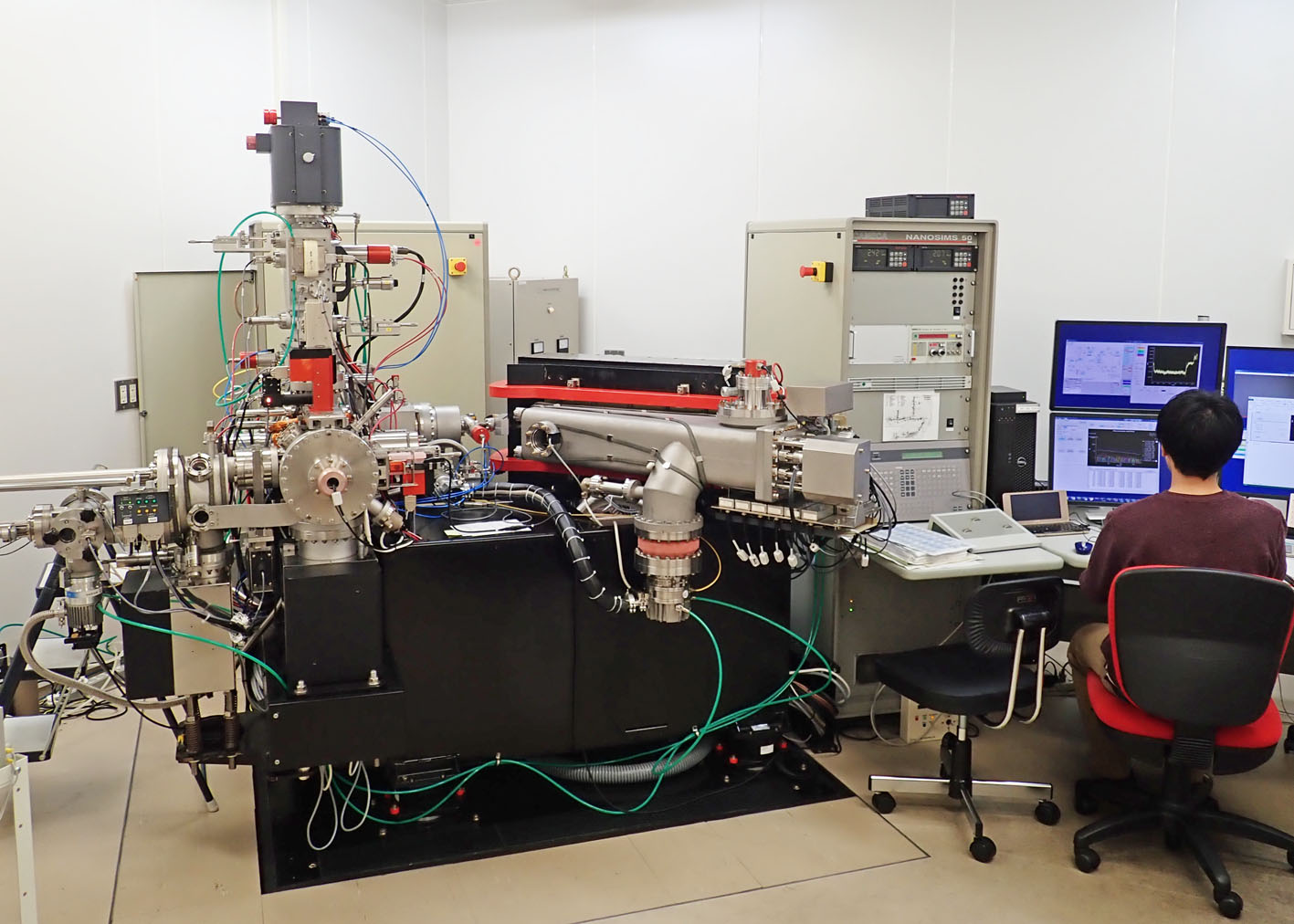
"There were two major challenges, though," said Yahagi. "The first was finding suitable specimens. We needed animals that had retained tiny larval shells, and such specimens are not commonly collected from deep-sea hydrothermal vents. Fortunately, Professor Kano obtained suitable specimens during research cruises. The second challenge was analyzing the larval shells themselves. These shells are less than 1 millimeter in size and only about 10 micrometers thick. We had to analyze them very carefully while avoiding contamination from shells formed after settlement. Advances in analytical technology allowed us to obtain reliable chemical records from these tiny shells."
The larval duration remains unknown for most hydrothermal vent species, but experiments suggest at least one species may spend more than a year near the surface before settling back down. This journey is highly risky as larvae can be eaten by any number of predators or get carried away by currents, never to reach a suitable vent habitat. The researchers suspect that only a small fraction successfully completes the journey, which may even explain why many vent animals are known to produce large numbers of eggs. The high productivity of hydrothermal vents, supported by bacteria that derive energy from chemicals rather than sunlight, provides the resources needed for this strategy.
As currents are largely responsible for relocating larvae, and as those currents are influenced by temperature patterns in different regions and layers of the ocean, there is a possibility that climate change could affect larval dispersal and connectivity among vent populations, although direct evidence is still lacking. The team suggests that although larval ecology is highly species-specific, the three limpet species examined in this study may be relatively resilient due to their large numbers of offspring and capability of long-distance dispersal via surface waters. As a result, their responses to environmental change or disturbance may not be representative of other hydrothermal vent ecologies. So, comparable studies across a wider range of vent-dwelling species will be needed before the ecological impacts of activities such as deep-sea mining can be properly assessed. Understanding how different vent species recover from disturbance, and how they maintain connectivity between isolated habitats, remains an important area for future research too.
"One of our next goals is to determine how widespread this behavior is among hydrothermal vent animals. In this study, we examined species living at depths of no deeper than around 2,000 meters, but hydrothermal vents occur as deep as 5,000 meters, so we are interested in whether animals from even greater depths also migrate to the sunlit upper ocean during their larval stage," said Kano. "We also want to reconstruct environmental temperature estimates at finer scales across different parts of the larval shell. In the present study, we obtained only a single temperature estimate for each larval shell, but higher-resolution measurements could reveal more detailed aspects of larval behavior. Although this is technically very challenging, it may allow us to trace not only the ascent to surface waters but also the return journey, including the descent into the deep sea and the search for a suitable hydrothermal vent where the larvae eventually settle, feed, reproduce and repeat the cycle again."


