
Researchers have developed a new artificial intelligence-powered platform that could significantly speed up the discovery of catalysts for methane pyrolysis, a promising technology for producing hydrogen with lower carbon emissions.
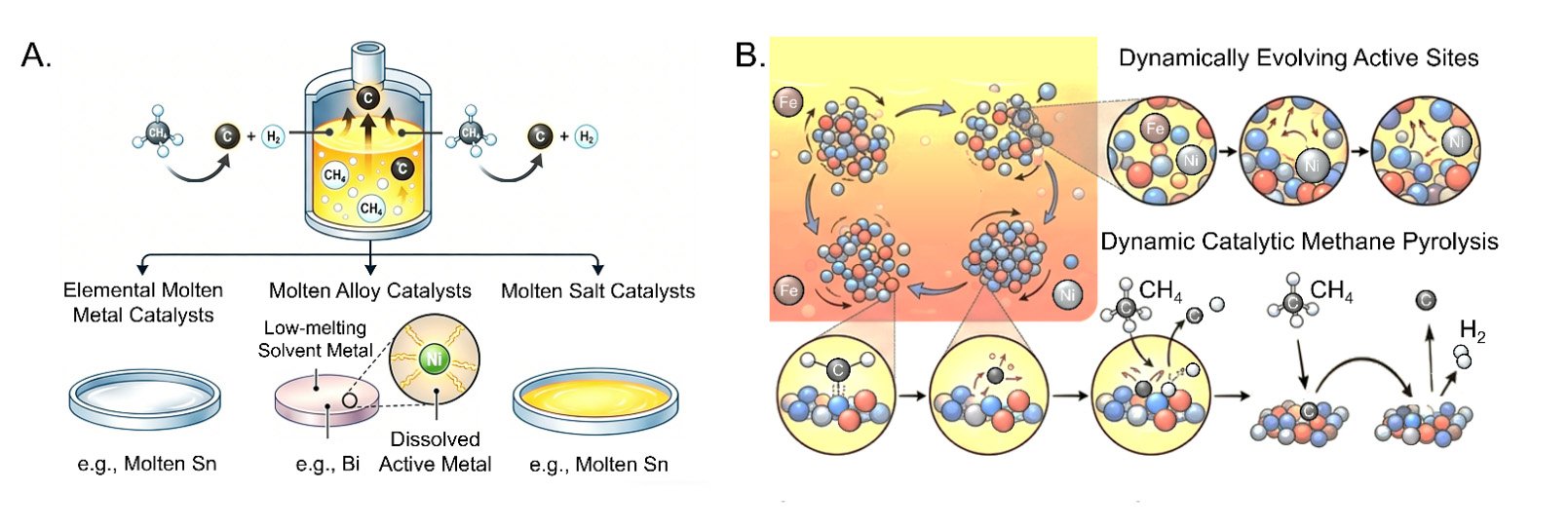
Hydrogen is widely regarded as an important component of future clean-energy systems. However, many current methods of hydrogen production generate carbon dioxide as a byproduct. Methane pyrolysis offers an alternative approach by splitting methane into hydrogen and solid carbon, avoiding direct carbon dioxide emissions.
One of the major challenges facing methane pyrolysis is identifying efficient molten catalysts that can accelerate the reaction. Because molten catalysts exist in an enormous and poorly understood chemical design space, discovering effective materials has traditionally required extensive trial-and-error experimentation.
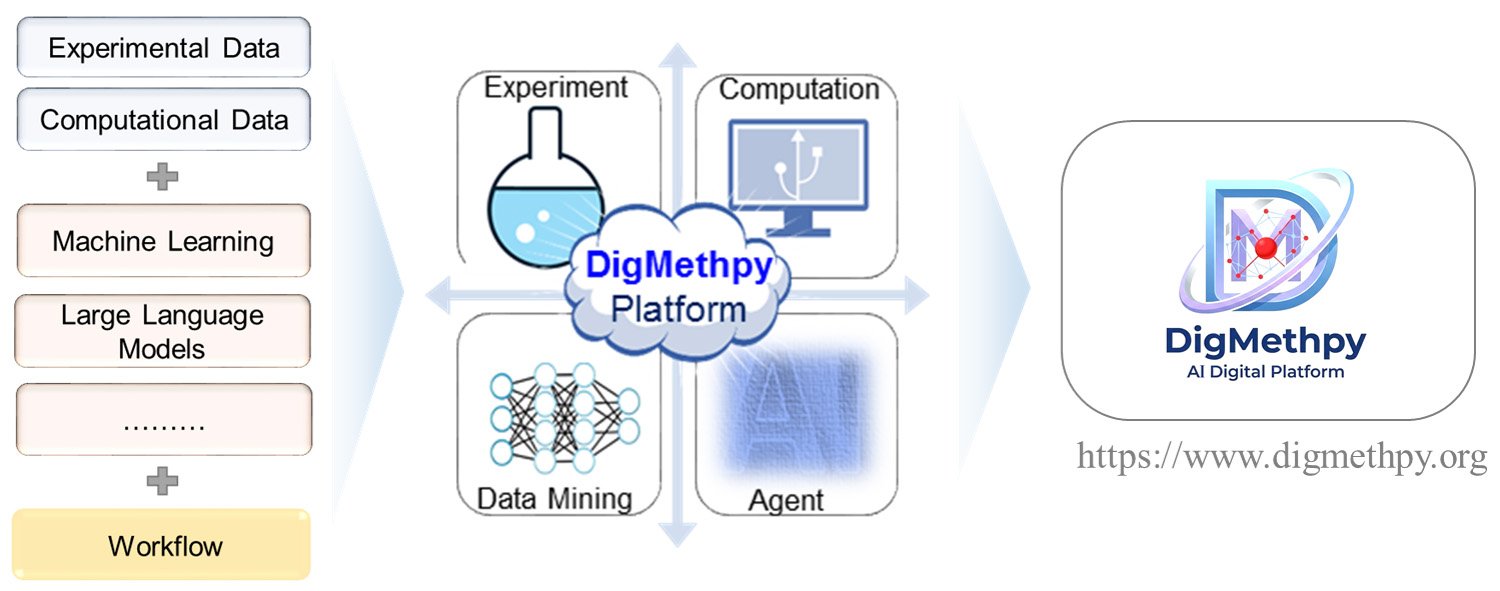
To address this problem, an international research team developed DigMethpy, an AI-empowered digital catalysis platform that combines scientific literature, experimental data, computational simulations, machine-learning models, and large language models into a single discovery framework.
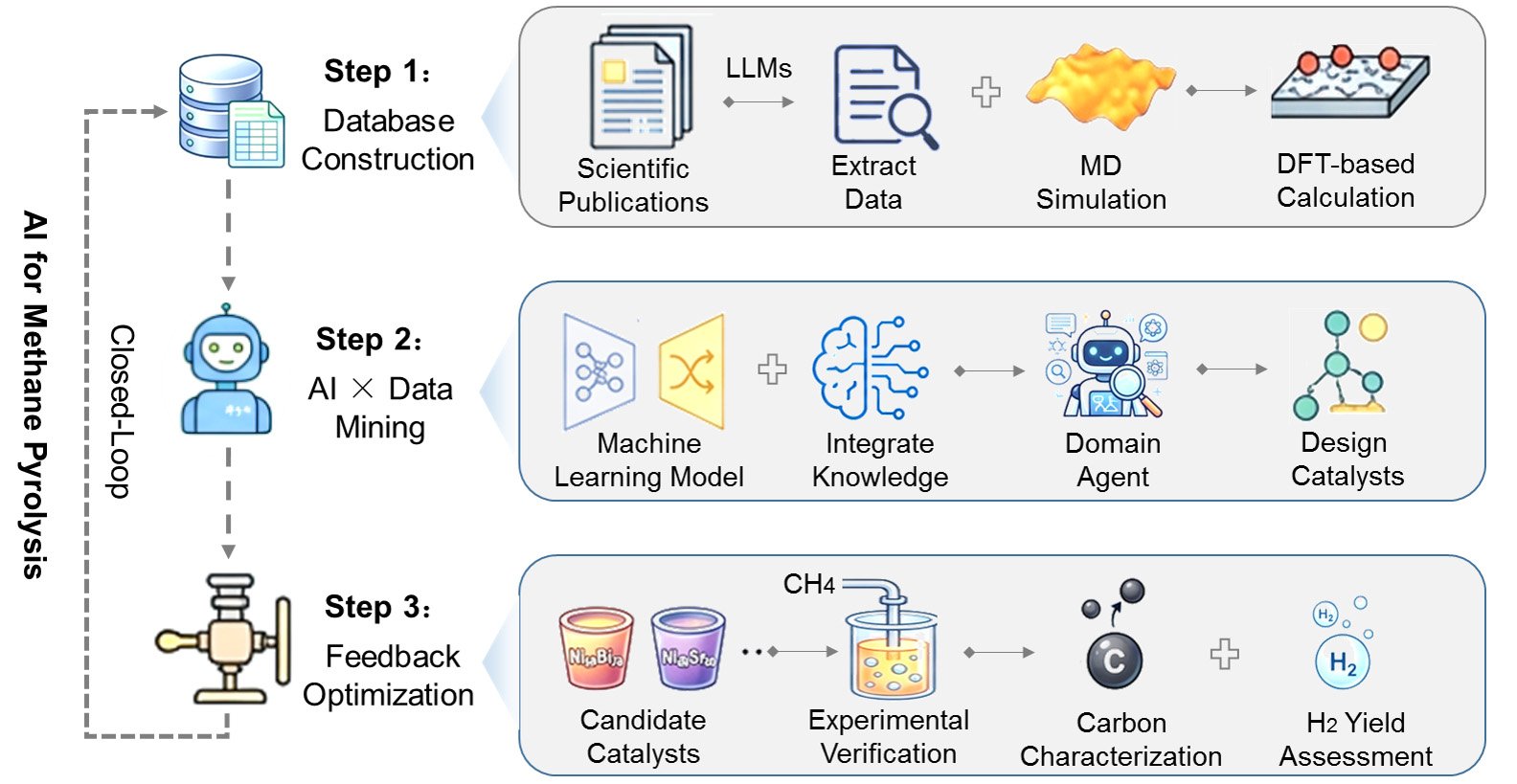
The platform creates a closed-loop workflow that continuously gathers information, predicts promising catalyst candidates, and improves its recommendations through validation feedback. DigMethpy currently contains more than 40,000 curated data points collected from over 500 scientific publications and computational records covering molten metals, alloys, salts, and mixed catalyst systems.
Using the platform, the researchers identified key chemical properties associated with catalyst performance, including atomic charge-related descriptors, diffusion behavior, and hydrogen adsorption characteristics. These insights were then used to guide the design of highly active multicomponent molten alloy catalysts for methane pyrolysis.
The researchers believe the approach can help scientists make better use of the growing volume of scientific data while reducing the time and cost required to discover new catalytic materials. The framework also demonstrates how artificial intelligence can be integrated into materials research to support more efficient scientific decision-making.
"DigMethpy represents an important step toward data-driven and eventually autonomous catalyst discovery," said Hao Li, Distinguished Professor at Tohoku University's Advanced Institute for Materials Research (WPI-AIMR). "By connecting experimental knowledge, computational modeling, machine learning, and large language models in a unified workflow, we can accelerate the development of catalysts needed for cleaner hydrogen production and other sustainable energy technologies."
The study was published in the journal AI Agents. Hao Li also serves as the founding editor of the journal. The research team plans to further expand the DigMethpy database, improve its predictive capabilities, and develop more autonomous multi-agent systems capable of supporting next-generation catalyst discovery.
- Publication Details:
Title: DigMethpy: An AI-Empowered Digital Catalysis Platform for Methane Pyrolysis Molten Catalyst Design
Authors: Zihao Cheng, Xuxuan Huan, Hangwei Liu, Junmei Du, Piao Ma, Hang Yin, Di Zhang, Hao Li, Yuanzheng Chen
Journal: AI Agent


