
The image of migrants portrayed in public opinion often swings between two extremes: on the one hand, representations in which migrants are depicted as a threat (mainly from right-wing ideologies) and, on the other hand, representations in which they are reduced to passive victims and evoke pity (mainly from left-wing ideologies). But how do migrant communities see themselves?
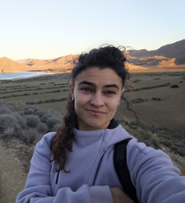
Elvira Mora wanted to examine and challenge these dominant narratives and stereotypical representations during her master's programme in Visual Ethnography. The research resulted in a written thesis and an ethnographic documentary called 'I'MPOSSIBLE' for which she won the prestigious Speckmann Prize.
Elvira: 'I wanted to reflect on these visual narratives and create representations that, although acknowledging difficulties and exclusion, would still highlight their strength, resilience and joy, and ultimately emphasize their agency. Through the documentary, I hoped to contribute to a more human and nuanced portrayal of migration, representing it more as a state than an innate essence.'
Understanding the structural inequalities
Elvira chose to focus her three-month fieldwork research on informal settlements in Campos de Níjar, Almería. 'I was born in this region of Spain, where the difficult and exploitative realities experienced by many migrants often remain invisible behind the paradisiacal landscapes and the agricultural economy that sustains much of Europe's food production. I wanted to better understand the structural inequalities migrants face, as well as the institutional responses surrounding them.'
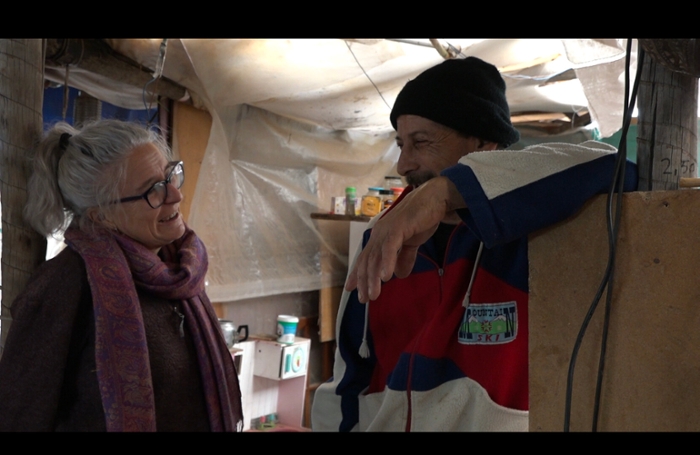
Together with her mother Teresa as her main collaborator, she visited different villages across the municipality. To get a broader sense of the social and political context surrounding migrant labor, they spoke with a lot of different stakeholders, including migrants, municipal workers, NGO staff, shop and cafes owners and residents.
Regaining agency through participatory filmmaking
Through collaborative ethnographic filmmaking Elvira tried to foreground the agency and self-representation of the migrants. Elvira explains: 'Rather than speaking for people, participatory filmmaking creates space for people to speak for themselves and for us to speak together with them. In this way, participants regain their agency in front of the camera - which is often absent in mainstream media portrayals - and become active subjects in the construction of their own image and narrative.'
Gaining access through volunteering
One aspect of this method included organizing participatory filmmaking workshops with migrants in the area, which was a challenge at first. 'Long working hours, precarious living conditions, and understandable concerns about visibility and being filmed often limited participation.' Through volunteering as a Spanish teacher with the Spanish Red Cross and accompanying a social worker from AESA, she managed to find participants to organise workshops.
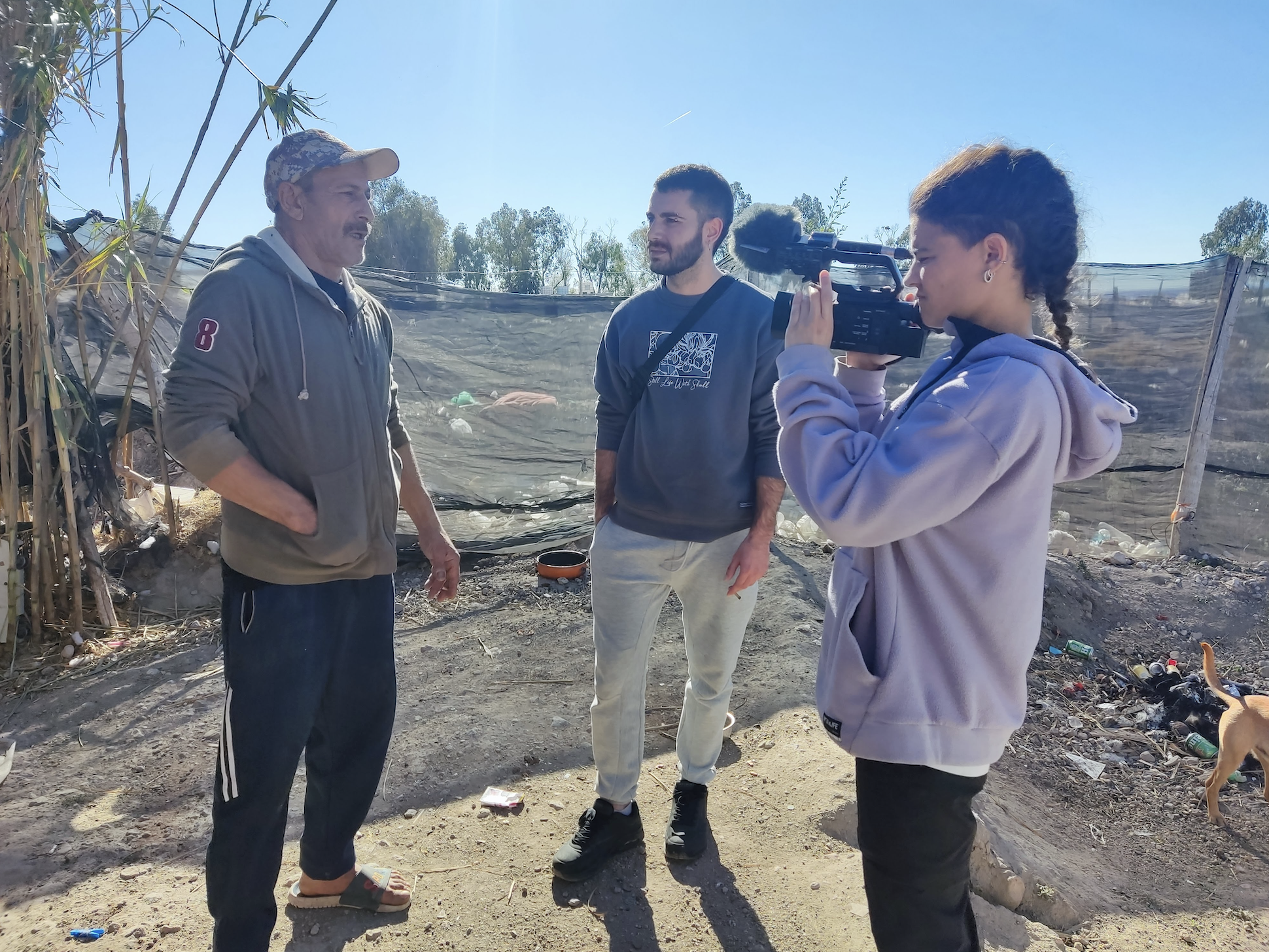
Elvira filming Abdellah in his 'chabola', while he explained some of the living conditions in the settlement. 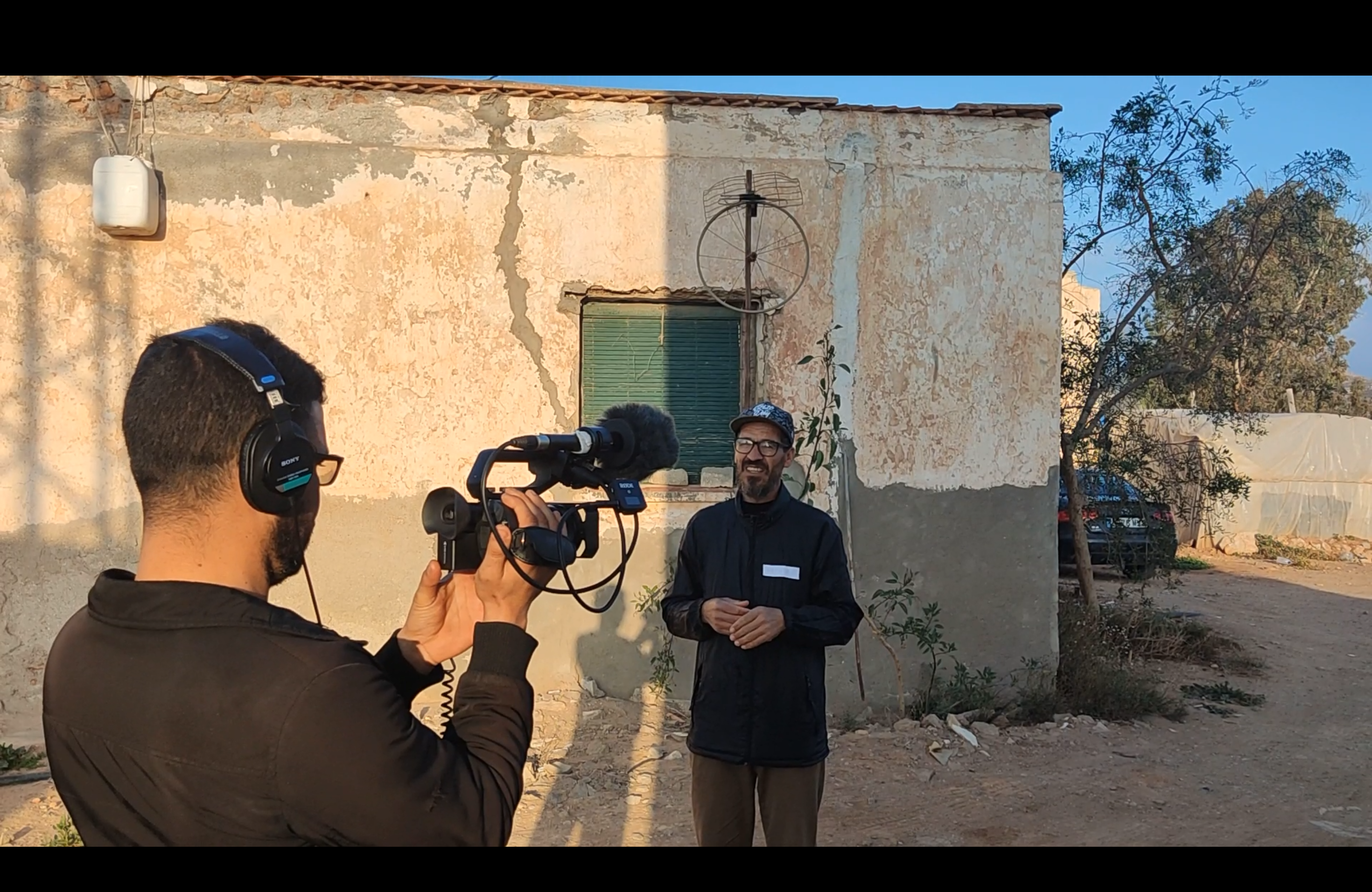
Two of the interlocutors and protagonists of the documentary during the first workshop. Toufik filmed and interviewed Rachid about their living and working conditions.
A critical look at the dominant narratives
With this research and documentary Elvira hopes to raise important questions about power, representation, and visibility within the dominant visual narratives that often surround migration. 'As audiences, we are constantly exposed to images of suffering that can unintentionally normalize dehumanizing portrayals of marginalized communities. Considering that we live in a world driven by images, my research asks important questions such as: Who has the power to tell stories about others? How are these stories constructed? What relationships exist between filmmakers and participants? And what responsibilities come with representing other people's realities?', she explains.
Elvira continues: 'These are questions that matter not only for anthropology and filmmaking, but also for society more broadly. The research contributes to ongoing discussions about more ethical, collaborative, and reflexive forms of documentary practice, especially when working with communities that have historically been spoken for rather than listened to.'
Contribute to more human representations of migration
Although this research has been completed, Elvira hopes to continue working with participatory methods and filmmaking and through this contribute to conversations around migration, representation, and power. 'As a European and Spanish citizen, I also believe we have a responsibility to confront the growing xenophobia toward migrants across many Western countries and to contribute to more empathetic and human representations of migration.'
Speckmann Prize
Annually the Institute of Cultural Anthropology and Development Sociology awards the Speckmann prize for the best Fieldwork NL report from bachelor's students, as well as the most accomplished master's thesis. This tradition started in 1993 and is named after Professor dr. J.D. Speckmann (1928-1997), who taught empirical sociology with a special focus on field research.


