
Everyone falls at some point in life.
However, the risk of falling - and injury - increases with age. According to faculty at Binghamton University's Decker College of Nursing and Health Sciences, about one-third of adults over age 65 will fall each year, and the risk increases with muscle weakness, impaired balance, and cognitive challenges. Falls can cause physical injuries and psychological, social, and financial burdens for older adults.
Last semester, faculty from Decker College's Division of Physical Therapy and Doctor of Physical Therapy (DPT) students investigated how best to help senior citizens. Through the Physical Therapy Community Fall-Risk Intervention Project, DPT students provide in-person and app-based in-home training to improve participants' balance, strength, and mobility.
This project, supported by the University's Center for Community Engagement, explored which delivery method offered the greatest improvement; the results will inform future fall-intervention services.
For the project, the faculty created two groups: one received in-person exercise training at the Johnson City (New York) Senior Center, and the other received it remotely via a smartphone app. DPT students worked with both groups as part of their capstone projects.
The project also used the Otago Exercise Program (OEP), an evidence-based fall-prevention plan. Developed in New Zealand, the OEP has been adopted by the U.S. Centers for Disease Control and Prevention as an effective fall-prevention intervention for older adults at risk of falling. It focuses on strength training, balance exercises, flexibility, walking, and activity. All DPT students working on this project were OEP-certified.
Assistant Professor Patima Silsupadol is a physical therapist who worked in the smartphone app group. She has always been interested in fall prevention among older adults, and the project gave her the opportunity to align her research interests, teaching, and clinical service.
"Our goal was to reach older adults, especially those in rural or underserved areas, who may not be able or willing to travel, especially during the winter," she says. "If we can deliver effective intervention through a smartphone, it gives them access to the support they need while helping reduce their fall risk."
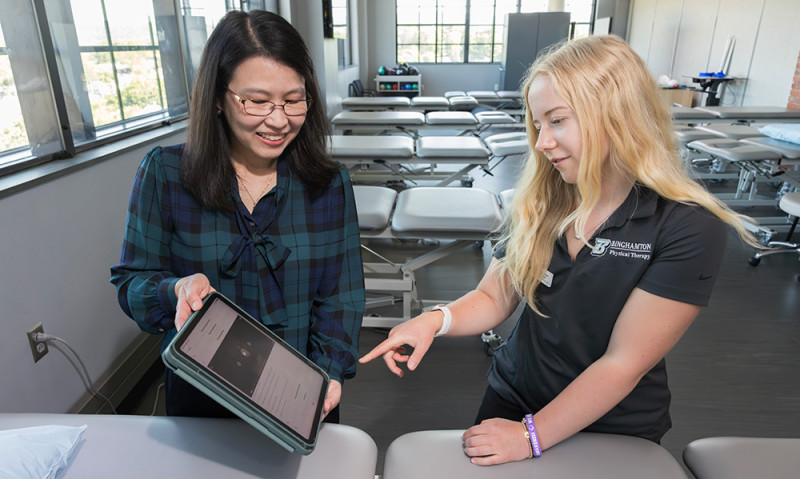
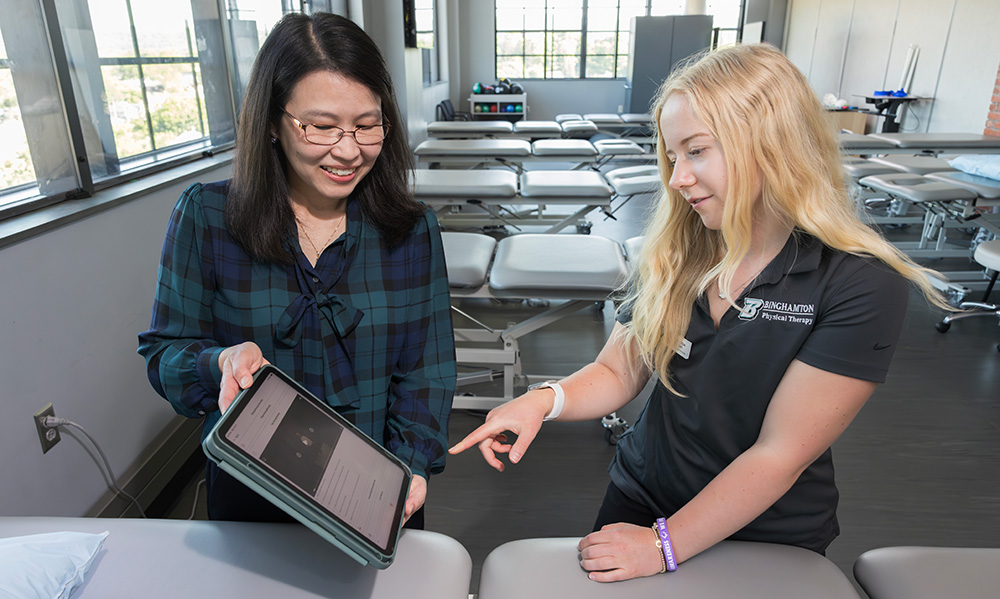
Associate Professor Vipul Lugade, a human movement engineer, developed the smartphone application to deliver the exercise program and oversaw baseline and post-intervention testing of participants. He says a major part of the project was educating the seniors about their deficits and providing individualized care to address those specific weaknesses.
"Every person is different, so each intervention needs to be tailored to the individual," Lugade explains.
According to Lugade, the biggest barriers to any in-person treatment are transportation and access.
"Not everyone has a car, someone to drive them, or the ability to come at a scheduled time," he says. "Homebased intervention offered flexibility because participants could complete the exercises when it worked best for them. The smartphone delivery method was especially exciting, because no previous study had used this approach for the Otago program. It helped us address a major research gap while also making the intervention more accessible."
Sarah Cerutti, a second-year DPT student, says another challenge was helping older adults get comfortable with their smartphones, but that staying in touch with the patients helped.
"Our twice-weekly phone calls became really important, because we could walk them through any issues and make sure they stayed on track," Cerutti says. "At the same time, it was surprising to see how much they improved just by doing the exercises on their own. We were soon able to increase weights and improve their balance, which was encouraging."
Janelle White, another second-year DPT student, adds that they observed a boost in their patients' confidence after only a few weeks, and that the program quickly improved their everyday lives.
"Participants weren't just doing the exercises; they were becoming more active overall," she says. "Some told me they began going on regular walks for 30 or 40 minutes, which they weren't doing before. Seeing that kind of change outside of the structured program was really rewarding."
Silsupadol adds that it was exciting to see people become more independent and aware of their own health.
"Once they understood where their weaknesses were, many were motivated to join programs at senior centers or continue exercises on their own," she says. "Instead of seeing the expected decline over time, we actually saw improvement in some areas like muscle strength. That's exactly what we hoped for - helping people build confidence and take control of their own health."
The second group in the project worked face-to-face with elderly patients at the Johnson City Senior Center. Assistant Professor Woei-Nan Bair and Clinical Assistant Professor Kelly Grier, both physical therapists, led this group.
In addition to benefiting seniors, Bair says one of the greatest advantages of this capstone project was the hands-on experience students gained working with patients.
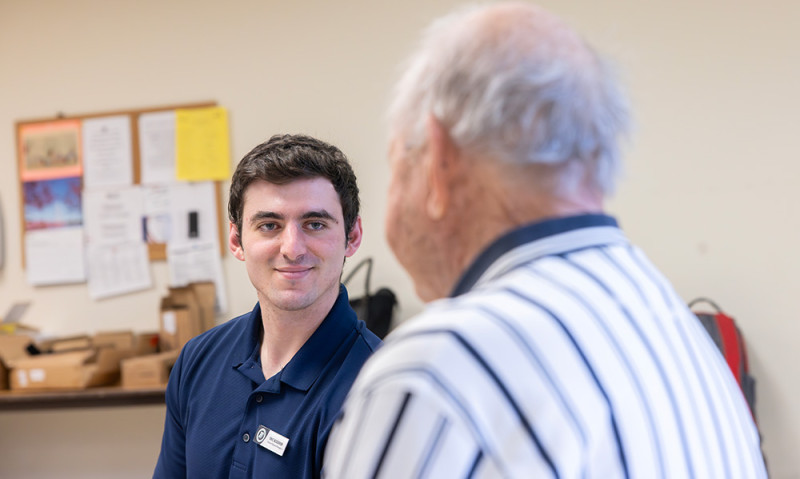
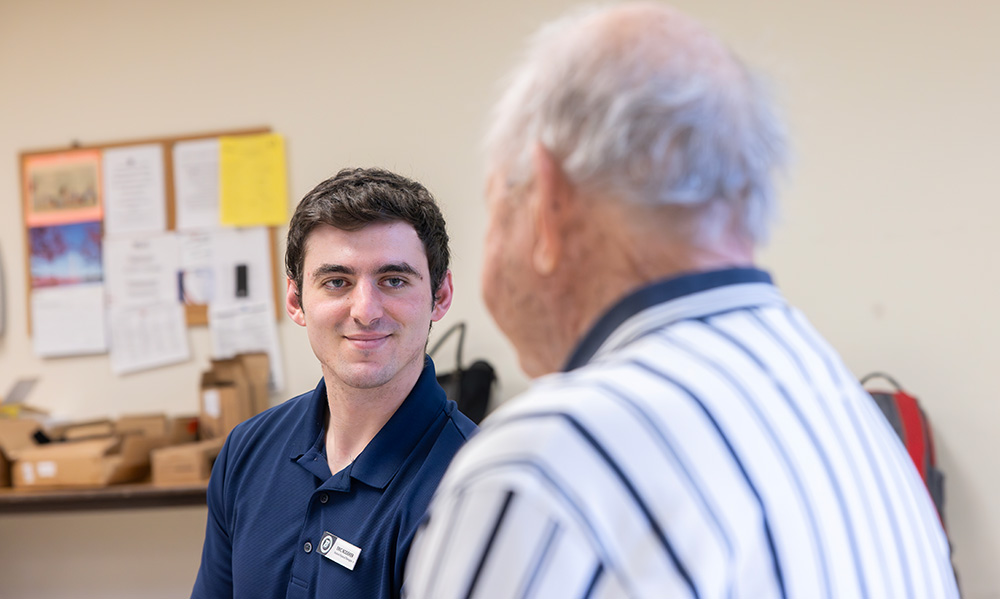
"Many physical therapy programs don't offer hands-on, patient-facing capstone experiences like this," she notes. "Instead of just reviewing the literature, our students worked directly with patients and applied what they learned. That kind of experience is invaluable for their development as future clinicians."
While getting experience is essential, Bair admits that managing logistics - coordinating student schedules, securing space, and ensuring everything ran smoothly in a busy community setting - was challenging.
"It took us significant time to organize the schedule with the senior center," she says. "We were also very aware that many older adults live on fixed incomes, so we do not charge the participants. Finding ways to sustain and fund a program like this long-term is something we're still working through."
Yet that extra effort seems to have paid off. Grier says seeing the growth among participants and students was one of the most exciting parts of the in-person portion of the project.
"Participants got stronger and improved their balance, and you could see that progress week by week," she says. "At the same time, students gained real clinical experience working with multiple patients, adjusting exercises, and practicing documentation. It was rewarding to watch both groups develop together."
Eric Bodeker, a student in the in-person group, says that face-to-face interaction with patients was initially a bit intimidating, but that a major part of the experience was learning the "why" behind the balance exercise prescription.
"At the beginning, it was difficult to confidently answer patients' questions, especially when they asked why a certain exercise mattered," he says. "But several weeks in, I felt much more confident explaining the benefits and reasoning behind each decision. That communication piece is something we'll carry with us into our careers."
Applying the lessons from this project throughout their careers is the goal. Lugade wants students to become lifelong learners and to understand how research translates into clinical practice. He added that this intervention program will continue in upcoming semesters to further the project's impact.
"It can take 13 to 17 years for research findings to become standard practice in patient care, and we want to help shorten that gap," he says. "These capstone projects embedded in a faculty-led clinical trial gave students the opportunity to work directly with participants, collect objective data, and help deliver evidence-based interventions. It's not just learning in the classroom; they applied it in real-world settings."


