
Mayo Clinic researchers have developed a promising gene-editing therapy that directly corrects a genetic mutation responsible for autosomal dominant polycystic kidney disease (ADPKD), the most common inherited kidney disorder.
A single treatment of the gene therapy slowed kidney cyst growth, improved heart and liver health, and extended survival in preclinical models of ADPKD. The findings were published in Nature Communications.

"This is the first time we've been able to show that base editing can effectively and safely correct a disease-causing mutation in the kidney in a complex biological system," says Xiaogang Li, Ph.D., nephrology researcher and senior author of the study. "Instead of managing symptoms, this strategy goes after the underlying cause of the disease."
ADPKD affects an estimated 12 million people worldwide. The disease is caused primarily by mutations in the PKD1 or PKD2 genes and leads to the progressive growth of fluid-filled cysts in the kidneys, often resulting in kidney failure. Many patients also develop complications outside the kidneys, including heart enlargement and liver disease.
Current treatments can slow disease progression but do not address its genetic root. The new approach, developed by Mayo Clinic investigators, uses a form of CRISPR-based gene editing known as base editing to precisely correct a single-letter DNA mutation in the PKD1 gene.
In the study, researchers engineered two versions of a base editor: one designed to work broadly across multiple organs and another tailored specifically to kidney cells. Delivered using adeno-associated virus (AAV) vectors, a single dose of the therapy corrected the PKD1 mutation in a significant proportion of cells in kidney tissue and, depending on the editor used, in the heart and liver as well.
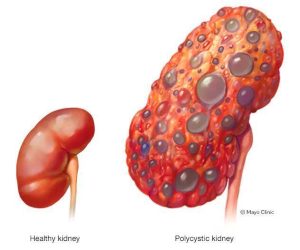
Preclinical models treated early in life had significantly reduced kidney cyst growth, better kidney function, less heart enlargement, improved liver health and longer survival. Importantly, the researchers found no evidence of harmful off-target genetic changes or significant immune reactions.
"Our results suggest this could one day be a treatment that meaningfully changes the course of disease," Dr. Li says. "That is fundamentally different from lifelong therapies that only slow progression."
The kidney has historically been difficult to target with gene-editing therapies. This study provides the first in vivo evidence that base editing can work efficiently in kidney tissue, opening the door to similar approaches for other inherited kidney diseases.
The research team also demonstrated that kidney-specific gene editing can limit genetic changes to the intended organ, a strategy that may enhance safety as therapies move closer to human testing.
"Being able to precisely control where editing happens is critical," Dr. Li says. "It allows us to maximize benefit while minimizing risk."
The work advances Mayo Clinic's Genesis initiative, which aims to prevent organ failure and restore function through regenerative medicine, precision genomics and advanced therapies.
Ongoing studies are focused on refining base-editing tools to address a broader range of PKD mutations, evaluating whether treatment can be effective after cysts have already formed, and developing alternative delivery methods - including nonviral options such as nanoparticles - to support future clinical use.
"If these approaches translate successfully to humans, they could reduce or even eliminate the need for chronic medication, delay kidney failure and significantly improve quality of life for patients with ADPKD," Dr. Li says.
For a complete list of authors, disclosures and funding, review the study.


